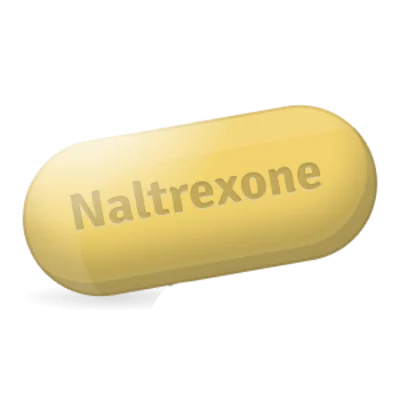
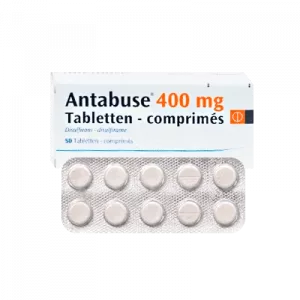
Naltrexone is an opioid antagonist tablet used for adults with opioid use disorder or alcohol dependence. It helps after detoxification by blocking opioid receptors and reducing the rewarding effects of opioids, which can lower relapse risk.
Description
Naltrexone is a type of opioid antagonist that blocks opioid receptors in the brain. When those receptors are blocked, opioids cannot produce their expected “high” or analgesic effect, so the brain gets less reinforcement from use.
Practical tip: keep an updated list of all pain medicines you might receive (including dental or emergency care). Opioid painkillers can fail to work while Naltrexone is active, so clinicians often need a non‑opioid plan in advance.
Composition
Each tablet contains naltrexone hydrochloride as the active substance. The formulation may also include standard excipients such as fillers, binders, and disintegrants to form an oral pill suitable for swallowing.
Dosage and usage
Naltrexone is used as part of a supervised treatment plan for opioid dependence after detoxification and for relapse prevention in alcohol use disorder. It is prescribed for adults and must be started only when opioids are fully cleared from the body.
How it works
Opioid dependence: Take 50 mg by mouth 1 time/day, with or without food, for maintenance therapy as prescribed by a clinician.
Alcohol use disorder: Take 50 mg by mouth 1 time/day, with or without meals, for long-term relapse prevention as directed.
Alternative supervised schedule: Some treatment plans use 100 mg on Monday, 100 mg on Wednesday, and 150 mg on Friday by mouth, 3 times/week, for ongoing therapy.
Route:Oral tablets swallowed with water.
Indications
Naltrexone is used for:
Opioid dependence / opioid use disorder: relapse prevention after detoxification, when the person is no longer physically dependent on opioids.
Alcohol dependence: reducing cravings and helping maintain abstinence, often alongside counselling and structured support.
It is not a detox medicine. It does not treat opioid withdrawal on its own, and it does not relieve cravings instantly for everyone. What it does well is reduce the “reward loop,” which is a big driver of relapse. WHO guidance on substance use treatment places medication as one part of care, with psychosocial support improving outcomes. [2]
Two key strengths show up in real practice: it is non‑sedating for most people, and it is not a controlled substance in many settings. A common limitation is adherence—missing doses removes the protective blockade.
Comparison
Naltrexone vs. Other Addiction Treatments
Medication choice depends on the substance, relapse pattern, and patient stability. Naltrexone is often compared with medicines that serve a different job in care.
Treatment
Primary role
Mechanism
Naltrexone
Relapse prevention in opioid or alcohol dependence
Rapid opioid receptor antagonist that displaces opioids during overdose
Disulfiram
Alcohol aversion support
Alters alcohol metabolism, causing unpleasant reactions if alcohol is consumed
A key practical difference: Naloxone is for emergencies, not daily relapse prevention. Disulfiram can work for selected alcohol-dependent patients who want a strong behavioural deterrent, yet it requires strict alcohol avoidance and careful monitoring. Naltrexone suits people aiming to reduce craving and reinforcement rather than creating an aversive reaction.
Contraindications
Some situations are clear “no” for Naltrexone, and others need close monitoring.
This medication is NOT for you if…
You are currently dependent on opioids or using opioids regularly.
You are in acute opioid withdrawal.
You have acute hepatitis or hepatic failure.
You have had a serious hypersensitivity reaction to naltrexone or formulation components.
Precautions that need planned monitoring
Hepatic or renal impairment: dose decisions and lab monitoring matter because naltrexone is processed by the liver and eliminated through the kidneys.
Pregnancy and lactation: use is a risk–benefit decision; relapse prevention can be vital, yet fetal/infant safety must be weighed carefully.
History of self-harm, severe depression, or unstable psychiatric illness: treatment for addiction works best when mental health care is coordinated, not siloed.
A blunt reality from clinic work: the most dangerous period is the transition. After detox, tolerance is lower; if someone stops Naltrexone and returns to prior opioid doses, overdose risk rises.
When this is not for you
This medication is NOT for you if…
you are currently using opioids or still physically dependent on them
you are in opioid withdrawal
you have liver failure or active hepatitis
you have had a serious allergy to naltrexone or any tablet ingredient
Use extra caution if you…
have liver or kidney problems
are pregnant or breastfeeding
live with severe depression, self-harm thoughts, or unstable mental health
Because this medicine blocks opioid painkillers, your healthcare team should know about it before any dental treatment, surgery, or emergency care.
Side effects
Naltrexone Side Effects
Most side effects are dose-related and show up early.
Common side effects
Nausea or vomiting, often during the first days
Headache
Drowsiness, fatigue, or low energy
Muscle or joint aches
Dry mouth or appetite changes
A small snack, good hydration, and consistent timing can reduce nausea for many people. Some patients do better taking it in the morning if it disrupts sleep; others prefer evening if it causes mild daytime fatigue.
Serious side effects that need urgent assessment
Liver-related problems are uncommon but important: dark urine, yellowing of skin/eyes, persistent right‑upper abdominal pain, or severe fatigue should be treated as urgent symptoms. Any severe allergic reaction signs (swelling, wheeze, widespread rash) also need immediate care.
Common mistakes
People make predictable mistakes with this medicine. Avoiding them saves a lot of trouble.
Starting too soon after opioids and triggering withdrawal. This can be severe.
Forgetting that some pain medicines given after dental work can be opioids, then wondering why pain control failed.
Testing the blockade with opioids. Some people take larger opioid doses to “push through,” which raises overdose risk if Naltrexone is missed or stopped.
Skipping doses on weekends or during travel, then resuming without telling the prescriber.
Ignoring nausea and stopping on day 2, when simple adjustments often allow continuation.
One more niche but real-life issue: urine drug screens can become part of employment or legal processes, and treatment plans sometimes need documentation. Organising those documents early is calmer than doing it during a crisis.
What doctors say
Doctors who prescribe Naltrexone often frame it as a relapse-prevention tool, not a cure. The goal is to reduce the “reward” from opioids or alcohol so behavioural strategies can actually stick week to week.
Clinicians also watch for two patterns: early nausea that resolves within days, and fatigue or sleep disturbance that can improve when dosing is moved to morning. Another observation is that patients with strong external structure (scheduled therapy, family support, supervised dosing at the start) tend to stay on the medication longer, which is where benefit accumulates. For opioid use disorder, many prescribers discuss where Naltrexone fits compared with opioid agonist therapy; for some patients, it is a great fit, and for others it is a mismatch because adherence is hard during high-stress periods. Guidance used across health systems, including resources aligned with WHO and regional frameworks, emphasises matching medication choice to patient stability and relapse risk rather than using one approach for everyone.
Frequently asked questions
What does Naltrexone HCL mean, and is it different from Naltrexone Hydrochloride Tablets?
Naltrexone HCL is shorthand for naltrexone hydrochloride, the salt form used to make a stable oral medicine. Names like Naltrexone HCL Tablets, Naltrexone Hydrochloride Tablets, and Naltrexone Hydrochloride IP refer to the same active ingredient family, with differences driven by manufacturing standards and local pharmacopeia terms. The clinical effect comes from naltrexone itself once absorbed. Regulator and pharmacopeial naming conventions are widely standardised across health systems. Reference: MOHAP, 2023.
Is there a child dose for Naltrexone?
Safety and efficacy are not established for routine child dose use in the core indications of opioid or alcohol dependence, since most evidence and approvals focus on adults. Paediatric use, when considered, tends to be specialist-led for specific situations rather than standard addiction pathways. If a minor needs treatment for substance use, care is usually integrated with child and adolescent mental health services and family support. Reference: WHO, 2023.
What happens if opioids are taken while on Naltrexone?
Opioids (narcotics/opiate painkillers) can be blocked, so the person may feel little or no effect. Some people then take higher doses to try to overcome the blockade, which is dangerous if Naltrexone is missed or stopped, because tolerance is often lower after detox. A second risk is precipitated withdrawal if hidden opioid dependence is present at initiation. These risks are central in addiction-medicine guidance and regulator-reviewed prescribing information. Reference: FDA, 2023. [4]
Does Naltrexone require monitoring of LFTs regularly?
Regular LFT monitoring is common, since liver enzyme elevations can occur and may not cause symptoms early on. Clinicians often check baseline LFTs and recheck after starting, then periodically during maintenance, with closer follow-up in people with hepatic risk factors. Symptoms like jaundice, dark urine, or persistent upper abdominal pain should be assessed urgently, even between scheduled tests. This approach is consistent with regulator-reviewed safety sections. Reference: FDA, 2023.
What should people know about injections, such as injection-site reactions?
Long-acting injectable naltrexone can cause injection-site reactions, and severe reactions are uncommon but taken seriously in clinical settings. People with bleeding tendencies or on anticoagulants may need individual planning when injections are used, since intramuscular administration can bruise or bleed more easily. This product page is for tablets, yet patients sometimes switch forms within a treatment program, so it helps to understand both. Reference: Cochrane, 2020. [5]
Do you offer anonymous delivery?
Your order will be securely packed and shipped within 24 hours. This is exactly what your package will look like (images of an actual item sent). It has the size and look of a regular private letter (24x11x0.7 cm) and its contents cannot be seen.
I started after detox and the first three days were nausea and a dull headache. By week two the cravings were quieter, and I stopped obsessing about drinking after work. I kept taking it in the morning with breakfast and it settled.
20 Nov 2024
M
Mariam, 29
Dubai
6 weeks
Verified
Rating: 4.2 out of 5
I felt tired in the afternoon for the first week and I nearly quit. Switching the dose to evening made it better for me. The biggest change was that alcohol felt less rewarding, so saying no got easier.
7 Dec 2024
O
Omar, 41
Sharjah
4 weeks
Verified
Rating: 3.3 out of 5
The medicine did what it should, but I underestimated the sleep disruption. I also forgot to tell my dentist and the painkiller they offered didn’t work. After that I made a note in my phone with ‘opioid blocker’ for appointments.
9 Nov 2024
H
Huda, 37
Al Ain
12 weeks
Verified
Rating: 4.4 out of 5
I missed doses on weekends and I could feel cravings come back. Daily dosing worked better. I did blood tests twice during the first months and everything stayed fine.
2 Dec 2024
Sources
Ministry of Health and Prevention (2023). National Guideline for the Management of Substance Use Disorders
World Health Organization (2023). Guidelines for the Psychosocially Assisted Pharmacological Treatment of Opioid Dependence
European Medicines Agency (2024). Summary of Product Characteristics (SmPC) — naltrexone
U.S. Food and Drug Administration (2023). Naltrexone hydrochloride tablets — prescribing information
Cochrane (2020). Opioid antagonists with minimal sedation for opioid dependence (review)