Verified
My eye pressure came down at my follow-up. First week I had stinging for about 20 seconds each time, then it settled. The bitter taste stopped once I started pressing the corner of my eye.
21 May 2026

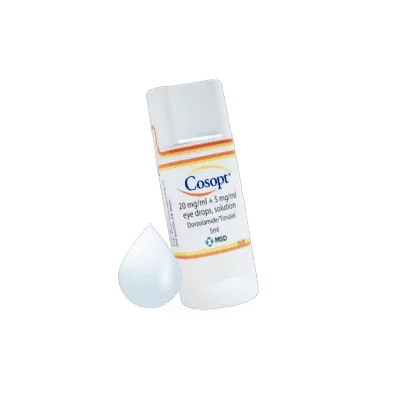
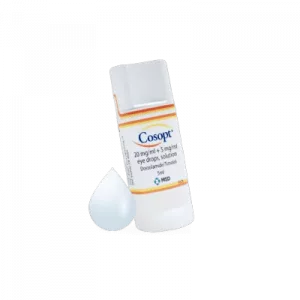
Cosopt is a prescription eye drop that combines dorzolamide and timolol. It is used for people with open-angle glaucoma or ocular hypertension who need lower eye pressure. It works by reducing aqueous humour production through carbonic anhydrase inhibition and beta-blockade.
Cosopt is a prescription eye drop that combines dorzolamide and timolol to lower elevated intraocular pressure (IOP). It is used by people with open-angle glaucoma or ocular hypertension, where high pressure can slowly damage the optic nerve. The two ingredients act together to reduce fluid production inside the eye.
Cosopt combines two pressure-lowering medicines in one solution: dorzolamide hydrochloride (Dorzolamide 2%) and timolol maleate (Timolol 0.5%). You will also see the pair written as dorzolamide-timolol, or as Dorzolamide (as HCl) and Timolol (as maleate).
Instil one drop into the affected eye twice a day, morning and evening, about 12 hours apart. Wash your hands first and avoid touching the dropper tip to the eye or any surface.
Good technique improves both effect and tolerance:
Remove soft contact lenses before each dose and wait at least 15 minutes before putting them back. If you use more than one eye medicine, leave 5–10 minutes between products so each has time to absorb.
Cosopt is often chosen when one medicine does not bring IOP to goal or when simplifying a regimen improves adherence. The main upside is convenience: one bottle, two mechanisms. The trade-off is that fixed combinations reduce flexibility; you cannot adjust one component without changing the whole product.
| Treatment approach | How it lowers IOP | Typical drawbacks |
|---|---|---|
| Cosopt (dorzolamide + timolol maleate) | Dual action: carbonic anhydrase inhibition + beta-blockade reduces aqueous production | Stinging/bitter taste; beta-blocker systemic effects in sensitive people |
| Prostaglandin analog class | Increases uveoscleral outflow | Iris/eyelash changes; redness; irritation |
| Single-agent therapy (dorzolamide or timolol) | One mechanism only | May not reach target IOP alone; still shares ingredient-specific side effects |
When clinicians prefer alternatives:
Do not use Cosopt if you have had an allergic reaction to any of its ingredients, including dorzolamide or timolol.
Avoid Cosopt if you have breathing problems like asthma or severe COPD, because timolol can worsen wheeze or shortness of breath.
It may also be unsafe if you have certain heart rhythm or heart pumping problems, such as a very slow pulse or conduction issues.
Tell your clinician if you have diabetes, thyroid disease, or kidney problems, as extra monitoring or an alternative drop may be needed.
Most side effects are local and mild, and many settle after the first days to weeks.
Common effects reported with Cosopt Eye Drops include:
Systemic effects are less common, yet they matter because timolol is a beta-blocker:
Common mistakes highlighted in the article include:
Ophthalmologists often move to a fixed combination like dorzolamide-timolol when a single drop does not achieve a target IOP, or when a patient is realistically missing doses with a multi-bottle regimen. Fewer bottles can mean fewer missed instillations, which matters more than people expect.
A practical nuance: if the eye stings sharply for a full minute, many clinicians suspect surface dryness or sensitivity rather than “allergy,” and will add lubricating drops or consider a preservative-free option if available. The aim is adherence; uncontrolled IOP causes irreversible loss.
IOP reduction can begin within hours after dosing, with a more stable day-to-day effect after consistent twice-daily use. Clinicians judge success by follow-up pressure checks and optic nerve monitoring rather than symptoms, since glaucoma is often silent. The Ocular Hypertension Treatment Study reported that lowering IOP reduces the risk of developing glaucomatous damage in at-risk patients in 2002. The practical takeaway is adherence: missed doses can raise average IOP more than patients expect. [5]
Soft contact lenses should be removed before instilling Cosopt. Many people wait at least 15 minutes before reinserting lenses, since drops can interact with lens material and worsen dryness or blur. If you get frequent irritation, a preservative-free approach may be discussed in clinic, since preservative sensitivity is common in long-term glaucoma care. EMA product information for dorzolamide/timolol combinations includes cautions about ocular irritation and contact lens use in 2023.
If you miss a dose, use it when you remember unless it is close to the next scheduled dose. In that case, skip the missed dose and return to your normal schedule; doubling increases overflow and systemic absorption without improving IOP control. Many ophthalmology clinics recommend linking doses to fixed routines like brushing teeth to reduce misses. WHO medication safety materials in 2022 emphasise routine-building for chronic therapies taken long-term.
A bitter or metallic taste is a classic Cosopt effect and comes from drainage through the nasolacrimal duct into the throat. Punctal occlusion (pressing the inner eye corner) for 2 minutes reduces this and also lowers the chance of systemic timolol effects. EMA product information for dorzolamide/timolol combinations (2023) lists taste disturbance among the recognised, usually manageable effects, and switching studies report it as a frequent real-world complaint.
Timolol can affect the body even when used as an eye drop, since some absorption bypasses the liver’s first-pass metabolism. People with asthma, COPD, slow pulse, or conduction problems are at higher risk of wheeze, shortness of breath, dizziness, or bradycardia. MOHAP’s 2024 prescription framework supports clinician oversight for medicines where comorbidities change risk. If symptoms start after initiation, clinicians often reassess both technique (tear-duct pressure) and the choice of IOP-lowering class.
Cosopt can be combined with other glaucoma medicines when one product does not reach target IOP. Spacing drops by 5–10 minutes helps each medicine stay on the ocular surface long enough to absorb. Using two beta-blocker drops together is generally avoided, since it duplicates systemic beta-blockade. EMA documentation for dorzolamide/timolol combinations from 2023 addresses concomitant therapy considerations and cautions on additive effects.
Your order will be securely packed and shipped within 24 hours. This is exactly what your package will look like (images of an actual item sent). It has the size and look of a regular private letter (24x11x0.7 cm) and its contents cannot be seen.