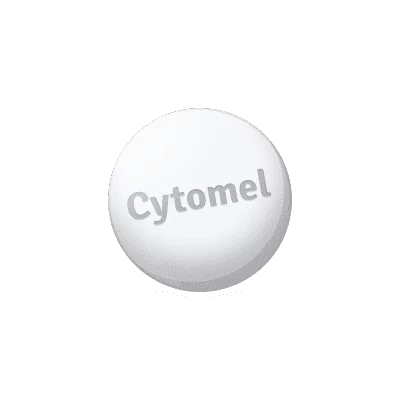
Cytomel is a prescription thyroid hormone medicine containing liothyronine sodium, a synthetic form of T3. It is for adults who need thyroid hormone replacement or supplementation for hypothyroidism. It provides direct, fast-acting T3 activity to help restore metabolic function.
Description
Cytomel is a thyroid medication that provides liothyronine, a synthetic version of the thyroid hormone T3 (triiodothyronine). Liothyronine (Cytomel) is used for hypothyroidism, a condition where the thyroid gland does not make enough thyroid hormone to keep metabolism, temperature regulation, and energy levels stable.
Hypothyroidism often shows up as tiredness, feeling cold, constipation, dry skin, slowed thinking, low mood, and gradual weight gain. Lab tests often show changes in TSH and free T4; clinicians also track free T3 in selected cases when symptoms and labs do not match neatly.
One practical nuance: Cytomel is usually chosen when a clinician wants direct T3 replacement rather than relying on the body to convert T4 into T3. Some patients feel a clearer “lift” in energy with T3, but the trade-off is a higher chance of feeling overstimulated if the dose is pushed too quickly.
Practical tip: When doctors adjust thyroid therapy, they usually change one thing at a time (dose, timing, or added T3). Changing multiple factors together makes it hard to interpret symptoms and lab trends.
Composition
Active ingredient: liothyronine sodium (T3) per tablet strength (commonly 5 mcg, 25 mcg, or 50 mcg). Excipients vary by manufacturer and may include fillers, binders, disintegrants, and coloring agents used to form the tablet.
Dosage and usage
Dose selection is individual. It can be used alone in hypothyroidism in specific cases, or added to a T4 regimen when a prescriber judges that a trial of combination therapy is appropriate under monitoring.
Two quick realities about T3 dosing:
Small changes can feel big.
Titration tends to be cautious.
Practical tip: When switching between brands or manufacturers of liothyronine, prescribers often re-check thyroid labs after the change, because some patients report symptom shifts even at the same labeled dose.
Cytomel is a prescription thyroid hormone. Doctors can issue a prescription for Cytomel after evaluating symptoms, thyroid blood tests, and medical history. For many patients with hypothyroidism, thyroid replacement is long-term and taken as a daily medication, with periodic dose adjustments.
Key day-to-day use guidance pharmacists repeat because it prevents avoidable problems:
Take Cytomel at the same time each day.
Keep the routine consistent around meals.
Stick with one schedule during lab monitoring.
A missed dose is usually handled by taking it when remembered on the same day, then returning to the usual schedule. Doubling doses to “catch up” is a common way people trigger palpitations or shakiness with T3.
How it works
Route: oral (tablets), swallow with water
Dose: take exactly the tablet strength prescribed (5 mcg, 25 mcg, or 50 mcg per tablet); total daily dose is individualized
Frequency: 1 time/day; some regimens may be split to 2 times/day if prescribed
Timing: take at the same time each day; may be taken with or without food
Duration: long-term/ongoing as prescribed; do not stop without prescriber direction
Indications
Cytomel, containing the active ingredient liothyronine sodium, is a synthetic form of thyroid hormone (T3) primarily used to treat hypothyroidism. It is prescribed for adults who need thyroid hormone replacement or supplementation. The key benefit is fast-acting T3 activity that helps restore metabolic function and relieve symptoms such as fatigue, weight gain, and cold intolerance.
Comparison
Both Cytomel and levothyroxine treat hypothyroidism, but they deliver different thyroid hormones. Levothyroxine provides T4 (thyroxine), and Cytomel provides T3 (triiodothyronine). The key clinical distinction is T4 versus T3 action.
Comparison table
Feature
Cytomel
Levothyroxine
Hormone provided
T3 (liothyronine sodium)
T4 (thyroxine)
Typical clinical role
Selected cases; sometimes add-on to T4
Common first-line thyroid hormone medication
Kinetics
Faster onset, shorter duration
Slower onset, longer duration
Levothyroxine is often preferred when steady hormone levels are the goal, since T4 has a longer half-life and produces smoother blood levels. Cytomel may be considered when a prescriber wants direct T3 effect or a monitored trial of T4/T3 therapy in persistent symptoms. A downside is that T3 dosing can feel less forgiving than T4 alone. The drawback is that Cytomel can produce “peaks,” so some patients feel swings in energy or heart rate when dosing is not well matched. Not for you if you cannot tolerate dose-related symptom shifts.
Practical tip: If lab checks are scheduled, try to take your Cytomel dose consistently relative to the blood draw time (same before/after pattern each visit). T3 timing can shift measured free T3 and confuse trend interpretation.
Generic liothyronine tablets contain the same active hormone as the brand and are expected to act the same way. If a switch is made between liothyronine products, prescribers commonly plan follow-up labs and a symptom review after a steady period, rather than adjusting the dose rapidly based on the first few days.
Contraindications
Hypersensitivity to liothyronine or any tablet excipient
Untreated thyrotoxicosis (overactive thyroid)
Uncorrected adrenal insufficiency
Recent acute myocardial infarction (heart attack)
Uncontrolled cardiac arrhythmias, such as atrial fibrillation or tachycardia
Caution and closer monitoring apply with coronary artery disease, uncontrolled hypertension, diabetes, osteoporosis risk, and in pregnancy. Use in these situations only under prescriber supervision.
When this is not for you
Cytomel may not be a good fit if you have heart disease or rhythm problems, because extra thyroid hormone can raise heart rate and worsen chest pain or trigger palpitations. It may also not be a good choice if you are sensitive to stimulants, since T3 can make you feel jittery or anxious when the dose is more than you need. If you have osteoporosis risk, are pregnant or planning pregnancy, have diabetes, or take warfarin, you typically need closer monitoring and more cautious adjustments.
Side effects
Most side effects from Cytomel reflect too much thyroid hormone activity (a hyperthyroid-like state). Common complaints include palpitations, faster heart rate, tremor, sweating, heat intolerance, diarrhea, anxiety, and insomnia. Headache and muscle weakness can also occur, and some patients describe a “wired but tired” feeling when T3 is more than they need.
Serious risks relate to the heart and rhythm. Chest pain, fainting, severe shortness of breath, or new irregular heartbeat symptoms need urgent medical assessment, because excess thyroid hormone can precipitate arrhythmias and worsen angina in susceptible patients. Long-term overtreatment can contribute to bone loss, a concern that matters more in postmenopausal women and people with other osteoporosis risks.
A less talked-about nuance: hair shedding can happen early in thyroid dose changes (either up or down). Patients often blame Cytomel itself, but it can be a transient shift as follicles respond to a new hormone environment.
Short sentences matter here. Symptoms can escalate fast. Dose changes should be measured.
Common mistakes
People rarely “fail” thyroid therapy; routines fail. These are common patterns seen in medication reviews and refill histories:
Taking Cytomel with calcium, iron, or magnesium supplements at the same time, then wondering why symptoms drift; separation by several hours is a common clinical tactic to reduce absorption interference.
Treating palpitations by skipping doses randomly; this can create a cycle of peaks and dips, which feels worse than steady under- or over-replacement.
Using Cytomel for weight loss goals rather than documented hypothyroidism; this raises the risk of tachycardia, anxiety, and muscle loss without addressing the real driver of weight gain. [3]
Getting thyroid labs drawn at inconsistent times relative to dosing; with T3 this can shift results enough to trigger unnecessary dose changes.
Increasing caffeine or pre-workout stimulants after starting Cytomel; the combo is a classic reason for tremor and insomnia in otherwise appropriate dosing.
What doctors say
Endocrinologists tend to view Cytomel as a precise tool rather than a default starting point. In clinics, it is often used for patients who remain symptomatic on T4 alone despite careful titration, or for specific diagnostic and treatment scenarios where short-acting T3 is useful. [2]
Cardio-metabolic sensitivity shapes prescribing decisions. Clinicians are more conservative with Cytomel in older adults and in anyone with coronary artery disease, atrial fibrillation risk, or uncontrolled hypertension, because excess thyroid hormone can raise heart rate and myocardial oxygen demand. Dose increases are typically spaced out to allow symptom and lab stabilization.
One more real-world observation: anxiety complaints after starting T3 are frequently dose- or timing-related rather than “allergy.” When the dose is adjusted thoughtfully, many patients do well, but it demands follow-up and careful listening to symptoms.
Frequently asked questions
How fast does Cytomel start working?
Cytomel contains T3, which is faster acting than T4, so some people feel changes in energy, heart rate, or temperature tolerance within days. The FDA label for liothyronine describes rapid pharmacologic activity, and the American Thyroid Association notes that symptom relief can vary by patient. Constipation and cold intolerance may improve before weight shifts, and mood changes can lag. Clinical follow-up often relies on labs after a steady dosing period rather than day-to-day feelings. Early stimulation symptoms can mimic “too much dose.”
Can Cytomel be taken with levothyroxine?
Yes, some patients are prescribed levothyroxine (T4) plus Cytomel (T3) as combination thyroid hormone medication. The goal is usually to keep T4 as the foundation and use small amounts of T3 for symptom control in selected cases under monitoring. The British Thyroid Association and the ATA both discuss this as a selective strategy rather than routine care. The risk is overtreatment, so clinicians typically adjust slowly and use repeat thyroid tests to keep TSH and free hormone levels in target range. Follow-up matters because combination therapy can worsen palpitations if the balance is off.
What medicines and supplements interfere with Cytomel?
Mineral supplements that contain calcium, iron, or magnesium can bind thyroid hormone in the gut and reduce absorption, so separation by several hours is a common strategy. The FDA label and NHS guidance both list these interactions. Bile-acid sequestrants can also reduce absorption, and certain antiseizure medicines can increase thyroid hormone clearance. If you take warfarin, dose changes in thyroid hormone can shift INR and require monitoring adjustments. A pharmacist can help separate doses safely.
What side effects suggest the dose is too high?
Symptoms that fit excess thyroid hormone include fast heartbeat, palpitations, tremor, sweating, diarrhea, heat intolerance, anxiety, and insomnia. The NHS and FDA both list these as warning signs of over-replacement. New chest pain, fainting, or irregular heartbeat symptoms need urgent assessment because thyroid hormone can aggravate underlying cardiac disease. Persistent symptoms after a dose change often prompt clinicians to reassess both timing and dose rather than pushing through. A dose review is safer than waiting it out.
Is Cytomel taken long-term?
For many people with true hypothyroidism, thyroid replacement is long-term because the underlying hormone deficiency does not resolve. The ATA and NICE both support ongoing monitoring when thyroid replacement continues for years. Doses can still change over time with weight changes, pregnancy, aging, and interacting medicines. Regular follow-up helps prevent slow drift into under-treatment or over-treatment, both of which can look like “the medicine stopped working.” Long-term use works best when the dose is reviewed periodically.
Do you offer anonymous delivery?
Your order will be securely packed and shipped within 24 hours. This is exactly what your package will look like (images of an actual item sent). It has the size and look of a regular private letter (24x11x0.7 cm) and its contents cannot be seen.
I added Cytomel after years on T4 with normal TSH but still feeling foggy. Week two I felt more awake in the mornings, and by week six my afternoon crash was less. I did get mild hand tremor when I took it with coffee, so I moved coffee later and it settled.
16 May 2026
O
Omar, 46
Abu Dhabi
4 weeks
Verified
Rating: 3.5 out of 5
Energy picked up fast, maybe too fast. I had a racing heart at night and couldn’t sleep the first week. My doctor reduced the dose and the palpitations eased, but I learned I can’t treat this like a vitamin.
22 May 2026
S
Sara, 29
Sharjah
3 months
Verified
Rating: 4 out of 5
My weight didn’t change much, but my mood and constipation improved. Blood tests looked better after the first adjustment. The annoying part was timing it away from my iron tablets; when I forgot, I felt sluggish again.
31 May 2026
H
Hassan, 57
Al Ain
8 weeks
Verified
Rating: 3.5 out of 5
I have a heart history, so we went slow. I didn’t feel a dramatic difference, but my cold intolerance improved and I stopped needing naps. I had one episode of chest tightness after a dose increase and we rolled back.
9 May 2026
L
Lina, 40
Ajman
6 weeks
Verified
Rating: 3.5 out of 5
I wanted it to fix everything, but it made me anxious and irritable. Labs suggested I was slightly over. Once we stopped, the anxiety faded over about a week; I stayed on T4 alone and felt steadier.
4 Jun 2026
Sources
U.S. Food and Drug Administration (FDA) (2019). CYTOMEL (liothyronine sodium) tablets — Prescribing Information (label).
American Thyroid Association (2023). Patient information: Liothyronine (T3) and combination T4/T3 therapy.
American Thyroid Association (2023). Thyroid hormone misuse and weight-loss warning guidance.
World Health Organization (WHO) (2023). WHO Model List of Essential Medicines and rational use guidance for thyroid hormones.
National Institute for Health and Care Excellence (NICE) (2023). Thyroid disease: assessment and management — monitoring and treatment guidance.