
Verified
My eye pressure came down at my follow-up. First 10 days I had noticeable redness in the evenings, then it eased. The biggest change was my eyelashes getting longer and a bit messy.
6 May 2026

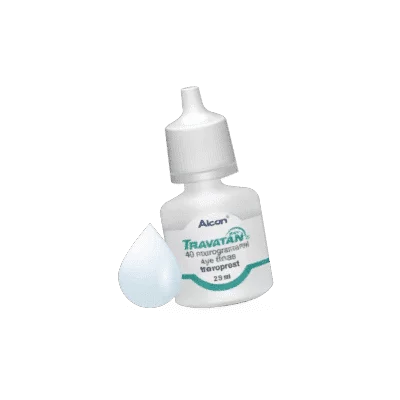
Travatan is a prescription eye drop containing travoprost, a prostaglandin analog. It is for adults with glaucoma or ocular hypertension who need lower intraocular pressure. It works by increasing drainage of aqueous humor to reduce eye pressure.
Glaucoma is a group of eye conditions where pressure and/or reduced blood flow can damage the optic nerve over time, leading to permanent vision loss if untreated. Ocular hypertension means the pressure inside the eye is higher than normal, without confirmed optic nerve damage yet, but it still raises future glaucoma risk. Lowering IOP is the main proven strategy to slow progression.
In day-to-day care, patients often like the “once daily” routine. One drawback is that some eye changes can be cosmetic and long-lasting, so it is worth being mentally prepared for that before starting.
Travatan eye drops contain travoprost 0.004% (40 micrograms/mL) as the active ingredient, a prostaglandin F2α analogue. Excipients typically include benzalkonium chloride (preservative), buffering agents, tonicity adjusters, and purified water for ophthalmic use.
The standard strength for Travatan is 0.004%, which corresponds to 40 micrograms/ml (40mcg/ml) of travoprost. It is intended for ocular use only and is dosed in drops, not “by millilitres.”
A key practical point: prostaglandin analogs are usually dosed once daily, and using them more often can reduce the pressure-lowering response in some patients. The bottle format is designed to deliver consistent drop size, but technique still matters.
Use Travatan exactly as prescribed, usually one drop in the affected eye(s) once daily in the evening. This timing is common in ophthalmology because IOP follows a daily rhythm and evening dosing fits many treatment plans [2].
A simple technique that works for most people:
The dropper tip is the usual contamination point. Eye-drop contamination is one of those “small” issues that can turn into conjunctivitis or keratitis in real life.
If you forget a dose, use it when you remember unless it is close to the next scheduled dose. Skip the missed dose if it is almost time for the next one. Do not use two doses at once.
Aqueous humor is the clear fluid produced inside the eye. When it does not drain well, pressure rises. Travoprost increases uveoscleral outflow, which is one of the eye’s drainage pathways, so fluid leaves the eye more easily and IOP drops.
This is why Travatan is often chosen as a first-line option in many glaucoma pathways: it targets drainage rather than “turning down” fluid production.
Travatan (travoprost) is an ophthalmic solution used to treat glaucoma and ocular hypertension by reducing intraocular pressure. It is prescribed for adults whose eye pressure is high enough to threaten the optic nerve and long-term vision. Travatan works by increasing the outflow of aqueous humor from the eye, and it is usually used as a once-daily evening eye drop.
Glaucoma is a group of eye conditions where pressure and/or reduced blood flow can damage the optic nerve over time, leading to permanent vision loss if untreated. Ocular hypertension means the pressure inside the eye is higher than normal, without confirmed optic nerve damage yet, but it still raises future glaucoma risk. Lowering IOP is the main proven strategy to slow progression.
If Travatan is not tolerated or does not lower IOP enough, ophthalmologists often consider other prostaglandin analogs or different drug classes. Within the same class, common alternatives include Latanoprost and Bimatoprost.
| Option | Drug class | Typical differences patients notice |
|---|---|---|
| Travatan (travoprost) | Prostaglandin analog | Redness, lash changes, possible iris darkening |
| Latanoprost | Prostaglandin analog | Similar IOP lowering; tolerability can differ person to person |
| Bimatoprost | Prostaglandin analog | Often strong IOP lowering; redness or periocular skin changes can be more visible in some |
Efficacy between prostaglandin analogs is often close, and choice is frequently driven by tolerability, eye-surface comfort, and adherence patterns rather than a dramatic difference in pressure reduction. Switching within the class is a standard move when side effects are the limiting factor.
Travatan may not be suitable if you have had an allergic reaction to travoprost or similar prostaglandin eye drops. Speak to your prescriber before using it if you have had recent eye surgery, ongoing eye inflammation or infection, a history of herpetic eye disease, or unexplained vision changes. Seek urgent eye care if you develop severe eye pain, sudden vision loss, or marked light sensitivity rather than treating it as a routine side effect.
Most side effects from Travatan are local to the eye area, and many are mild. Some changes can be long-lasting, so patients deserve plain-language expectations before they commit to long-term therapy.
Commonly reported effects with travoprost-class drops include:
Less common but clinically important effects include eyelid skin darkening, irritation severe enough to stop treatment, and signs of inflammation in susceptible eyes (for example, a history of uveitis). Rarely, prostaglandin analogs have been linked with cystoid macular edema in higher-risk settings such as after cataract surgery [3].
Three quick realities many people only learn after starting:
Small habits change outcomes with glaucoma drops.
One sentence I’ve heard many times: “I thought I was taking it, but my bottle lasted forever.” That often means the drops missed the eye or the dosing was inconsistent.
In clinic, ophthalmologists often start with a prostaglandin analog like Travatan because once-daily dosing fits real life and adherence tends to be better than multi-dose regimens. Doctors also watch the eye surface: if dryness, blepharitis, or allergy flares, they may adjust the plan rather than pushing through discomfort for months.
A pattern many clinicians recognise is “good pressure, poor technique.” A patient can be fully committed yet still miss the eye, blink the drop out, or contaminate the tip and develop irritation that looks like drug intolerance. Fixing technique can rescue a treatment that was almost abandoned.
WHO-aligned eye-care guidance in 2026 still frames glaucoma as a chronic disease where sustained IOP reduction is the modifiable risk factor, so persistence is part of the clinical strategy, not a moral failing [5].
Travatan starts lowering intraocular pressure within hours, and the full steady effect is usually assessed after several days of consistent nightly dosing. Clinicians still judge success at follow-up visits because glaucoma care is based on measured IOP trends, not a “feeling.” EMA product assessments for prostaglandin analogs describe this class as once-daily therapy with sustained 24-hour pressure control in many patients .
Yes, iris pigmentation can darken over time, especially in hazel, green-brown, or blue-brown eyes. The change is caused by increased melanin in iris melanocytes, and it can be permanent even if the drop is stopped. WHO patient-safety materials in eye care describe pigmentation change as a known class effect of prostaglandin analogs used chronically .
Most contact lens wearers can still use Travatan, but lenses should be removed before instilling the drop and reinserted after a waiting period advised by the prescriber. The goal is to reduce irritation and avoid lens contamination with the solution. EMA guidance for ophthalmic medicines supports spacing drops and avoiding behaviours that increase exposure of lenses to preservatives .
A brief sting can happen, especially in the first weeks, and mild redness often settles as the eye surface adapts. Persistent redness, pain, light sensitivity, or discharge needs assessment because infection, inflammation, or intolerance may look similar. MOHAP-aligned pharmacovigilance practice treats ongoing ocular symptoms with prescription drops as a reason for clinical review rather than self-adjusting dose frequency .
These combinations are common in glaucoma management, and they work by different mechanisms: Travatan increases outflow, Timolol reduces aqueous production, and Brinzolamide reduces production via carbonic anhydrase inhibition. Spacing drops by at least 5 minutes reduces washout and improves effect. EMA documents on ophthalmic co-administration describe dose separation as standard practice for multi-drop regimens .
For travoprost-class drops, once daily is standard because receptor effects are long-acting and higher frequency can increase side effects without improving control. Clinicians aim for a target IOP and adjust therapy by adding or switching agents rather than simply increasing prostaglandin dosing. WHO glaucoma care summaries continue to position adherence to a simple regimen as a key determinant of long-term outcomes .
Your order will be securely packed and shipped within 24 hours. This is exactly what your package will look like (images of an actual item sent). It has the size and look of a regular private letter (24x11x0.7 cm) and its contents cannot be seen.
