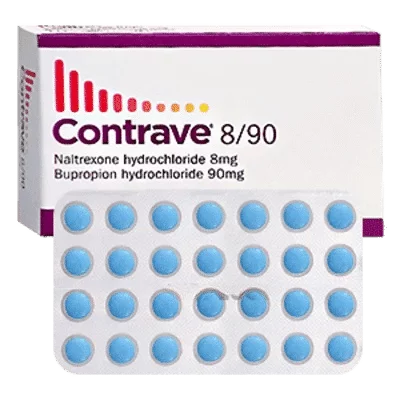
Contrave is an extended-release weight-loss medicine for adults with obesity or overweight and related health risks. It combines naltrexone and bupropion to help reduce hunger and food cravings. It is used with a reduced-calorie diet and increased physical activity.
Description
Contrave is a prescription oral tablet used for long-term weight management in adults. It is combined with a reduced-calorie eating plan and increased physical activity.
It works by acting on appetite and reward pathways in the brain, which can help reduce hunger and cravings. It is used in adults with obesity or overweight who also have weight-related medical problems.
Composition
Contrave tablets contain two active ingredients in a fixed-dose combination:
These are extended‑release tablets, designed to release the medicines gradually.
If you have a history of opioid pain medicines for back pain or post‑surgery, flag it early: naltrexone can block opioids and can trigger sudden withdrawal if opioids are still in your system.
Dosage and usage
Contrave is usually started low and increased weekly to improve tolerability, aiming for the target maintenance dose of two 8 mg/90 mg extended‑release tablets twice daily.
If nausea hits in the first 10–14 days, taking the dose with a meal and keeping portions smaller can help; heavy, high‑fat meals tend to make nausea and reflux worse for many people.
Missed dose
Skip the missed dose and take the next dose at the usual time. Doubling up raises the chance of side effects and is a common reason people quit early.
How it works
Dose: Start with 1 tablet by mouth once daily in the morning for the first 1 week. Increase by 1 tablet daily each week until the usual maintenance dose of 2 tablets twice daily is reached.
Frequency: Take it twice daily once you are on the full dose.
Timing: Take the tablets in the morning and in the evening, and avoid taking them too close to bedtime.
Route:Oral tablets.
Duration: Use as part of a long-term weight management plan with diet and exercise, only if the treatment is helping and is tolerated.
Indications
Contrave is intended for adult patients who are:
Obese (BMI 30 and above), or
Overweight (BMI 27–29.9)with weight-related medical problems
Weight-related medical problems often include high blood pressure, high cholesterol, and type 2 diabetes. The goal is long-term weight management, not short bursts of rapid loss.
A practical screening point used in clinics: if cravings are a dominant driver of overeating, Contrave can be a logical option because it targets both appetite signaling and reward-driven eating.
Comparison
Contrave’s defining feature is the naltrexone + bupropion combination, aiming at both hunger signaling and the reward pathway. Other weight‑loss medicines may work through different mechanisms, such as gut hormone (GLP‑1) signaling, fat absorption blockade, or sympathomimetic appetite suppression. The best choice depends on whether your main barrier is cravings, portion control, metabolic disease (like type 2 diabetes), or tolerability concerns such as nausea or insomnia.
Targets hunger center + reward system to reduce hunger and control cravings
Craving-led eating, emotional snacking patterns, need for an oral option
GLP‑1 receptor agonists
Mimic incretin hormones to reduce appetite and slow gastric emptying
Type 2 diabetes, strong appetite suppression goals, cardiometabolic risk focus
Fat absorption inhibitor
Reduces intestinal fat absorption
People who prefer a non‑CNS option and can manage GI effects
One caution clinicians repeat: Contrave contains bupropion, so it overlaps with antidepressant pharmacology. It may suit some patients with low mood; it can also worsen anxiety or sleep in others. This trade‑off drives many “stay on it” vs “stop it” decisions.
Contraindications
Contrave is not for you if any of the following apply:
Uncontrolled hypertension
Seizure disorder or a history of seizures
Current or prior bulimia or anorexia nervosa
Current opioid use or opioid dependence (including many cough/pain medicines)
Abrupt discontinuation of alcohol, benzodiazepines, barbiturates, or antiepileptic drugs
If you have high blood pressure, seizure history, an eating disorder, or you use opioid pain medicines, this medicine may be a poor fit. It can also be difficult to use if you are pregnant, breastfeeding, or prone to anxiety and insomnia. Severe liver or kidney disease and allergy to either ingredient are also reasons to avoid it.
Side effects
Most side effects are front-loaded in the first weeks, during the titration phase. The most common complaints are nausea, constipation, headache, vomiting, dizziness, dry mouth, and insomnia. Some people also notice jitteriness or a “wired” feeling, because bupropion can be activating.
Serious risks need respect:
Seizures (risk rises with higher doses, rapid dose escalation, heavy alcohol use, eating disorders, or medicines that lower seizure threshold)
Blood pressure and heart rate increases, mainly early on
Mood changes and suicidal thoughts/behavior, which is a class warning linked to antidepressant components in susceptible people
One very practical micro-detail: bupropion can cause false-positive urine screens for amphetamines on some immunoassay tests; confirmatory testing (GC/MS) clears the confusion. Another: insomnia often improves if the evening dose is taken earlier rather than late at night, while keeping the twice-daily schedule consistent.
Common mistakes
These are patterns that repeatedly reduce results or increase side effects:
Taking extra tablets to “catch up.” This increases seizure risk and worsens nausea.
Crushing or chewing extended‑release tablets. It can dump the dose quickly and raise adverse effects.
Starting Contrave while still using opioids (including some cough syrups and post‑procedure pain medicines). This can trigger acute withdrawal because of naltrexone.
Drinking heavily on weekends during titration. Alcohol can worsen dizziness, raise seizure risk, and sabotage sleep.
Ignoring blood pressure changes. A few high readings early can be the first sign you need a plan change.
If constipation appears, the simplest fix is often a consistent breakfast routine plus extra water and fibre for a week; jumping straight to strong laxatives can cause cramping and bounce-back.
What doctors say
In clinics, doctors tend to frame Contrave as a “behavior amplifier”: if a patient already commits to diet structure and movement, reduced cravings make the plan easier to follow, day after day. Many prescribers also choose it when emotional eating or reward-driven snacking is prominent, because the mechanism targets hunger signaling and reward pathways rather than only absorption of calories.
Doctors also watch the tolerability window closely. If nausea, insomnia, or anxiety keeps building through weeks 2–4, many clinicians pause the titration for longer, because pushing to full dose too fast often ends with discontinuation. A second real-world observation: if weight loss is minimal after an adequate trial at maintenance dose, continuing indefinitely rarely helps; switching strategy is more common.
Frequently asked questions
How long it usually takes to feel appetite or craving changes
Many people notice some change during the titration phase, often by weeks 2–4, because dose increases are gradual. Weight change tends to lag behind appetite changes, since routines need time to shift and water weight can fluctuate. Clinicians often assess early response after reaching the maintenance dose and use that to guide next steps. WHO materials on obesity management and lifestyle integration summarize reference standards for obesity pharmacotherapy (WHO, 2025). [5]
Emotional eating and reward-driven snacking
Contrave is designed to influence the reward system and hunger center, so it can be useful when cravings are the main driver of overeating. Naltrexone’s opioid receptor antagonist action is relevant here because opioid signaling is linked to food reward in some people. Bupropion’s catecholamine effects can also support motivation and reduce appetite for some patients. EMA documents on centrally acting medicines emphasize monitoring for neuropsychiatric effects when appetite pathways and mood pathways overlap (EMA, 2024). This aligns with FDA labeling and current clinical monitoring practices.
Taking Contrave with food
Taking doses with food often improves tolerability, mainly nausea. Many patients do better with lighter meals rather than high‑fat meals, since heavy meals can worsen reflux and queasiness during dose escalation. Consistent timing helps sleep planning too, since bupropion can be activating. MOHAP patient-safety communications in the UAE commonly stress adherence to dose titration for medicines affecting the central nervous system (MOHAP, 2025). This advice is consistent with FDA labeling and routine pharmacist counseling.
Missed dose and double-dosing
If you miss a dose, take the next scheduled dose at the usual time and do not double up. Taking extra tablets increases side effects, and for bupropion-containing products it can increase seizure risk. If missed doses happen often, simplifying timing (same morning routine, same evening routine) usually works better than changing the target dose. WHO medication adherence resources describe routine-based dosing as one of the most reliable adherence tactics in long-term therapy (WHO, 2025). The same approach is reinforced in clinical counseling by NICE and FDA-based medication guides.
Mood, anxiety, and sleep changes
Because Contrave includes bupropion, mood and activation symptoms can shift either way. Some people feel more energized; others feel anxious or sleep-disrupted, mainly during weeks 1–4. Sleep often improves with earlier evening dosing and caffeine control, but persistent agitation, panic, or dark thoughts should be treated as a stop-and-review signal rather than something to push through. Safety language for bupropion-class medicines is addressed in EMA product information frameworks for antidepressant-related warnings (EMA, 2024). FDA labeling and EMA product information both highlight mood monitoring.
Opioid pain medicines and procedures
Naltrexone blocks opioid receptors, so opioid painkillers may work poorly and can trigger withdrawal if opioids are still present. This matters for planned dental work, surgery, or even some cough preparations that contain opioid derivatives. If you need acute pain control, clinicians often choose non‑opioid strategies while naltrexone is on board. MOHAP opioid stewardship and patient counseling materials highlight the clinical importance of disclosing opioid use before starting opioid-blocking therapy (MOHAP, 2025). FDA prescribing information also warns about opioid withdrawal risk.
Do you offer anonymous delivery?
Your order will be securely packed and shipped within 24 hours. This is exactly what your package will look like (images of an actual item sent). It has the size and look of a regular private letter (24x11x0.7 cm) and its contents cannot be seen.
Week 1 was mostly nausea and dry mouth. By week 4 my cravings for sweets dropped, and I stopped raiding the pantry at night. Weight loss was steady, not dramatic, but my portions got smaller without feeling punished.
10 Nov 2024
O
Omar, 41
Abu Dhabi
8 weeks
Verified
Rating: 3.2 out of 5
It helped with appetite, but sleep was messy. If I took the evening dose too late I was awake at 2–3 am. Moving it earlier made a difference, yet I still felt a bit wired.
19 Oct 2024
S
Sara, 29
Sharjah
5 weeks
Verified
Rating: 2 out of 5
I quit early because constipation and nausea made work hard. Cravings did drop in the second week, so I could see the point, but the stomach issues didn’t settle for me.
15 Oct 2024
H
Hassan, 47
Al Ain
6 months
Verified
Rating: 4.6 out of 5
I liked that it targeted snacking. I also track my blood pressure at home and saw a small rise at the start that settled later. The biggest win was consistency: fewer impulsive food decisions during stressful weeks.
3 Nov 2024
Sources
U.S. Food and Drug Administration (FDA) (2024). Contrave (naltrexone HCl and bupropion HCl) extended-release tablets — Prescribing Information.
PubMed (2019). Naltrexone/bupropion for weight management: clinical review.
World Health Organization (WHO) (2025). Obesity and overweight — Fact sheet.
European Medicines Agency (EMA) (2024). Summary of Product Characteristics (SmPC) — naltrexone/bupropion prolonged-release tablets.
Ministry of Health and Prevention (MOHAP) (2025). Medication adherence and safe-use guidance for patients.