Verified
I used Voltaren for a knee osteoarthritis flare. By day two the swelling felt less and I could climb stairs again, but I had mild heartburn if I took it without food.
14 Oct 2024

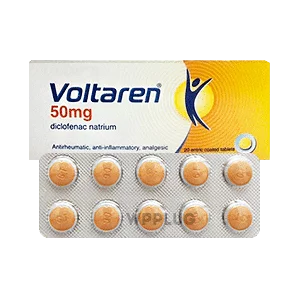
Voltaren is an NSAID medicine containing diclofenac. It is for adults with pain and inflammation affecting joints, muscles, or soft tissues. It lowers prostaglandins to reduce swelling and ease pain.
Voltaren belongs to the non-steroidal anti-inflammatory drugs (NSAIDs) group and its active ingredient is diclofenac. In day-to-day clinical use, it’s selected when pain has a clear inflammatory component: swollen joints, tender tendons, flare-ups of osteoarthritis, or painful stiffness that improves once inflammation settles.
Voltaren tablets are used for systemic relief, meaning diclofenac circulates in the bloodstream and can help pain and inflammation affecting deeper structures or multiple areas at once.
Diclofenac is an NSAID that reduces pain, inflammation, and fever by inhibiting cyclooxygenase enzymes (COX-1 and COX-2). Those enzymes help the body produce prostaglandins, which act like volume knobs for pain sensitivity and inflammation. When prostaglandins drop, swelling and pain signals usually ease, and mobility often improves. EMA evaluates diclofenac-containing medicines with specific warnings about gastrointestinal and cardiovascular risk that increase with higher doses and longer courses [1].
Diclofenac can appear as different salts in medicines. Diclofenac sodium is a common oral form (often used in tablets), while diclofenac diethylamine is widely used in diclofenac gel formulations designed for local tissue penetration. You may also see concentrations described for topical diclofenac gel, such as 2.32% diclofenac in some gels, though Voltaren on this page is supplied as pills.
Voltaren pills are taken by mouth with water. Many people tolerate NSAIDs better when taken with food, especially if they are prone to heartburn. For dosing, follow the directions provided by your prescriber or the regulated product instructions used in the UAE; avoid stacking multiple NSAIDs on the same day.
People make the same avoidable errors with diclofenac, and they explain a lot of “it didn’t work” or “it upset my stomach” stories.
If Voltaren is being used on a schedule and you miss a dose, take it when remembered unless it’s close to the next planned dose. Do not “catch up” by taking two doses together. The safety margin narrows quickly with NSAIDs.
Voltaren is used for pain & inflammation and pain & swelling where NSAID therapy is appropriate. Common situations include:
Voltaren helps symptoms. It does not rebuild cartilage. For osteoarthritis, many clinicians combine it with physiotherapy and load management for better long-term function.
A fast effect can happen. Anti-inflammatory benefit may build over a few days.
Voltaren tablets and Voltaren Emulgel both use diclofenac, yet they behave very differently in the body. Tablets deliver diclofenac sodium into the bloodstream, which can help when pain is widespread, deep, or associated with a larger inflammatory flare. Gels act closer to where they’re applied and usually lead to lower whole-body exposure than oral NSAIDs.
| Feature | Voltaren tablets | Voltaren gel |
|---|---|---|
| Main effect | Systemic | Local |
| Best fit | Multi-site pain, deeper inflammation | One or two specific painful areas |
| Key limitation | More GI/renal/CV risk | Less useful for deep or widespread pain |
A real trade-off exists: tablets may give stronger relief for some people, yet side effects become more relevant, especially with longer use or higher dosing.
Clinically important interactions:
Voltaren is not suitable for you unless a clinician has checked it is safe if you have ever had an allergic reaction to diclofenac, aspirin, or other NSAIDs, or if NSAIDs have triggered asthma or wheezing for you. Avoid it if you have (or have had) stomach ulcers or bleeding, or if you are already at higher risk of bleeding because of medicines like blood thinners, antiplatelets, or some antidepressants.
Extra caution is needed if you have kidney or liver problems, dehydration, high blood pressure, heart failure, or cardiovascular disease, because NSAIDs can worsen fluid retention, blood pressure, kidney function, and cardiovascular risk. Do not use in the third trimester of pregnancy.
Side effects depend on dose, duration, and personal risk factors. Oral diclofenac tends to cause more systemic adverse effects than topical diclofenac gel because blood levels are higher. WHO pharmacovigilance resources consistently highlight gastrointestinal bleeding and renal injury as key NSAID risks, especially in older adults and in people with dehydration or existing kidney disease [2].
Common side effects seen with NSAIDs like diclofenac include stomach discomfort, heartburn, nausea, and dizziness. Some people get ankle swelling or a mild rise in blood pressure. Skin allergy is less common with tablets than with gels, yet any NSAID can trigger rash in sensitive individuals.
Serious side effects need quick medical assessment: black stools, vomiting blood, sudden chest pain, one-sided weakness, severe shortness of breath, facial swelling, or wheeze after dosing. Stop the drug and seek urgent care if those occur.
People make the same avoidable errors with diclofenac, and they explain a lot of “it didn’t work” or “it upset my stomach” stories.
In musculoskeletal clinics, diclofenac is often used as a “flare-control” NSAID: a short course to calm inflammation so physiotherapy and movement become tolerable again. Orthopaedic and rheumatology prescribers also tend to avoid long continuous NSAID use in patients with hypertension, ulcer history, chronic kidney disease, or established cardiovascular disease, because diclofenac’s risk is dose- and time-dependent.
A practical prescribing habit I’ve seen: if a patient needs an NSAID for more than a few days, many clinicians also review gastroprotection (such as a proton pump inhibitor) and ask about any anticoagulants or SSRIs, since those combinations raise GI bleeding risk. The European Medicines Agency keeps diclofenac safety messaging aligned with this risk-based approach rather than “one rule for everyone” dosing [4].
Many people feel some pain relief within a few hours after an oral dose, while the anti-inflammatory effect can take a bit longer to translate into better movement and less stiffness. Faster doesn’t always mean better; repeated dosing raises side-effect risk more than it raises benefit once the ceiling effect is reached. In 2026 safety guidance used across EU regulators, EMA continues to advise using the lowest effective dose for the shortest duration to reduce complications . For inflammatory flares, improvement often becomes clearer over 1–3 days.
Combining diclofenac with ibuprofen stacks NSAID exposure and increases the risk of stomach ulcers, bleeding, kidney stress, and blood pressure rise. The pain relief boost is usually small compared with the safety downside. In 2026 pharmacovigilance summaries used by WHO, duplicate NSAID therapy remains a recurring contributor to preventable adverse events . If extra analgesia is needed, clinicians often choose a non-NSAID option instead of adding a second NSAID.
Diclofenac can raise blood pressure and fluid retention in some patients, and long courses at higher doses are linked with higher cardiovascular risk than some other NSAIDs. People with established cardiovascular disease, heart failure, or multiple risk factors need careful selection and typically shorter courses. MOHAP’s medicine safety approach in the UAE mirrors international cautions around NSAIDs in cardiovascular risk groups in 2026 . If you already monitor BP at home, a noticeable upward shift after starting an NSAID is a meaningful signal.
Alcohol plus NSAIDs increases irritation of the stomach lining and can raise the chance of gastritis or bleeding, especially if you already have reflux or a past ulcer. A single drink may not cause an issue for everyone, yet risk climbs with heavier intake or longer NSAID use. EMA risk communication for diclofenac focuses on reducing avoidable GI triggers during treatment courses, and alcohol is one of those triggers . If stomach pain or black stools appear, that combination needs urgent assessment.
Some people with asthma also have NSAID sensitivity, where aspirin or ibuprofen can trigger wheeze, chest tightness, or nasal symptoms. Diclofenac can do the same in susceptible individuals, and the reaction can be serious. WHO safety summaries in 2026 continue to include bronchospasm as a known NSAID hypersensitivity presentation . If you’ve ever wheezed after an NSAID, diclofenac is usually avoided.
NSAIDs are avoided in the third trimester because they can affect fetal blood flow and labour. Earlier pregnancy use is typically restricted to situations where a clinician decides the benefit outweighs risk, and duration matters. EMA product assessments for diclofenac keep strong restrictions for late pregnancy exposure due to fetal and maternal risks . During breastfeeding, clinicians often choose alternatives first, depending on dose and timing.
Your order will be securely packed and shipped within 24 hours. This is exactly what your package will look like (images of an actual item sent). It has the size and look of a regular private letter (24x11x0.7 cm) and its contents cannot be seen.




Voltaren Emulgel is a topical diclofenac gel used for localized pain relief. The market includes topical diclofenac gel concentrations such as 1%, 1.16% diclofenac gel, and 2.32% diclofenac in some “12 hours” formats, and pack sizes often listed as 50 g and 100 g. “Voltaren Emulgel 12 Hours” is typically positioned for longer-lasting local symptom control.
This product page is for Voltaren pills, which act systemically rather than locally.
| Item | What it means | Typical use-case |
|---|---|---|
| Emulgel “12 Hours” | Extended local symptom cover | Localized muscles & joint pain |
| % strength (e.g., 1% / 1.16% / 2.32%) | Concentration of diclofenac gel | Higher % is intended for longer or stronger local effect |
| Size (e.g., 50 g / 100 g) | Amount of gel in the tube | Frequency/duration of local application |
Voltaren tablets can be made in immediate-release and modified-release versions. Modified-release tablets are often described as sustained-release (SR) or retard formulations, designed to release diclofenac over longer periods to smooth pain control and reduce the need for frequent dosing. Dispersible tablets are formulated to dissolve in water before swallowing, which some patients find easier during nausea.
On this page, Voltaren pills are available as 50 mg and 100 mg diclofenac tablets.
Voltaren suppositories are rectal formulations of diclofenac used when oral dosing is not suitable (for example, severe nausea, post-operative settings, or when rapid systemic absorption is desired without swallowing a tablet). Adult and paediatric strengths exist in the broader Voltaren range, including lower-dose suppositories used for children under medical direction. This route still carries NSAID systemic risks, since diclofenac enters the bloodstream.
For buyers choosing tablets, the key point is that the benefit-risk profile is similar across systemic diclofenac routes: dose and duration drive side effects more than the route itself.
