Verified
I used it with breakfast and dinner and tracked my fasting numbers most mornings. My readings looked steadier after about week three, but the bigger win was fewer cravings late afternoon.
29 May 2025

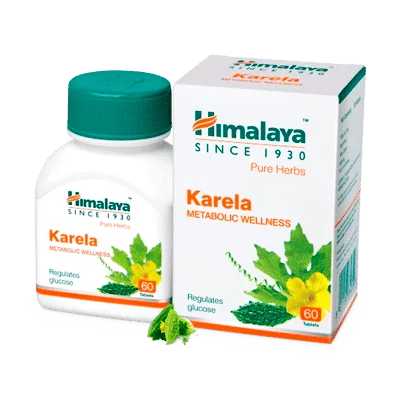
Karela is an oral herbal supplement made from Momordica charantia. It is for adults looking for added support with blood glucose regulation alongside diet and activity. Its key benefit is helping the body maintain healthier glucose handling.
Karela, commonly known as bitter gourd, is an oral herbal supplement in tablet form made from Momordica charantia to support metabolic wellness. It is used by adults who want extra day-to-day support for blood glucose regulation alongside diet and activity routines. Its key action is helping the body maintain healthier glucose handling, with the main benefit focused on glucose balance.
Karela, commonly known as bitter gourd, is an oral herbal supplement in tablet form made from Momordica charantia to support metabolic wellness.
If you forget a dose, skip it and take the next one at the usual time. Do not double up to “catch up,” since that can increase the chance of stomach upset or low glucose in people on diabetes medicines.
Karela is used for metabolic wellness support, with emphasis on:
Karela can be a reasonable option for adults with prediabetes-style concerns who are actively working on food choices, weight management, and activity.
Karela is a single-botanical glucose-support supplement. Alternatives for the same goal fall into two broad categories: lifestyle-only approaches and prescription glucose-lowering medicines.
| Approach | What it can do | Main limitation |
|---|---|---|
| Karela (Momordica charantia) tablets | Supports steadier glucose routines and may modestly improve glucose handling in some adults | Effects vary; can contribute to hypoglycaemia with diabetes medicines |
| Lifestyle intervention (diet, activity, weight loss) | Often produces the strongest and most reliable improvement in insulin sensitivity | Requires consistency; results are slower without structure |
| Prescription antidiabetic medicines | Proven HbA1c reduction in clinical trials and guideline-backed treatment pathways | Needs medical supervision; side effects and interactions depend on the drug class |
Karela fits best as an adjunct for motivated adults who want routine support and who understand that tablets do not replace clinical care when diabetes is established. Prescription medicines remain the mainstay when targets are not met with lifestyle measures, and WHO guidance frames diabetes management as staged and risk-based rather than one tool for everyone [4].
Extra caution is needed with glucose-lowering therapy. If you use insulin or sulfonylureas, the main concern is additive glucose lowering and symptomatic hypoglycaemia. MOHAP guidance on safe medicine use in the UAE also stresses the importance of recognising interaction risk when combining health products with chronic-disease medicines [3].
Karela is not a good fit if you are pregnant or breastfeeding, if you have had an allergy to Momordica charantia, or if you have had low glucose episodes before. Be especially careful if you already use insulin or sulfonylureas, since this supplement can make glucose fall too far. If you notice shakiness, sweating, confusion, or sudden hunger, treat it as a warning sign and get medical advice.
Most people tolerate Karela well, yet side effects can happen, most often related to the gut or glucose lowering.
Commonly reported:
Less common but important:
One sentence to keep in mind: symptoms like sweating, tremor, confusion, or sudden intense hunger can signal low glucose and should be taken seriously.
People usually run into problems with Karela for predictable reasons.
Taking it on an empty stomach is a big one. Bitter botanicals can irritate the stomach lining and trigger nausea when there is no food buffer. Doubling doses after missed tablets is another pattern; it rarely improves results and often worsens digestive effects.
Mixing Karela with diabetes medicines without extra monitoring is the mistake with the highest downside. Patients sometimes assume “herbal” means “can’t cause hypoglycaemia,” then get shaky during a long meeting or after the gym. Alcohol on an empty stomach can amplify this problem by lowering glucose and blunting warning signs.
Another real-world issue is data interpretation. People change breakfast, sleep less, start walking more, and begin Karela in the same week—then they can’t tell what helped. Make one change at a time if you want a clear signal.
Doctors who work with metabolic health usually like Karela for one reason: it can help motivated patients stick to a glucose-focused routine without adding another prescription step. In practice, clinicians also draw a hard line between “support” and “treatment.” If someone has symptoms of uncontrolled diabetes (unintended weight loss, frequent urination, persistent thirst, blurred vision), a supplement is not the next step.
A common clinical observation is that people feel a difference only when they measure consistently. When patients check fasting glucose at random times, the data looks noisy and Karela gets blamed unfairly. When the same patient measures at the same time for two weeks, patterns become visible.
Another nuance doctors mention: combining Karela with insulin or sulfonylureas can push glucose too low in sensitive people. The risk is not theoretical; it shows up as shakiness, sweating, sudden hunger, or confusion during delays between meals. For this reason, clinicians often advise extra caution in anyone already on glucose-lowering therapy.
Your order will be securely packed and shipped within 24 hours. This is exactly what your package will look like (images of an actual item sent). It has the size and look of a regular private letter (24x11x0.7 cm) and its contents cannot be seen.