Verified
The dryness improved by week 3 and sex was less painful after about a month. The first few nights I had some leakage, so bedtime use worked best for me.
24 Jun 2025

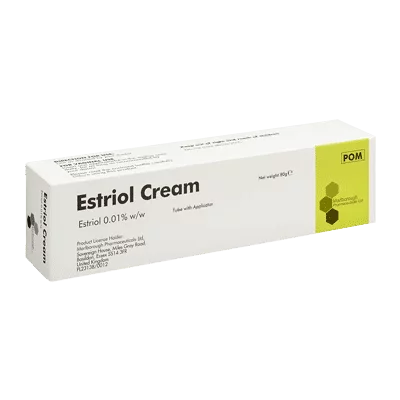
Estriol is a weak oestrogen medicine used for local menopausal symptom relief in adult women. It is intended for peri- or post-menopausal women with vaginal dryness, irritation, or pain with sex. It helps by restoring estrogen activity in vaginal tissue and improving lubrication and elasticity.
Estriol is a weak oestrogen hormone used mainly for menopausal hormone replacement therapy when low estrogen levels cause vaginal dryness, irritation, and pain with sex. It is intended for adult women in peri‑ or post‑menopause who want local symptom relief. Estriol supports the vaginal tissues by replenishing estrogen activity in the area, improving lubrication and elasticity.
Estriol is one of the body’s natural estrogens (oestrogen). In menopause, oestrogen levels fall, which can lead to vaginal thinning and dryness, urinary discomfort, and painful intercourse. Estriol is often described as a “weaker” estrogen than estradiol or estrone, and that weaker potency is a key reason it’s commonly selected for local vaginal treatment rather than full-body hormone replacement.
Estriol is the active substance. In vaginal cream form, it is usually combined with a non-medicinal cream base and excipients that help the medicine spread evenly and remain stable in the tube. The exact inactive ingredients can vary by manufacturer, but the formulation is designed for local vaginal use.
Estriol cream is used for the treatment of vaginal atrophy and related menopausal symptoms such as dryness, burning, itching, soreness, and pain during intercourse. It is also used to improve the condition of the vaginal lining when estrogen levels are low after menopause or other estrogen deficiency states.
Estriol is used for menopausal hormone replacement therapy when symptoms are driven by estrogen deficiency, with a focus on the genital and urinary area. For many women, the biggest win is relief from dryness and irritation that makes walking, cycling, or sex uncomfortable.
Typical benefits reported in practice include:
Estriol, estradiol, and estrone are all estrogens, yet they behave differently in the body. Estriol is commonly described as weaker at estrogen receptors and is frequently used for local vaginal therapy where symptom control is needed with minimal systemic effect.
| Estrogen | Relative potency (practical) | Typical clinical use |
|---|---|---|
| Estriol | Lower | Local vaginal oestrogen for dryness/atrophy symptoms |
| Estradiol | Higher | Systemic HRT and also local vaginal options, depending on product |
| Estrone | Intermediate | More a circulating/storage form; less used as a primary therapy |
The trade-off is straightforward: a weaker estrogen can be enough for local symptoms, but it may not address full-body menopausal symptoms the way systemic therapy can. For women whose main complaint is vaginal discomfort, Estriol is often a rational first step before moving to broader menopausal hormone replacement therapy.
Estriol is not for you if any of the following applies, because the risk can outweigh the benefit:
Estriol should be avoided if you have a history of estrogen-sensitive cancer, unexplained vaginal bleeding, a clotting problem, severe liver disease, or if you are pregnant or breastfeeding. It also needs extra caution if you have had a deep vein thrombosis or pulmonary embolism, because even local estrogen can still be absorbed.
If you notice heavy bleeding, one-sided leg swelling, chest pain, sudden shortness of breath, yellowing of the skin or eyes, or severe abdominal pain, get medical help promptly.
Estriol can cause side effects, and they are usually dose-related. The most common ones seen with estrogen therapy in general include breast tenderness/enlargement, headaches, nausea or digestive upset, and fluid retention with swelling. Irregular vaginal bleeding or discharge can occur, especially early in treatment or if dosing is higher than needed.
A key risk concept is endometrial stimulation. Even local estrogen can be absorbed to some degree, and in a person with a uterus, persistent unopposed estrogen effect may increase endometrial thickening risk. Clinicians handle this by using the lowest effective dose, reassessing symptoms, and investigating unexplained bleeding rather than ignoring it.
Estriol is not a painkiller. It treats tissue changes. Relief is often gradual and usually follows tissue recovery rather than immediate numbing.
Serious symptoms that should trigger urgent medical assessment include heavy vaginal bleeding, signs of a blood clot (new unilateral leg swelling/pain, chest pain, sudden shortness of breath), or jaundice and severe abdominal pain. These are uncommon, but they are the safety line clinicians draw with any estrogen exposure.
Most problems I see with Estriol aren’t “allergy” problems; they’re technique and expectations problems.
In clinical practice, doctors usually frame Estriol as a targeted, tissue-restoring option for genitourinary syndrome of menopause: treat the cause (low estrogen effect on the vaginal wall), then maintain the improvement with the least exposure that still controls symptoms. They also screen for “don’t-miss” diagnoses first, because persistent vulvovaginal symptoms can overlap with infections, dermatologic conditions, or unexplained bleeding.
A common prescribing pattern is an initial “loading” phase (more frequent use) followed by maintenance (less frequent use). Clinicians also ask about clotting history, estrogen-sensitive cancers, and liver disease before starting, even with local vaginal oestrogen, because safety decisions come from the patient’s whole risk profile, not only from the product strength.
Many gynaecologists also remind patients that comfort can improve earlier than tissue resilience; you may feel less dry by week two or three, while fragility and micro-tears can keep improving over a longer stretch.
Local vaginal oestrogen can improve the health of tissues around the urethra and bladder neck, so some women notice fewer urinary symptoms when dryness and irritation improve. It does not treat a urine infection, so fever, flank pain, or smelly cloudy urine still need medical assessment. Public health guidance on menopause symptom care recognises the genitourinary link and supports local oestrogen use when appropriate. WHO menopause resources keep this as a common option for GSM-type symptoms. [4]
Many patients feel a change within 2–4 weeks, with continued improvement over the next 6–12 weeks as the epithelium becomes more resilient. Pain with sex often lags behind dryness because micro-tears and fear-avoidance take time to settle. If symptoms are unchanged after a full trial at the prescribed schedule, clinicians often re-check the diagnosis and technique rather than just increasing the amount. This timeframe aligns with patient information used across NHS menopause care pathways. [5]
Estriol is not a weight-loss or weight-gain drug. Some users report fluid retention or swelling, which can look like sudden weight gain on the scale, and it usually tracks with dose intensity. Lifestyle factors during menopause often drive body composition changes more than local estrogen does. If swelling is pronounced, one-sided, or associated with breathlessness, that pattern needs urgent assessment rather than dose tinkering.
A prior deep vein thrombosis or pulmonary embolism is a major caution for any estrogen exposure, even if local. The clinical decision depends on the clot history, current anticoagulation, other risk factors, and whether non-hormonal approaches can control symptoms. MOHAP-aligned practice in the UAE prioritises individual risk assessment for hormone therapies in people with thromboembolic history.
Some women use local vaginal oestrogen alongside systemic menopausal hormone replacement therapy when vaginal symptoms persist. The key is avoiding unnecessary duplication and making sure bleeding changes are evaluated. Clinicians also consider whether a progestogen is already part of your systemic regimen if you have a uterus. EMA-reviewed product information for estriol and other estrogens supports individualised combination use under medical supervision.
Seek urgent care for chest pain, sudden shortness of breath, coughing blood, or painful swelling in one leg, since these can signal a clot. Heavy vaginal bleeding, persistent bleeding after being stable on therapy, or yellowing of the skin/eyes also needs prompt evaluation. These warnings mirror estrogen-class safety advice used across major regulators and public health services. NHS safety advice for vaginal oestrogen includes clear red-flag symptoms and when to seek urgent help.
Your order will be securely packed and shipped within 24 hours. This is exactly what your package will look like (images of an actual item sent). It has the size and look of a regular private letter (24x11x0.7 cm) and its contents cannot be seen.