
Verified
Heartburn settled by day three, and by week two I stopped waking up coughing. I still avoided late shawarma meals because those brought symptoms back.
19 May 2026

Dexilant is a prescription proton pump inhibitor containing dexlansoprazole. It is for people with GERD symptoms or erosive esophagitis who need stronger, longer acid control. It works by suppressing stomach acid production to reduce irritation and support healing.
Dexilant is a prescription proton pump inhibitor containing dexlansoprazole. It is used by people with frequent GERD heartburn or erosive esophagitis, including those who still get breakthrough symptoms on other acid reducers. It works by suppressing stomach acid production to reduce irritation and help the oesophagus heal.
The active ingredient is dexlansoprazole, the R-enantiomer of lansoprazole. It belongs to the proton pump inhibitor (PPI) class, a group of benzimidazole acid reducers that block the stomach's H+/K+ ATPase pump.
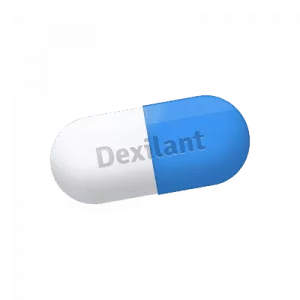
Dexilant capsules come in two strengths: 30 mg and 60 mg. The capsule uses a dual delayed-release design, with two types of granules that dissolve at different points in the gut. This releases the drug in two waves, which extends acid control across more of the day than a single-release PPI.
Dexilant is taken by mouth as a capsule. Your prescriber chooses the strength and duration based on the diagnosis (symptomatic GERD vs erosive esophagitis), symptom severity, and response over time.
Common real-world directions pharmacists see include:
Some details that matter in daily use:
Typical uses include:
A practical expectation helps: Dexilant can reduce burning and regurgitation. It does not stop non-acid reflux, overeating-related discomfort, or bile reflux. It targets acid. [1]
Dexilant sits in the same therapeutic family as other PPIs, and it is often compared with both standard PPIs and H2 blockers. The choice depends on symptom timing, the need for oesophageal healing, prior response, and tolerance.
| Medicine | Class | Key practical point |
|---|---|---|
| Dexilant (dexlansoprazole) | PPI | Dual delayed-release pattern can extend coverage across the day |
| Lansoprazole | PPI | Standard delayed-release; timing with meals may matter more for some people |
| Rabeprazole (AcipHex) | PPI | Often rapid symptom improvement; still a once-daily PPI for many |
| Pantoprazole (Protonix) | PPI | Commonly used in hospital and outpatient reflux care; interaction profile often considered “clean” |
| Nizatidine (Axid) | H2 blocker | Useful for milder symptoms or night-time add-on in selected cases |
A balanced takeaway: Dexilant can be a strong option for persistent GERD and for healing erosive disease. Many patients do just as well on another PPI, and some do better stepping down once healing is achieved.
This may not be suitable if you have ever had an allergic reaction to Dexilant or any other PPI. Get medical help urgently if you develop swelling of the face or lips, wheezing, or widespread hives after taking it. Speak with your clinician before use if you have severe liver disease, a history of low magnesium, osteoporosis or fragility fractures, or frequent gastrointestinal infections.
Most people tolerate Dexilant well, and side effects—when they happen—tend to be mild and self-limited in the first days to weeks. The effects reported most often with PPIs include:
Less common but clinically relevant effects can include:
Serious reactions are uncommon, yet they matter because they change what you do next. Seek urgent medical care if there are signs of an allergic reaction (swelling of face/lips, wheeze, widespread hives), severe watery diarrhoea with fever, or chest pain that is new and severe.
Longer courses of PPIs, including Dexilant, are linked with class warnings such as lower magnesium, vitamin B12 deficiency, kidney inflammation, and higher risk of certain infections like C. difficile in susceptible people. EMA safety communications for PPIs highlight that the benefit-risk balance remains positive when there is a clear indication, and they encourage using the lowest effective dose for the shortest necessary duration. [3]
Mistakes are predictable with PPIs, and they are fixable.
In clinic, gastroenterologists often reach for Dexilant when a patient reports breakthrough heartburn despite taking a PPI correctly, or when night symptoms disrupt sleep. Another frequent scenario is a patient with healed erosive esophagitis who relapses quickly when stepping down therapy; a longer-acting pattern can help maintain control while the oesophagus recovers.
Some people feel less burning within the first few doses, while full control can take several days of consistent use, since acid pumps need repeated suppression across meal cycles. FDA label information for dexlansoprazole describes once-daily use for acid-related disease, and clinicians often align expectations with that schedule. Symptom relief can come before the oesophagus fully heals, so feeling better is not the same as “problem solved.” Guidance from EMA documents on PPIs supports continued use for the prescribed course when treating erosive disease. Statement aligned with standard PPI class information. [1]
Dexilant can be taken with or without food, which many patients find easier than meal-timed PPIs. Consistency still matters, because taking it at random times makes it hard to judge whether symptoms are truly controlled. Clinicians often suggest choosing a routine time you can stick to for at least 1–2 weeks. NICE guidance on reflux management supports consistent use when treatment is being assessed. Information consistent with WHO drug-class resources.
Longer courses may be needed for erosive esophagitis maintenance or difficult GERD, yet long-term PPI therapy is usually reviewed periodically. The review focuses on whether symptoms return off therapy, whether the diagnosis was confirmed, and whether a lower dose or intermittent strategy could work. EMA safety communications for PPIs include class cautions such as low magnesium, infection risk, and fracture risk in susceptible patients, which is why follow-up plans matter.
Pregnancy reflux is common, and clinicians usually start with non-drug measures and antacids before stepping up therapy. When a PPI is needed, the decision is individual and based on symptom severity and prior response; the prescriber weighs maternal benefit against fetal risk. FDA pregnancy labeling for PPIs is product-specific, so clinicians review the label and the patient’s history before choosing therapy. MOHAP-aligned clinical practice emphasises documenting all medicines and supplements during pregnancy so avoidable exposure and interactions are reduced.
Alcohol can worsen reflux by relaxing the lower oesophageal sphincter and irritating the lining, so it can break through even strong acid suppression. People often report that spirits and wine trigger more than small amounts of beer, yet the pattern is personal and dose-dependent. If heartburn persists despite Dexilant, alcohol timing and quantity is one of the first lifestyle factors clinicians adjust. Mechanism is consistent with GERD education used in EMA- and WHO-aligned patient materials.
Persistent symptoms can mean incorrect diagnosis, non-acid reflux, poor adherence, or a trigger that overwhelms acid suppression (late meals, large portions, NSAIDs). A clinician may reassess timing, confirm diagnosis, check for complications, or consider a different strategy such as split dosing or investigating other causes. WHO guidance on rational medicine use supports reassessment when response is incomplete rather than layering multiple drugs without a plan.
Your order will be securely packed and shipped within 24 hours. This is exactly what your package will look like (images of an actual item sent). It has the size and look of a regular private letter (24x11x0.7 cm) and its contents cannot be seen.
