Verified
My morning stiffness eased after about six weeks, and by month three my hands felt less swollen. Diarrhea was annoying early on, but it settled when I stopped taking it on an empty stomach.
23 Nov 2024

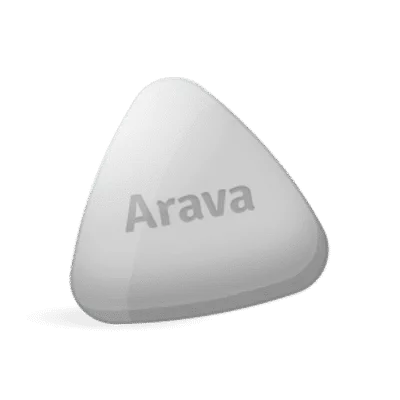
Arava is an oral DMARD containing leflunomide for adults with active rheumatoid arthritis or psoriatic arthritis. It is used to reduce immune-driven joint inflammation and help slow ongoing joint damage.
Arava is a disease-modifying antirheumatic drug (DMARD) used for inflammatory arthritis, mainly rheumatoid arthritis and psoriatic arthritis in adults. The generic name of Arava is leflunomide, and its goal is to control the immune-driven process behind swelling, pain, and progressive joint damage rather than only masking symptoms.
Arava is usually considered when joints are actively inflamed and morning stiffness, swelling, and fatigue are affecting daily function. It can be used as a long-term controller medicine, so expectations should be realistic: this is a “slow-burn” therapy, not a fast painkiller [1].
Arava, with the active ingredient leflunomide, is an oral DMARD used to treat active rheumatoid arthritis and psoriatic arthritis in adults.
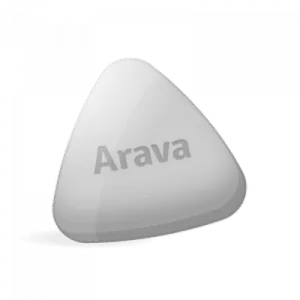
Arava is supplied as tablets. On this page, Arava is available in 10 mg and 20 mg tablet strengths, which are the usual maintenance-dose strengths used in rheumatoid arthritis and psoriatic arthritis care.
Film coating is used to make tablets easier to swallow and to reduce taste irritation. Tablets are intended to be swallowed whole with water.
Arava is taken by mouth once daily. That schedule is simple. A common adult regimen begins with a loading dose of 100 mg once daily for the first 3 days, then transitions to a maintenance dose of 20 mg once daily. The maintenance dose can be reduced to 10 mg once daily if side effects limit tolerance.
Key administration points that matter in real life:
A missed dose is usually handled by taking the next scheduled dose at the usual time rather than doubling up, since doubling increases side-effect risk without improving control.
Arava is indicated for the treatment of active rheumatoid arthritis in adults to reduce signs and symptoms, improve physical function, and help slow progression of joint damage. It is used as a disease-modifying antirheumatic medicine when ongoing control of autoimmune inflammation is needed.
Several treatment approaches exist for rheumatoid arthritis and psoriatic arthritis, and Arava is one option within DMARD therapy. Choice depends on disease severity, liver risk, pregnancy plans, prior response, and whether extra-articular symptoms are present.
| Option type | How it compares to Arava | Typical drawbacks |
|---|---|---|
| Conventional DMARDs (example: methotrexate) | Often a first-line anchor DMARD; can be used alone or in specialist combinations | GI upset, mouth ulcers, liver monitoring needs, teratogenic risk |
| Biologic or targeted synthetic DMARDs (examples: TNF inhibitors, JAK inhibitors) | Faster control for some patients with aggressive disease or DMARD failure | Higher infection risk, screening requirements (TB/hepatitis), cost and access factors |
Arava’s place is often as a once-daily oral DMARD when immune modulation is needed and injection therapy is not preferred. Its limitation is liver and pregnancy risk management, and the long persistence of its active metabolite means side effects may not resolve instantly after stopping.
Most people tolerate Arava with manageable side effects, but the adverse effects are real and can be limiting. The common group is gastrointestinal and skin-related: diarrhea, nausea, reduced appetite, rash, itchiness, and headache. Hair loss or hair thinning is also reported; it is often diffuse (shedding) rather than patchy bald spots, and many patients see it stabilize after the first months.
Blood pressure can increase during treatment, so new headaches, flushing, or elevated home readings should be taken seriously. Lab changes can include lower white blood cells or platelets, and anemia can occur. Liver effects range from mild ALT and AST elevations to rare severe liver injury; this is one reason scheduled liver-function testing is standard practice when leflunomide is prescribed.
Serious warnings to act on quickly include:
Pregnancy is a major warning: leflunomide is teratogenic, and pregnancy planning needs a formal discussion with the treating clinician, including drug elimination procedures when indicated. The WHO’s medication safety resources continue to highlight pregnancy risk management as a core principle for teratogenic medicines used long term [4].
People make predictable mistakes with Arava, and they often lead to avoidable side effects or disappointing results.
One more nuance I see often: patients focus only on joint pain scores and miss functional markers such as grip strength in the morning or time-to-walk comfortably, which are often the first domains to improve.
In rheumatology clinics, Arava is often framed as a “controller” DMARD: it aims to reduce flare frequency, morning stiffness, and swelling, while also slowing joint damage progression. Clinicians like that it is once daily and does not require injections, which improves adherence for many patients who struggle with complex schedules.
Doctors also set boundaries early: Arava is not a good fit if liver risk is high, if pregnancy is planned, or if there is a history of severe recurrent infections. A pattern clinicians recognize is that patients feel better, stop the medicine for a few weeks, and then flare hard; with immune-modulating therapy, stop–start use tends to destabilize disease control and makes side effects harder to interpret over time.
Another practical point doctors raise is blood pressure: even people with previously normal readings can drift upward on leflunomide, so hypertension screening becomes part of routine follow-up. This aligns with safety information assessed by regulators such as the EMA for leflunomide-containing products [3].
Your order will be securely packed and shipped within 24 hours. This is exactly what your package will look like (images of an actual item sent). It has the size and look of a regular private letter (24x11x0.7 cm) and its contents cannot be seen.