Verified
I used Triamcinolone tablets for an allergic flare with swelling. By the second day the itching and redness eased, but I felt hungry and couldn’t sleep well on the first two nights.
27 Sep 2025

Triamcinolone is a potent corticosteroid medicine used to reduce inflammation. It is for adults and, in some cases, children with allergic or inflammatory symptoms needing steroid control. Its key benefit is glucocorticoid activity that dampens inflammatory signaling and immune overreaction.
Triamcinolone is a synthetic corticosteroid with strong glucocorticoid activity, meaning it acts like the body’s cortisol to calm inflammation. In plain terms, it reduces the chemical “alarm signals” that drive redness, heat, swelling, and itching during flares. Triamcinolone acetonide is a commonly used ester form in clinical practice because it delivers anti-inflammatory action in a stable way for different routes of treatment.
Triamcinolone acetonide reduces inflammation, reduces redness, and reduces swelling.
Triamcinolone tablets contain the active ingredient triamcinolone (a synthetic glucocorticoid). In addition, they include inactive excipients that form the tablet core and coating, such as fillers, binders, disintegrants, lubricants, and coating agents; the exact excipients depend on the manufacturer.
Triamcinolone is used across multiple routes in medicine, and the route matters because it changes how much reaches the bloodstream. You may see Triamcinolone described in references as Triamcinolone Aerosol, Cream, Lotion, Ointment, or as a Triamcinolone Injection, and there are also mouth-targeted options such as a steroid-based oral paste.
Common clinical applications by form include:
One practical nuance: topical steroids are chosen by potency and body area. The same steroid can be “too strong” for eyelids yet “too weak” for thick plaques on palms.
Triamcinolone Injection is used as a local corticosteroid injection when clinicians aim for high anti-inflammatory action at a specific site. The benefit is targeted relief: less swelling, less pain, and improved movement when inflammation is driving symptoms.
In orthopaedic and sports-medicine clinics, injections are often chosen when:
A drawback is that injections are technique-sensitive. Wrong placement reduces benefit, and repeated injections into the same site may increase risks like local tissue thinning.
One more nuance patients remember later: steroid injections can temporarily raise blood glucose. If you live with diabetes, you may need a plan for monitoring in the days after the procedure.
Triamcinolone dosing is individualized by indication, route, severity, age, and comorbidities. Adult Dose and Child Dose differ, and some clinicians consider Renal Dose adjustments indirectly by watching fluid retention, blood pressure, and overall steroid burden rather than “kidney clearance” alone, since steroids have complex systemic effects.
For the pills (tablets) sold on this page, typical administration principles are:
For other routes referenced in clinical care:
One sentence I repeat a lot: never stop long courses suddenly. Steroids can suppress the hypothalamic–pituitary–adrenal (HPA) axis, so abrupt stopping after sustained use can trigger withdrawal symptoms and adrenal insufficiency risk [2].
Triamcinolone is prescribed when inflammation is the main problem and a corticosteroid is appropriate for that location. In day-to-day practice, the most common requests are for itch, redness, swelling, and pain from inflammatory flares that do not settle with moisturizers or avoidance alone.
Typical indications discussed for Triamcinolone across care settings include:
Triamcinolone is powerful. It can also be overused. Duration matters.
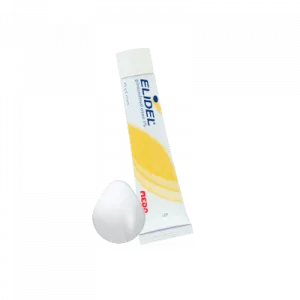
Kenacort 0.1% Oral Paste is a steroid-based oral paste used for short-term control of painful inflammation in the mouth. Because it sits on the lesion, it acts locally and can make eating and speaking less uncomfortable during a flare.
Kenacort 0.1% Oral Paste treats mouth ulcers, treats canker sores, and treats aphthous stomatitis. It also treats painful oral inflammation, treats burning or irritated mouth lining, and treats sore spots caused by braces or dentures.
A small real-world tip from pharmacy counselling: the paste adheres best on a dry surface. Patting the area gently dry (with clean gauze) before applying improves contact time, which is the whole point of this dosage form.
Triamcinolone sits in the mid-to-higher potency range depending on formulation and route, and clinicians pick it based on site, severity, and required duration. Hydrocortisone is often used when the aim is the mildest steroid effect, while betamethasone is typically selected when higher potency is needed on thicker skin or severe inflammation. Mometasone is commonly chosen for once-daily regimens in some inflammatory dermatoses.
| Corticosteroid | Typical potency level | Common clinical positioning |
|---|---|---|
| Triamcinolone | Medium (topical, formulation-dependent) | Broad use for inflammatory dermatoses; systemic use for stronger anti-inflammatory effect when prescribed |
| Hydrocortisone | Low | Sensitive areas and mild flares, shorter bursts |
| Betamethasone / Mometasone | Medium-to-high (product-dependent) | More resistant inflammation, thicker plaques, or when stronger suppression is needed |
The trade-off is predictable: as potency and exposure rise, the chance of side effects rises too. EMA safety communications around corticosteroids keep returning to the same principle—use the minimum strength and duration that controls the disease [4].
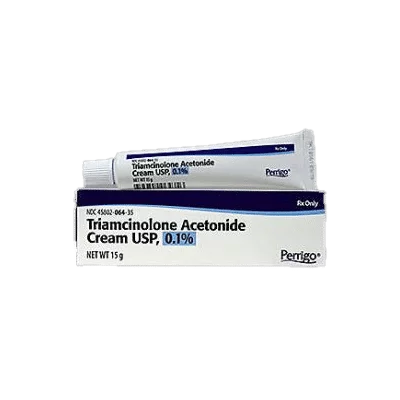
People often look for Triamcinolone Acetonide 0.1% when they have been prescribed a topical steroid of that concentration for an inflammatory skin flare. In the UAE, you may encounter references to Triamcinolone Acetonide 0.1% Topical and pack descriptions such as Triamcinolone Acetonide 0.1% Topical Cream Tube 15g when clinicians discuss treatment plans.
Do not use this medicine if you are allergic to triamcinolone, if you have a body-wide fungal infection, or if you are receiving high-dose steroid treatment around the time of live vaccinations. Tell your clinician if you have diabetes, high blood pressure, glaucoma or cataract risk, osteoporosis risk, ulcer history, or mood problems, because steroid exposure can worsen these and may require closer monitoring.
Side effects depend on route, dose, and duration. Topical use tends to cause local skin effects, while oral tablets and repeated injections can produce more systemic steroid effects.
Commonly reported side effects include headache and dizziness, nausea or abdominal discomfort, weakness or muscle pain, and skin reactions like rash, itching, or dryness.
Topical and local effects (more likely with stronger steroids, longer duration, occlusion, or thin skin areas):
Systemic effects (more likely with oral steroids, higher doses, long courses, or extensive topical use):
Seek urgent care for an unusual or allergic reaction to triamcinolone such as facial swelling, wheeze, or severe widespread rash. These are uncommon, but they matter.
A human detail many people only discover late: steroids can unmask fungal rashes by calming redness while the fungus keeps growing, creating a deceptively “better-looking” but spreading rash. If a rash becomes ring-like, scaly at the edge, or spreads despite steroid use, it needs reassessment.
Small errors with steroids can undo the benefit. These are patterns pharmacists see repeatedly:
One more down-to-earth issue: if you use tablets and feel stomach burn, people often stop food and take it on an empty stomach to “absorb better.” That tends to worsen irritation, not improve effect.
In clinical practice, doctors often describe Triamcinolone as a “high-impact” anti-inflammatory tool: it can change a flare quickly, yet the wrong duration creates new problems.
A practical clinic nuance: mood and sleep effects are real. Some patients feel “wired” or irritable on oral steroids. Dosing earlier in the day is often chosen to reduce insomnia when medically appropriate.
Your order will be securely packed and shipped within 24 hours. This is exactly what your package will look like (images of an actual item sent). It has the size and look of a regular private letter (24x11x0.7 cm) and its contents cannot be seen.