Verified
I used Toradol after a dental procedure. Pain dropped within about an hour and I didn’t feel groggy. I did get mild heartburn, so I took it after meals and that helped.
26 Nov 2024

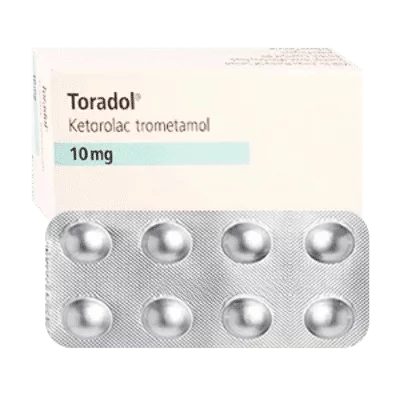
Toradol is a prescription nonsteroidal anti-inflammatory drug containing ketorolac. It is for adults who need short-term relief of moderate to severe acute pain. It helps by inhibiting COX enzymes to reduce prostaglandins that drive pain and inflammation.
Toradol is an NSAID, meaning it reduces pain and inflammation by acting on the same chemical pathway your body uses to generate “pain-and-swelling signals.” Ketorolac (also written as Ketorolac trometamol) is the medicine inside Toradol, and it is considered one of the more potent NSAIDs for acute pain when used for a short duration.
Toradol 30mg/Ml Injection is used for short-term (under 5 days) management of moderately severe acute pain, often when rapid relief is needed in clinical settings. Ketorolac is chemically related to indomethacin, another NSAID, which is one reason clinicians expect strong analgesic activity from it.
The key mechanism is inhibition of both cyclooxygenase-1 (COX-1) and cyclooxygenase-2 (COX-2). This leads to inhibition of prostaglandin synthesis. Prostaglandins are local mediators that amplify pain sensitivity, inflammation, and fever, so lowering them usually reduces pain intensity and swelling. [1]
Toradol contains Ketorolac, also seen as Ketorolac tromethamine or Ketorolac trometamol in medical references. These names point to the salt form used to make the drug stable and absorbable; clinically, they deliver ketorolac’s NSAID effect.
Ketorolac tromethamine is a racemic mixture of [-]S- and [+]R-enantiomeric forms. The S-form has analgesic activity, which helps explain why ketorolac can feel “strong” compared with many other NSAIDs at typical doses. The same non-selective COX inhibition that brings analgesia also explains the main safety limits: stomach bleeding risk and kidney stress increase as exposure rises. [2]
A practical way to think about it: ketorolac is built for short, intense pain windows, not for “everyday” recurring pain control.
Toradol is used for short-term acute pain only, with a strict maximum duration that is typically under 5 days. That limit is not arbitrary; it is tied to the steep rise in serious NSAID harms when ketorolac is continued longer than intended.
Key administration points patients find useful:
Both injectable ketorolac and oral ketorolac tablets treat the same type of pain, but the “why” for each form differs. Injections are used when speed matters or when oral intake is not possible, while pills are used when the person can swallow and the pain is stable enough for an oral plan.
| Feature | Injection | Tablets (pills) |
|---|---|---|
| Best use-case | Rapid control of severe acute pain | Step-down therapy or stable acute pain |
| Onset | Faster | Slower than injection |
Clinicians often transition from an injection to oral 10mg Toradol to complete the short course, since the goal is pain control with the smallest effective exposure time. This step-down approach also reduces repeated injections and keeps treatment aligned with the under‑5‑days safety window.
Toradol, containing the active ingredient Ketorolac, is a potent nonsteroidal anti-inflammatory drug (NSAID) used for the short-term management of moderate to severe acute pain. It is used in adults who need strong, non-opioid pain relief for a brief period, such as after procedures or for renal colic.
Toradol is a strong NSAID, so patient selection matters as much as dose.
Extra caution is needed in people with hypertension, heart failure, liver disease, older adults, and anyone using medicines that alter clotting.
Toradol can cause side effects typical of NSAIDs, and ketorolac has a narrower margin for prolonged use than milder options. The most frequent issues are gastrointestinal upset (nausea, indigestion, heartburn), headache, dizziness, and sleepiness. Swelling (edema) and blood pressure rise can occur, mainly in people already prone to fluid retention.
Serious risks matter with ketorolac:
Risk climbs with longer use, older age, prior ulcer history, heavy alcohol intake, dehydration, chronic kidney disease, or combining it with other bleeding-risk medicines.
Three practical, “real life” side-effect nuances I see repeatedly:
These are the patterns that most often lead to side effects or poor pain control.
One more detail people miss: if a urine drug screen matters for work, tell the clinician ordering it that you used ketorolac, since medication history affects interpretation and follow-up steps.
Doctors tend to value Toradol for one clear scenario: acute pain where inflammation is a driver, and where avoiding opioids is desirable. In emergency and surgical care, ketorolac is often chosen when you need strong analgesia without sedation and without opioid-related constipation and respiratory depression.
At the same time, prescribers are strict about the “short course” rule. When patients tell me they want to keep it going because it worked, the usual medical response is to switch to a safer longer-term plan (or to investigate why pain is persisting). This is where ketorolac differs from many OTC pain relievers: it is less forgiving when used beyond the intended window.
A practical prescribing nuance: clinicians often avoid ketorolac in dehydrated patients (post-op nausea, renal colic with vomiting) until fluids and kidney function are assessed, because NSAIDs can reduce renal blood flow when the kidneys are already under stress.
With Toradol tablets, many people feel meaningful relief within 30–60 minutes, with peak effect often a bit later depending on stomach contents and pain severity. Injection forms act faster, which is why hospitals use them for immediate postoperative pain control. EMA safety documents for ketorolac emphasize short-course use because risk rises with exposure time, not because the onset is slow.
Ketorolac is designed for short-term treatment, and extending beyond a few days sharply increases the chance of GI bleeding and kidney injury. This is why clinicians plan a step-down strategy or a switch if pain persists. MOHAP-aligned practice in the UAE follows the global NSAID safety framing: shortest duration that achieves control.
No. Toradol (ketorolac) is an NSAID, so it does not act on opioid receptors and does not cause opioid-type respiratory depression. It can still cause serious harm if misused, mainly through GI bleeding and renal effects. WHO medicines guidance treats NSAIDs and opioids as separate analgesic categories with different risk profiles and monitoring needs.
Combining Toradol with other NSAIDs (including ibuprofen, naproxen, and pain-dose aspirin) raises the risk of ulcers and bleeding without reliably improving pain control. If a clinician has you on low-dose aspirin for cardiovascular prevention, they may still avoid ketorolac or shorten the course while watching for bleeding. EMA materials on NSAIDs highlight additive GI risk with NSAID combinations.
Black stools, vomiting blood or coffee-ground material, fainting, sudden severe abdominal pain, facial swelling, wheeze, or chest pain are emergency patterns. Reduced urination with swelling can indicate kidney stress, especially if you were dehydrated. These are not “expected” NSAID side effects and should be treated as urgent signals. MOHAP patient-safety messaging focuses on early recognition of serious adverse reactions for higher-risk medicines.
People with chronic kidney disease are at higher risk of kidney function decline on ketorolac, and those with hypertension can see blood pressure rise or fluid retention. Clinicians often choose different analgesics or use the briefest possible ketorolac course with close monitoring when benefits outweigh risks. WHO medication-safety guidance flags NSAIDs as a common contributor to preventable renal adverse events in susceptible patients.
Your order will be securely packed and shipped within 24 hours. This is exactly what your package will look like (images of an actual item sent). It has the size and look of a regular private letter (24x11x0.7 cm) and its contents cannot be seen.