Verified
I used it twice daily as my doctor planned. The first few days I felt a slight hand tremor after the morning dose, then it settled. By week three I stopped waking up coughing at night.
18 Nov 2024

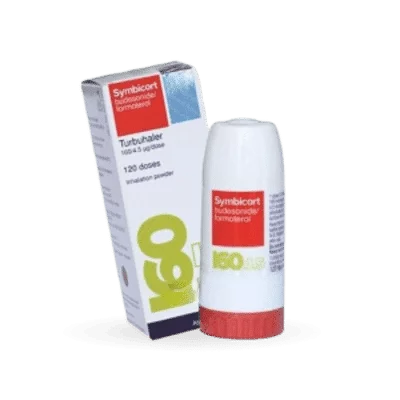
Symbicort is a combination inhaler containing budesonide and formoterol. It is for adults and for children aged 6 years and older whose clinician has chosen a combined controller inhaler. It reduces airway inflammation and relaxes airway muscles to help keep breathing steadier over time.
Symbicort is a brand-name turbuhaler that combines an inhaled corticosteroid with a bronchodilator for long-term control of obstructive airway disease. It is used as a maintenance treatment in asthma and chronic obstructive pulmonary disease (COPD), aiming to reduce symptoms such as wheeze, chest tightness, cough, and breathlessness over weeks of regular use. In practice, it is commonly chosen when symptoms persist on a single preventer inhaler, or when COPD needs an inhaled corticosteroid plus long-acting bronchodilator strategy.
Symbicort contains two active ingredients that target different parts of the airway problem: inflammation and bronchospasm. Budesonide calms the swollen, irritated lining of the airways, while formoterol opens the airway tubes by relaxing smooth muscle.
Budesonide is an inhaled corticosteroid (ICS). It reduces airway inflammation by lowering inflammatory signalling and swelling in the bronchial lining, which decreases mucus and makes the airways less “twitchy” to triggers like viral colds, dust, or smoke.
Formoterol is a bronchodilator and a selective beta2-adrenergic agonist (a LABA). In many patients it starts to ease tightness within minutes, then continues to keep the airway muscles relaxed for many hours. The form used in combination products is often described chemically as formoterol fumarate (including budesonide/formoterol fumarate dihydrate in some regulatory documents). [2]
Symbicort is supplied as an inhalation powder device (Symbicort Turbuhaler). The strength is usually written as two numbers: the budesonide amount and the formoterol amount delivered per dose. Your clinician sets the dose based on asthma severity, COPD symptoms, prior inhaler use, and how often you still need a reliever.
Symbicort turbuhalers are commonly manufactured with fixed dose counts (often 60 or 120 doses depending on the device). For many people, a simple way to think about it is: dose count affects how long one device lasts, while strength and daily frequency affect your anti-inflammatory and bronchodilator exposure.
Start with good technique from day one; most “Symbicort didn’t work” stories I hear trace back to inhalation speed, device handling, or skipped maintenance doses. A turbuhaler is breath‑actuated, so the way you inhale matters.
Do not swallow the rinse water if you are prone to oral thrush.
It is used as a maintenance treatment in asthma and chronic obstructive pulmonary disease (COPD), aiming to reduce symptoms such as wheeze, chest tightness, cough, and breathlessness over weeks of regular use.
Symbicort sits in the “ICS/LABA” category: inhaled corticosteroid plus long-acting beta-agonist bronchodilator (LABA). Other combination inhalers use different ingredient pairs, and the best choice depends on symptom pattern, exacerbation history, inhaler technique, and tolerance.
| Combination type | Active ingredients | Typical place in therapy |
|---|---|---|
| ICS/LABA (this product) | budesonide + formoterol | Asthma controller; COPD maintenance in selected patients |
| ICS/LABA | fluticasone + salmeterol | Alternative controller strategy when a different steroid/LABA profile suits better |
| LAMA (no steroid) | long-acting muscarinic antagonist | COPD-focused bronchodilation when steroid is not indicated or not tolerated |
Doctors may choose budesonide/formoterol when they want an ICS/LABA with a LABA that can feel faster in onset for many patients, while still functioning as a maintenance medicine. The trade-off is that beta2 effects (tremor, palpitations) can be more noticeable in sensitive people, and any ICS-containing inhaler raises thrush risk when mouth rinsing is skipped. The WHO’s 2026 asthma guidance keeps inhaled corticosteroids central to preventing exacerbations, which is the core rationale for choosing an ICS/LABA combination when symptoms persist. [5]
This medicine needs clinician supervision, especially if your symptoms change or you need frequent reliever doses. Tell your clinician before using it if you have heart rhythm problems or ischaemic heart disease, uncontrolled diabetes, thyroid disease, glaucoma, osteoporosis risk, or a history of severe infections like tuberculosis. Seek urgent medical assessment if you get worsening wheeze right after use or develop new chest pain.
Most side effects are local (mouth and throat) or related to beta2 stimulation. Throat irritation, hoarseness, and cough after inhalation are common. Oral candidiasis (thrush) can occur, and rinsing after each use lowers risk.
Some people feel tremor, palpitations, or headache from formoterol, especially in the first week or after dose increases. A fast heartbeat can be unsettling but often settles as your body adjusts. If you develop worsening wheeze right after using Symbicort, this can be paradoxical bronchospasm (an adverse event) and needs urgent medical assessment and an alternative plan. [3]
One sentence that matters: new chest pain is never something to ignore.
A few patterns show up again and again in real-world use:
In clinic, the biggest “win” with Symbicort usually comes from reducing inflammation consistently, not from chasing symptoms. When patients move from intermittent use to a regular maintenance routine, night waking and early-morning tightness often improve first, then exercise tolerance follows.
A second observation is device fit: some people do better with a turbuhaler because it is breath‑actuated, while others struggle to inhale forcefully enough during flare-ups. If a patient has repeated “I taste powder but feel no change,” I suspect low inspiratory flow or incorrect loading, long before I blame the medicine.
Doctors also pay close attention to exacerbation patterns in COPD. If someone has frequent exacerbations plus eosinophilic inflammation, an ICS/LABA approach can be reasonable; if infections are frequent, clinicians may lean away from steroid exposure.
Many patients feel the bronchodilator effect of formoterol within minutes, while the anti-inflammatory benefit from budesonide builds over days to weeks with consistent use. If symptoms are mainly inflammation-driven, the “real” improvement can take longer than the first few doses. EMA regulatory assessments describe the dual role of budesonide/formoterol in symptom control and exacerbation prevention, which maps to this two-speed effect.
Symbicort is used for both asthma and COPD, with the aim of controlling daily symptoms and reducing flare-ups. In asthma, it targets airway inflammation plus bronchoconstriction; in COPD, it is used as maintenance therapy in appropriate patients to reduce symptoms and exacerbations. WHO 2026 materials keep the focus on reducing exacerbation risk as a major treatment goal in chronic airway disease.
Symbicort is designed as a maintenance medicine, and many patients still need a separate fast-acting reliever for sudden symptoms. Some asthma plans use budesonide/formoterol as both maintenance and reliever in specific regimens, but that decision is clinician-led and depends on your asthma phenotype and prior exacerbations. MOHAP-aligned clinical practice in 2026 emphasises having a clear written action plan so patients do not over-rely on a controller inhaler during acute breathlessness.
Take your next dose at the usual scheduled time and do not double up to “catch up.” Doubling increases beta2 side effects like tremor and palpitations without reliably improving control that day. The steadiness of dosing matters more than perfect timing, so focus on getting back to your routine. EMA patient guidance documents for ICS/LABA inhalers reflect this general approach to missed doses.
Rinsing your mouth and spitting after each use is the single most practical step. Good inhalation technique also helps, because less powder deposits in the mouth when the dose reaches the lungs efficiently. If you use a high-dose steroid plan or have dentures, your thrush risk rises, so mouth care becomes even more important. Safety summaries for inhaled corticosteroids consistently flag oral candidiasis as a preventable adverse effect.
For suitable COPD patients, an ICS/LABA combination can reduce exacerbations, especially when there is an eosinophilic component or a history of repeated flare-ups. Clinicians balance this against pneumonia risk, which rises with inhaled corticosteroids in some COPD populations. In 2026, guideline-based COPD care continues to individualise ICS use rather than giving it to every patient with COPD symptoms.
Your order will be securely packed and shipped within 24 hours. This is exactly what your package will look like (images of an actual item sent). It has the size and look of a regular private letter (24x11x0.7 cm) and its contents cannot be seen.