Verified
Week 1 was annoying because it stung after washing my face. By week 4 the red bumps on my cheeks were clearly less, and by week 10 my skin looked calmer with fewer flare days.
20 May 2025

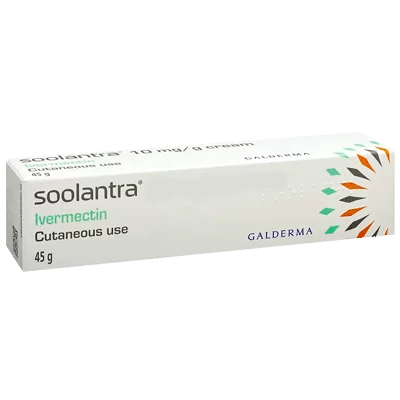
Soolantra is a prescription topical cream containing 1% ivermectin. It is for adults with inflammatory facial rosacea lesions such as red bumps and swelling. It helps by reducing skin inflammation and targeting Demodex mites that can worsen flares.
Soolantra (Ivermectin) 1% Cream is a prescription-strength topical medication used for the inflammatory lesions of rosacea, meaning the red, acne-like bumps and irritated patches that show up on the central face. Rosacea is not “just redness”; in many people it behaves like a chronic inflammatory condition with flare-ups triggered by heat, alcohol, spicy food, harsh skincare, or stress.
One small but real-life detail: many patients confuse rosacea bumps with acne and keep using strong acne scrubs or benzoyl peroxide daily, which can keep the skin barrier inflamed and make rosacea harder to calm down.
This dual mechanism matters in real life because rosacea inflammation can be driven by both immune overactivity in the skin and mite-related irritation. When mite load and inflammation drop together, many people see fewer bumps and less background irritation over time.
Soolantra is supplied as a topical cream in tubes for cutaneous use. The active ingredient is ivermectin at 10 mg/g, which corresponds to 1% cream.
You may see this referenced in different listing styles such as “Soolantra Cream” or “Soolantra 1% Cream”; clinically they refer to the same formulation strength. In real-world use, patient satisfaction tends to track with patience and routine: people who keep application steady for several weeks usually report more stable improvement than those who stop and restart with every flare.
Apply Soolantra once daily as a thin layer to affected facial areas.
A practical application method many dermatology clinics teach:
Wash with a mild, non-foaming cleanser and pat dry.
Use a small amount and spread it thinly across the rosacea-prone areas (forehead, cheeks, chin, nose) rather than “dotting” only on individual bumps.
Avoid eyes, eyelids, lips, and inside the nostrils.
Wash hands after applying, unless hands are the treated area.
Using too much: a thick layer increases irritation without improving efficacy.
Treating it like acne medication: adding strong acids (AHA/BHA), retinoids, or scrubs at the same time can overwhelm sensitive rosacea skin.
Stopping too soon: many improvements are clearer after several weeks, not after a few days.
Applying to broken or freshly shaved irritated skin: this often causes a burning reaction.
Ignoring triggers: heat, saunas, hot showers, and alcohol can keep flushing active even if bumps improve.
Soolantra is indicated for the topical treatment of inflammatory lesions of papulopustular rosacea in adults. A dermatologist typically prescribes it when:
It targets the inflammatory, lesion-forming side of rosacea. Persistent flushing and visible vessels are vascular features that often need separate measures. The cream is for facial skin only and is not intended for broken or severely damaged skin.
Rosacea treatment is chosen based on the dominant symptoms: bumps, flushing, visible vessels, or burning sensitivity.
| Option | What it targets | Typical place in therapy |
|---|---|---|
| Topical ivermectin (Soolantra) | Inflammatory lesions + Demodex + inflammation | Good fit when bumps/papules are prominent |
| Topical metronidazole | Inflammation | Often used for mild–moderate inflammatory rosacea |
| Azelaic acid (topical) | Inflammation + texture | Useful when roughness and bumps coexist, can sting at first |
A key advantage of Soolantra is that it is antibiotic-free, which is appealing for long-term inflammatory control. A limitation is patience: you usually need weeks of consistent use to judge results, and sensitive skin can feel worse before it feels better.
Do not use Soolantra if you have ever had an allergic reaction to ivermectin or this cream. Avoid using it on areas of skin that are open, badly irritated, or damaged, because this can worsen burning and reactions. If you are pregnant or breastfeeding, get individualized medical advice before using it. Stop and seek help if you develop facial swelling, hives, or rapidly worsening painful irritation.
Most side effects are local skin reactions where the cream is applied. The common ones patients describe are burning, stinging, dryness, itching, or mild worsening of redness early in treatment. These reactions often settle as the skin barrier calms down, especially when paired with a gentle moisturiser and a simplified skincare routine.
Less common effects can include contact dermatitis-type reactions (rash, swelling, increased tenderness), and rare systemic symptoms like dizziness or fever have been reported. If you develop facial swelling, hives, or rapid worsening with pain, treat it as a hypersensitivity reaction and stop using the cream.
One more practical caution: avoid getting the cream into the eye. Even a small amount can cause significant stinging, tearing, and redness, and patients often describe it as worse than a typical moisturiser mishap.
Dermatologists often describe Soolantra as a “slow-burn” rosacea medication: it can steadily reduce inflammatory lesions while you keep triggers and skincare irritation under control. In clinics, a common plan is to commit to a consistent daily application window, then reassess at around 8–12 weeks, because rosacea bumps tend to fluctuate week to week.
Doctors also watch for pattern changes. If redness improves but flushing stays severe, you may need additional rosacea strategies for vascular symptoms (for example, trigger management or other prescription options). If bumps improve but burning persists, clinicians often simplify skincare first before switching the medication, since barrier damage can mimic “drug failure.”
Yes, and doing so often improves tolerability. Apply Soolantra to clean, dry skin, allow a short settling time, then use moisturiser and sunscreen on top. Many rosacea patients do best with fragrance-free products and mineral sunscreen because chemical filters can sting. WHO skin health guidance also supports protecting inflamed skin from UV exposure, since sun is a frequent rosacea trigger.
First, check the routine around it rather than assuming the medication “doesn’t suit you.” Reduce other actives (acids, retinoids), avoid hot water, and apply to fully dry skin; these steps often cut stinging within a few days. If burning is intense, spreading, or comes with swelling or hives, stop and treat it as a possible hypersensitivity reaction. Clinicians commonly recommend a barrier-first approach for rosacea because irritation can perpetuate inflammation even when the right drug is used.
It tends to work better when used as a thin layer over the rosacea-prone facial zones, not as a spot treatment on single bumps. Rosacea inflammation is often “field-based,” meaning the surrounding skin is part of the process even if only a few lesions are visible. Applying only to isolated spots can leave untreated skin inflamed and prone to new lesions. This approach is consistent with how topical rosacea therapies are studied and prescribed in routine dermatology care.
This situation needs individualized medical guidance because rosacea severity, skin absorption risk, and alternative options all matter. EMA prescribing information for topical ivermectin advises caution in pregnancy and lactation and supports using the smallest exposure consistent with control when treatment is needed. If rosacea is mild, some clinicians prefer non-drug measures first (trigger control, gentle skincare, sun protection). If inflammatory lesions are significant, a clinician may still choose treatment after weighing risks and benefits.
You can, but sensitive or inflamed barrier skin raises the chance of early stinging. Many dermatologists first stabilise scaling and irritation with a gentle routine, then introduce Soolantra once daily. If you flare with most creams, patch-style cautious introduction (small area first for a few days) is a common clinic tactic, even though it is slower. MOHAP’s patient-safety messaging supports careful use of topical medicines on the correct skin condition and avoiding self-mixing multiple medicated products at once.
Your order will be securely packed and shipped within 24 hours. This is exactly what your package will look like (images of an actual item sent). It has the size and look of a regular private letter (24x11x0.7 cm) and its contents cannot be seen.