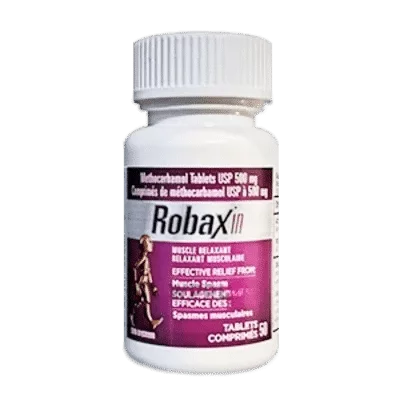
Robaxin is a centrally acting skeletal muscle relaxant containing methocarbamol. It is for adults with acute musculoskeletal pain where muscle spasm limits movement. It calms overactive nerve signals in the central nervous system to reduce spasm-related pain and tightness.
Description
Robaxin is a muscle relaxant prescribed to alleviate skeletal muscle conditions where spasm and pain limit movement. It is used to treat muscle spasms linked to acute musculoskeletal pain, such as back strain, neck spasm, or painful muscle tightness after minor injury.
Relief can be fast.
It is symptom control.
If pain is from a fresh strain, many clinicians suggest a short “reset”: heat for stiffness, ice for new swelling, and use Robaxin to break the spasm cycle so you can start light mobility the same day.
Composition
Robaxin is also known by its generic name, methocarbamol. Methocarbamol is the active ingredient in Robaxin, and its drug class is a centrally acting skeletal muscle relaxant (a carbamate derivative).
Because it acts centrally, the main trade-off is sedation. Some people feel sleepy or “foggy,” even when pain improves.
Dosage and usage
Route: Oral (swallow Robaxin tablets with water).
Adults (typical):1,500 mg per dose (3 × 500 mg tablets or 2 × 750 mg tablets) 4 times/day for 48–72 hours.
Then (maintenance):750–1,000 mg per dose every 6 hours (4 times/day) or 1,500 mg per dose 3 times/day, for the shortest duration needed (often up to 1 week).
Maximum daily dose:6,000 mg/day.
Timing with food: Take with or without food; take with food if stomach upset occurs.
Missed dose: Take as soon as remembered unless it is close to the next dose; do not double doses.
Avoid: Alcohol and other sedatives while taking Robaxin; do not drive or operate machinery until effects are known.
How it works
Route: Oral.
Dose range used for effect in adults:750–1,500 mg per dose.
How often: Typically 3–4 times/day (about every 6–8 hours).
Onset: Symptom relief may begin within ~30 minutes after a dose.
Duration: Effects commonly last ~4–6 hours, so doses are spaced through the day.
Course length: Commonly 2–7 days, then stop when muscle spasm improves or as directed.
Indications
Robaxin is used for muscle spasm relief when spasm is the main driver of pain and limited range of motion. Methocarbamol treats muscle pain and stiffness that come with acute musculoskeletal pain, especially when the area feels “locked,” guarded, or hard to stretch.
Common situations where clinicians use Robaxin include:
Acute low back pain with spasm after lifting or awkward movement
Neck or shoulder spasm after poor sleep position or sudden turn
Spasm-related pain after minor sports injuries, once serious injury is ruled out
General stiffness where the spasm itself prevents normal movement
Robaxin is beneficial for acute musculoskeletal pain. It is used to treat muscle spasms.
If your back pain comes with leg weakness, numbness in the groin area, or trouble controlling bladder or bowels, don’t self-manage spasm—those are red-flag symptoms that need urgent medical assessment.
Comparison
Robaxin alternatives are usually other skeletal muscle relaxants, or a plan that uses a nonsteroidal anti-inflammatory drug (NSAID) plus physiotherapy and activity modification. In some cases, baclofen is used as an alternative muscle relaxant, especially when spasticity from neurologic conditions is the core problem rather than an acute strain.
Below is a concise comparison of muscle relaxants that many clinicians consider.
Option
What it’s used for
Common limitations
Robaxin (methocarbamol)
Acute musculoskeletal pain with muscle spasm
Drowsiness, dizziness; short duration means timed dosing
“Medications that relax muscles for surgery” (neuromuscular blockers) are a different category used in anaesthesia, not for home treatment of back or neck spasm.
Contraindications
Hypersensitivity/allergic reaction to methocarbamol or any component of the tablet
Severe renal impairment (avoid unless a clinician has explicitly decided it is appropriate)
Severe hepatic impairment (avoid unless a clinician has explicitly decided it is appropriate)
Use extra caution if you have:
A seizure disorder such as epilepsy
Significant neurologic disease where sedation would raise fall risk
A job that requires full alertness (driving, operating machinery, working at heights)
Drug and substance interactions that matter:
Alcohol
Other sedatives (sleeping tablets, benzodiazepines, some antihistamines, some strong pain medicines)
Multiple CNS-active medicines together (higher risk in older adults)
When this is not for you
Do not use Robaxin if you have ever had an allergic reaction to methocarbamol or ingredients in the tablet.
Avoid using it on your own if you have serious kidney or liver problems, unless a clinician has told you it is appropriate, because side effects like heavy sleepiness can be stronger.
Be especially careful if you have epilepsy or other neurologic conditions, or if you need to stay fully alert for driving, machinery, or work at heights.
Do not mix Robaxin with alcohol or other sedating medicines, as the combined effect can make you much sleepier and less coordinated.
Side effects
Robaxin side effects mostly come from its central nervous system effect. Many people feel the benefit first as “less pulling” and “less locking,” then notice the downside as sleepiness.
Trouble breathing, swelling of face/lips, or widespread hives can signal a severe allergy and needs urgent care.
Severe confusion, fainting, or extreme sedation needs urgent assessment, especially if mixed with alcohol or other sedatives.
If nausea shows up, many patients do better taking Robaxin with a small snack and a full glass of water. Taking it on an empty stomach tends to make stomach symptoms louder.
Common mistakes
Common patient mistakes to avoid
People make the same errors with muscle relaxants, and they are avoidable.
Taking an extra dose too soon because the pain is still present. Robaxin reduces spasm; pain from inflamed tissue can lag behind, so doubling up early increases dizziness without speeding recovery.
Mixing with alcohol in the evening. The sedation stacks, and next-day grogginess is a common reason people stop the medicine too early.
Driving after the first dose. You can feel “fine” sitting down, then realise reaction time is slower once you are on the road.
Staying completely inactive for days. With acute back pain, prolonged rest can worsen stiffness, so many clinicians pair Robaxin with short, frequent walks as tolerated.
Using it to mask red-flag symptoms. Progressive weakness, fever, severe trauma, or unexplained weight loss needs assessment beyond spasm treatment.
What doctors say
Doctor perspectives from clinical practice
Doctors often describe Robaxin as a “spasm breaker” more than a pure painkiller. In musculoskeletal clinics, the pattern is familiar: once the spasm eases, patients can sleep, tolerate physiotherapy, and reduce guarding.
A frequent prescribing nuance is choosing Robaxin when anxiety around pain causes extra muscle tightening, since calming CNS-driven spasm can help the whole cycle. The flip side is sedation; clinicians often advise trying the first doses during low-demand hours, then adjusting timing to protect work and driving.
Frequently asked questions
Does Robaxin heal the muscle injury, or just reduce symptoms?
Robaxin does not expedite the muscle healing process; it reduces spasm and spasm-driven pain so you can move and sleep more comfortably. Healing still depends on time, graded activity, and addressing the cause of the strain. National Institute for Health and Care Excellence clinical summaries used across evidence-based references describe methocarbamol as symptomatic treatment rather than tissue repair [4]. This difference helps set expectations and prevents overuse.
Is Robaxin suitable for athletes and people who train?
Methocarbamol has been found to provide considerable relief for athletes with acute spasm patterns, mainly by reducing muscle tension so rehab can start sooner. The main limitation is sedation and reduced coordination, which can make training unsafe on the day you take it. Many sports clinicians keep it short-term and focus on mobility work, then taper as movement improves. World Health Organization guidance on medication-related harm also stresses avoiding sedating combinations and returning to activity in a graded way after injury .
Can Robaxin be combined with anti-inflammatory painkillers?
Robaxin is often used alongside an NSAID when inflammation and spasm both contribute to pain, because they act through different mechanisms. The key is tolerability: NSAIDs can irritate the stomach and affect kidneys in at-risk people, while Robaxin can cause drowsiness. If you have kidney disease, ulcers, or take blood thinners, NSAID choice needs careful review. A Cochrane review on acute low back pain management supports multimodal, short-term strategies that pair medicines with activity and exercise-based care rather than relying on one drug alone [5].
What should I do if I miss a dose?
If you miss a dose, take the next scheduled dose at the usual time rather than stacking doses close together. Doubling up increases dizziness and nausea more than it improves muscle spasm relief. If symptoms are already improving, many clinicians use missed doses as a natural point to start tapering frequency. This approach aligns with short-term use principles described in clinical medicine summaries for centrally acting muscle relaxants.
Do you offer anonymous delivery?
Your order will be securely packed and shipped within 24 hours. This is exactly what your package will look like (images of an actual item sent). It has the size and look of a regular private letter (24x11x0.7 cm) and its contents cannot be seen.
I took Robaxin for a back spasm after lifting boxes. Within an hour I could stand straighter, and sleep improved the first night. I felt sleepy after the morning dose, so I shifted it later and kept the daytime dose only when pain was tight.
13 Nov 2024
M
Mariam, 41
Abu Dhabi
1 week
Verified
Rating: 4 out of 5
Neck and shoulder spasm eased by day two, and physio stretches stopped feeling impossible. The downside was dry mouth and a light ‘floating’ feeling for a couple of hours. Once I avoided taking it before driving, it was fine.
29 Oct 2024
O
Omar, 29
Sharjah
3 days
Verified
Rating: 3 out of 5
It helped the spasm, but the drowsiness hit me harder than I expected. I stopped the daytime doses and used it in the evening only. Pain was still there, just less tight.
18 Nov 2024
A
Aisha, 52
Al Ain
6 days
Verified
Rating: 3.5 out of 5
I used it with gentle walking for acute low back pain. The first dose made me dizzy, and I had to sit down for a while. After that I did better with food and water, and by the end of the week I didn’t need it daily.
21 Oct 2024
Sources
World Health Organization (WHO) (2026). Medication Safety in Polypharmacy: Technical Report and Key Messages.
European Medicines Agency (EMA) (2026). Methocarbamol: Summary of Product Characteristics (central muscle relaxants).
Ministry of Health and Prevention (MOHAP) (2026). Patient Medication Safety Guidance: Sedating Medicines, Driving, and Fall Risk.
National Institute for Health and Care Excellence (NICE) (2026). Management of Acute Musculoskeletal Pain: Medicines Used for Symptom Relief.
Cochrane (2025). Pharmacological and Non-pharmacological Interventions for Acute Low Back Pain: Systematic Review.