Verified
I took Provera for missed periods. My period came about four days after I finished the course, and the cramps were close to my normal. Mild bloating, nothing else.
22 Oct 2024

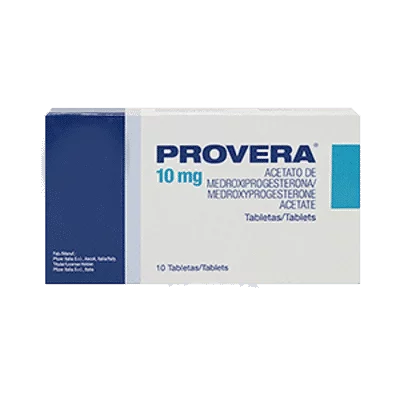
Provera is an oral progestin tablet containing medroxyprogesterone acetate. It is for people who need help regulating uterine bleeding or protecting the endometrium during estrogen therapy. It works by providing progesterone-like activity that stabilises the uterine lining and supports predictable shedding.
Provera Tablets contain medroxyprogesterone acetate (often shortened in conversation to medroxyprogesterone), which is a progestin—a lab-made hormone that behaves like the body’s natural progesterone. In a normal menstrual cycle, progesterone helps “steady” the lining of the uterus (the endometrium) after ovulation, and its drop triggers a period. Provera supports that progesterone effect so the lining sheds in a more predictable way, and it can also help protect the endometrium when estrogen is used in hormone replacement therapy [1].
Medroxyprogesterone acetate is the specific chemical form that makes Provera work. It binds to progesterone receptors and changes gene signalling inside endometrial cells, which reduces ongoing growth of the lining and makes bleeding patterns easier to manage in hormone-imbalance states. In clinical practice, this is why Provera is often chosen when the main goal is endometrial stabilisation rather than contraception.
Active substance: medroxyprogesterone acetate (a synthetic progestin). Provera is supplied as oral tablets with the stated strength per tablet on the label; tablets also contain standard pharmaceutical excipients used for tablet formation and stability.
Provera is prescribed when a clinician wants progesterone-like activity without using natural progesterone itself. The benefit is targeted: it helps regulate the uterine lining and bleeding pattern when hormones are out of balance.
Provera may be used for:
Secondary amenorrhea is often managed by giving a short course of a progestin so the endometrium can shed, which may “reset” bleeding timing. For abnormal uterine bleeding due to hormonal imbalance, the aim is to stop the endometrium from continuously building up and shedding unpredictably. Heavy, painful, irregular, or persistent periods can share that same endometrial instability as a driver, even when symptoms feel very different day to day.
In HRT, estrogen can ease menopausal symptoms, yet unopposed estrogen can raise the chance of endometrial hyperplasia in women with a uterus. Adding a progestin like Provera is a standard strategy to lower that risk by counterbalancing estrogen’s effect on the uterine lining [2].
In oncology, progestins can be used to slow growth in some hormone-dependent cancers. The decision is based on tumour type, receptor status, stage, and the wider plan from an oncology team; dosing and monitoring are different from menstrual-cycle indications.
Alternatives depend on the reason Provera was chosen. Some people are treated with micronized progesterone (a form closer to natural progesterone) when the goal is endometrial support with a different side-effect profile, while others are managed with different progestins, combined hormonal contraceptives, or non-hormonal options for heavy bleeding. In HRT plans, conjugated estrogens may be paired with a progestin strategy to protect the endometrium, and the exact pairing is individualised based on symptoms and risk factors.
A key limitation: switching hormones is not like switching painkillers. Bleeding patterns can take a few cycles to stabilise after a change.
| Feature | Oral Provera | Depo-Provera |
|---|---|---|
| Form & administration | Tablet taken by mouth | Injection (clinic-administered) |
| Usual clinical role | Bleeding control, secondary amenorrhea, HRT endometrial protection | Contraception (long-acting) |
| Duration pattern | Short-course or cyclical, depending on plan | Long-acting effect over weeks/months |
If your goal is contraception, clinicians usually discuss injection-specific issues such as delayed return to fertility and bone mineral density monitoring; those points are not interchangeable with oral tablet use.
Provera may not be suitable if any of these apply to you:
Most side effects with Provera are related to hormone sensitivity: changes in bleeding pattern, fluid retention, and mood or headache complaints are the ones I hear about most often. Some risks matter more if you already have clotting risk factors, liver disease, or a history of hormone-sensitive cancers.
These effects can feel “random,” yet they often settle once your body adapts to a steadier progestin level.
Seek urgent assessment if you develop symptoms that can fit a clot or severe reaction: new one-sided leg swelling, sudden chest pain, coughing blood, severe shortness of breath, facial swelling, or widespread rash. Rarely, hormone medicines can also aggravate liver problems; warning signs can include persistent right‑upper abdominal pain, dark urine, or yellowing of eyes/skin.
Progestins can increase thromboembolic risk in susceptible people, and that risk profile changes a lot based on age, smoking, obesity, immobility, and personal or family clot history. In day-to-day practice, clinicians also screen for migraine with aura and uncontrolled hypertension because these can shift risk–benefit decisions for hormonal therapies. MOHAP-aligned counselling in the UAE focuses on individual risk assessment before starting hormonal medicines rather than “one-size-fits-all” rules [3].
Taking Provera correctly is usually simple, yet the small mistakes create most of the frustration.
A short sentence that saves trouble: keep a bleeding diary. It helps.
In clinical practice, Provera is a “workhorse” progestin when the problem is endometrial instability—spotting that won’t settle, skipped periods that need a planned withdrawal bleed, or endometrial protection during estrogen therapy. Clinicians often prefer it when they need a predictable progestin effect with a schedule that can be started and stopped, rather than a long-acting method.
One thing doctors warn about early: if you start Provera to control abnormal bleeding, the first week can look messier before it looks better. Another real-world point is diagnostic: persistent abnormal uterine bleeding still needs evaluation for structural causes (polyps, fibroids) and not every bleeding pattern is “just hormones.” EMA safety communications around progestins keep the emphasis on using the lowest effective dose for the shortest necessary duration when the indication allows it, and reassessing risk factors over time [5].
With short-course regimens, a withdrawal bleed often occurs a few days after the last tablet rather than during the first doses. Timing varies with baseline hormone levels and how thick the endometrium is at the start. If bleeding does not occur, clinicians usually reassess causes such as pregnancy, thyroid issues, or hypothalamic stress. In 2026 practice guidance used across MOHAP-aligned services, the key is follow-up rather than repeating courses back-to-back without evaluation.
Yes—when estrogen is used in women with a uterus, adding a progestin can reduce the risk of estrogen-driven endometrial hyperplasia. Provera provides that progestin effect by stabilising the endometrium and limiting ongoing proliferation. The schedule (continuous vs cyclic) is personalised to symptoms and bleeding tolerance. This approach aligns with evidence summaries used by the EMA for progestin-containing therapies.
Urgent symptoms include signs that can fit a clot (new leg swelling/pain, chest pain, sudden shortness of breath), severe allergic reaction (facial swelling, difficulty breathing), or severe liver symptoms (jaundice, dark urine with persistent abdominal pain). These are uncommon, yet they matter because delayed care increases harm. WHO safety frameworks for hormonal medicines emphasise recognising thromboembolic symptoms early and acting fast. If you already have clot risk factors, clinicians typically choose a different plan.
Provera can delay a period by keeping progesterone activity high so the uterine lining does not shed on schedule. Spotting happens when the lining becomes unstable from fluctuating hormone levels, late doses, or starting too close to the expected period. Some cycles are also more “sensitive” after stress, weight change, or travel, so breakthrough bleeding is more likely. EMA-reviewed patient information for progestins lists irregular bleeding as a common effect and one that often improves with consistent dosing.
Oral Provera tablets are not positioned as a reliable contraceptive method. People often confuse it with Depo-Provera, an injectable medroxyprogesterone product used for contraception with a long-acting profile. If pregnancy prevention is the goal, clinicians usually recommend methods with established contraceptive dosing and effectiveness data. WHO family planning guidance in 2026 continues to separate oral short-course progestin use from dedicated contraceptive regimens.
Yes. Mood changes (irritability, low mood) and sleep disruption can occur, most often early in treatment or after a dose change. Patients with a history of depression tend to notice this sooner, so tracking sleep and mood for the first 1–2 weeks is practical. If symptoms are severe or persistent, prescribers often adjust the plan rather than pushing through. EMA safety reviews for progestins recognise central nervous system effects like headache and mood change as clinically relevant adverse effects.
Your order will be securely packed and shipped within 24 hours. This is exactly what your package will look like (images of an actual item sent). It has the size and look of a regular private letter (24x11x0.7 cm) and its contents cannot be seen.