

Propecia - Finasteride
4 customer reviewsPropecia is a finasteride medicine for male pattern hair loss. It is for adult men with androgenetic alopecia. It works by inhibiting 5-alpha reductase to lower DHT and help slow thinning and support regrowth.
What is it?
Propecia is a medicine containing finasteride for adult men with male pattern hair loss (androgenetic alopecia). It is used for hair thinning driven by dihydrotestosterone (DHT) and follicle shrinkage. Propecia works by inhibiting the 5-alpha reductase enzyme to lower DHT and help slow loss and support hair regrowth.
Composition
Active ingredient: finasteride 1 mg per film‑coated tablet. Excipients typically include tablet fillers/binders and a film coating (e.g., cellulose derivatives, lactose, starches, magnesium stearate, and coloring agents), which may vary by manufacturer.
How to use?
Used to treat androgenetic alopecia (male pattern hair loss) in adult men, particularly thinning at the crown and mid‑scalp. It is intended for long‑term therapy to reduce DHT and help slow further hair loss; benefits are usually assessed over several months of continuous use.
How does it work?
- Dose: 1 mg (1 tablet) per dose
- Route: oral (swallow whole with water)
- Frequency: 1 time/day
- Timing: same time each day; with or without food
- Duration: daily long term; assess response after about 3–6 months; continued use is needed to maintain effect
Indications
Propecia is indicated for adult men to treat male pattern hair loss (androgenetic alopecia), where rising scalp DHT shrinks follicles and progressively thins the hair. It is most appropriate when:
- Thinning affects the crown (vertex) and mid-scalp, the areas where finasteride shows the clearest response.
- The goal is to slow ongoing loss and support regrowth while follicles are still active, rather than to treat a long-established receded hairline.
- The man is willing to use it continuously, since benefit depends on sustained DHT suppression.
It is not indicated for women, children, or for hair loss from causes other than androgenetic alopecia.
Comparison
Alternatives exist for men who cannot use finasteride or who want a combination approach.
- Topical minoxidil is a non-hormonal option used to stimulate follicles and extend the growth phase; a common example is Regaine.
- Combination regimens are common in practice: finasteride to reduce DHT plus topical minoxidil to boost follicle activity, since they work through different mechanisms.
A limitation to know: minoxidil does not reduce DHT, so it does not address the same root driver as Propecia. A limitation for finasteride is that it is systemic, so side effects, while not common for many users, are a real consideration.
Contraindications
- Use in women (especially pregnancy) and in children (not indicated)
- Hypersensitivity/allergy to finasteride or tablet ingredients
- Significant liver disease
- History of male breast cancer or unassessed breast changes
Not recommended for
This medication is not for you if you are female, could be pregnant, or are breastfeeding, or if you are under 18. Avoid it if you have ever had an allergic reaction to finasteride or any tablet ingredients. If you have significant liver disease, or you have a history of male breast cancer or notice new breast changes that have not been checked, you should not use it until you have medical advice.
Side effects
Propecia side effects come from altering hormone conversion (testosterone to DHT), so the main ones discussed in clinic are sexual and mood-related. The best way to think about risk is “possible, not guaranteed.”
Potential side effects reported with finasteride include:
- decreased libido
- erectile dysfunction
- reduced semen volume
- breast tenderness or enlargement (gynecomastia)
- rash or swelling (allergic-type reactions)
- mood changes such as low mood or anxiety in a small subset of users
A nuance people miss: finasteride lowers PSA (prostate-specific antigen) readings. This does not mean “lower enlarged-prostate risk,” and it can complicate screening interpretation; clinicians often adjust PSA interpretation in men taking finasteride.
Common mistakes
Most “Propecia failed” stories I’ve seen trace back to avoidable patterns.
- Stopping at month 2 or 3 because hair looked worse from early shedding, then never reaching the regrowth window.
- Taking it only on weekdays or “every second day” without a plan, then expecting stable DHT suppression.
- Switching shampoos, supplements, and routines monthly, which makes it hard to judge what helped.
- Judging results only by the hairline when the bigger visible change may be crown density and hair calibre.
- Handling tablets carelessly around pregnancy. Finasteride exposure in pregnancy is a serious issue, so households should treat storage and handling with care.
Doctor opinions
In dermatology clinics, Propecia is often positioned as a “foundation therapy” for androgenetic alopecia because it targets the hormonal driver rather than just stimulating follicles. Doctors also see a pattern: men who start early, stay consistent, and avoid changing routines every few weeks tend to report the most stable satisfaction.
One clinical observation I hear repeatedly is that styling can hide progress. Patients who rely only on mirror checks often miss slow gains, then suddenly notice at month six that the crown is less visible under harsh overhead lighting. Clinicians also emphasise that response varies by scalp area; crown thinning often responds better than a very receded frontal hairline.
Another real-world point from medical practice: discussions about side effects should be calm and specific. Anxiety about decreased libido can itself cause sexual performance issues, so clinicians usually recommend tracking symptoms with dates, sleep quality, and stress levels rather than guessing.
Frequently asked questions
Can Propecia be used by women?
Propecia is not indicated for use in women, and it should be avoided in pregnancy because finasteride can affect development of a male fetus. This is a strict safety rule, not a “grey area,” and it includes avoiding exposure to crushed or broken tablets. Guidance aligned with international regulator safety standards is reflected in EMA product information for finasteride-class medicines.
What happens if I stop taking Propecia?
When Propecia is stopped, DHT levels rise again and the progression of hair loss typically resumes over the following months. The hair you maintained on treatment can gradually be lost, returning toward your untreated baseline. This pattern is consistent with the mechanism of action described in regulator-reviewed documents and clinical resources. If stopping is due to side effects, clinicians often discuss timing and symptom tracking to clarify cause and next steps.
Can Propecia interact with other medications?
Finasteride has a relatively low burden of classic drug–drug interactions, but medication context still matters. Testosterone therapy and anabolic steroid use can worsen androgen-driven hair thinning and can reduce the perceived benefit of Propecia. If you take medicines affecting liver function, that may also matter since finasteride is metabolised hepatically. For UAE residents, medication safety advice is aligned with MOHAP expectations for appropriate use of hormone-modulating therapies [5].
Is Propecia a doctor-approved hair-loss treatment?
Yes. Propecia (finasteride 1 mg) is widely recognised as a doctor-approved hair-loss treatment for androgenetic alopecia in adult men, and it appears in evidence-based dermatology treatment pathways. WHO drug information resources also describe finasteride’s pharmacology and its role as a 5-alpha reductase inhibitor. The key is correct diagnosis: it treats male pattern hair loss, not every hair-loss condition.
Will Propecia help with hair thinning at the hairline?
It can help some men, but responses vary by area and by how advanced the miniaturisation is. In practice, crown thinning often shows clearer improvement than a long-established receded hairline, where follicles may be less recoverable. The most realistic goal many clinicians set is slowing progression and improving density where follicles remain active. Tracking with consistent photos helps you judge subtle change.
Does decreased libido from Propecia always persist?
No. Decreased libido is a known possible side effect, yet many men never experience it, and some who do notice it early find it improves with time or resolves after stopping. What helps clinically is writing down when symptoms started, sleep quality, alcohol intake, and stress level, since these can strongly affect sexual function. If sexual side effects are persistent or distressing, clinicians often reassess the risk–benefit balance and alternative strategies.
Do you offer anonymous delivery?
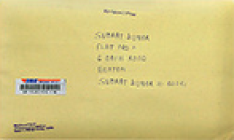 Front view
 Side view
 Back view
Your order will be securely packed and shipped within 24 hours. This is exactly what your package will look like (images of an actual item sent). It has the size and look of a regular private letter (9.4x4.3x0.3 in. or 24x11x0.7 cm) and its contents cannot be seen.
Propecia — Comparison with alternatives
Propecia Current

Finasteride Best price Best rated

Proscar

Careprost
Reviews and Experiences
Sources
- European Medicines Agency (EMA) (2026). Finasteride: Summary of Product Characteristics (regulatory product information). ↑
- World Health Organization (WHO) (2026). WHO Drug Information: Finasteride (pharmacology and safety overview). ↑
- PubMed (2025). Finasteride 1 mg for androgenetic alopecia: systematic review and clinical outcomes. ↑
- Cochrane (2025). Treatments for male pattern hair loss: evidence review of 5-alpha reductase inhibitors and minoxidil. ↑
- MOHAP (Ministry of Health and Prevention) (2026). Medication safety guidance for hormone-modulating medicines and patient counselling principles. ↑
