Verified
I started for thinning at the crown. At week 6 my shower shed looked worse and I nearly quit. By month 4 the shed slowed, and by month 6 my barber said the crown looked denser under bright lights.
1 May 2026


Finasteride is a 5-alpha reductase inhibitor that lowers dihydrotestosterone levels. It is for adult men with androgenetic alopecia or for men treated for benign prostatic hyperplasia. By reducing DHT, it helps slow follicle miniaturization and supports longer growth phases.
Finasteride is a 5-alpha reductase inhibitor, sometimes described as a DHT blocker because its key action is to reduce dihydrotestosterone (DHT). The enzyme 5-alpha reductase converts testosterone to dihydrotestosterone; in genetically susceptible men, DHT drives progressive follicle shrinkage, leading to male pattern hair loss, also known as androgenetic alopecia. By inhibiting 5-alpha reductase, Finasteride reduces DHT levels, which helps interrupt that miniaturization cycle and gives affected follicles a better chance to stay in the growth phase.
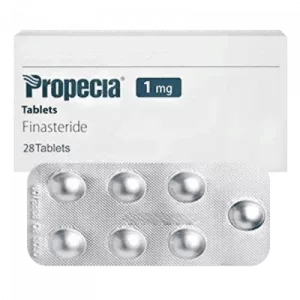
Finasteride tablets contain the active ingredient finasteride (typically 1 mg or 5 mg per tablet). Excipients may include fillers/binders (e.g., lactose or cellulose), disintegrants, lubricants (e.g., magnesium stearate), and a film coating, depending on manufacturer.
Finasteride therapy for androgenetic alopecia is usually long-term. Most men don’t notice meaningful changes in a few weeks, because hair growth cycles are slow, and follicles need time to move from a miniaturized pattern back toward thicker growth. In day-to-day clinical follow-up, the most realistic early “win” is reduced shedding and slower progression of hair loss, and then gradual improvement in density.
Consistent use matters because the DHT reduction is reversible after stopping. When Finasteride is discontinued, DHT levels rise again and the medication-driven benefit tends to fade over subsequent months. Dermatology clinics often recommend tracking progress with photos taken in the same lighting and angle every month; the mirror is a poor measuring tool because day-to-day styling hides small, real gains.
Two more practical points come up a lot:
Finasteride is prescribed for a small set of clearly defined, hormone-linked conditions:
Finasteride is often used with Minoxidil because the mechanisms are different and can be complementary. Finasteride reduces DHT (the hormonal driver of follicle shrinkage), while Minoxidil supports hair growth through local follicle effects and improved anagen (growth phase) support; in clinic, that “two angles” approach is common for men who want both stabilization and regrowth. People sometimes refer to an Oral Finasteride + Minoxidil approach when both are used as systemic tablets, though many regimens use oral Finasteride with topical Minoxidil depending on tolerance and clinician preference.
Combination therapy can bring faster visible density changes for some men, yet it can also add side effects. Minoxidil can cause scalp irritation when topical, and systemic minoxidil can affect heart rate and blood pressure in susceptible people. The practical takeaway is simple: add one change at a time, so if a side effect appears, you can identify the culprit quickly.
Avoid Finasteride if you are pregnant, might become pregnant, or are breastfeeding, because exposure can harm development of a male fetus. Do not use it in children or adolescents. Do not use it if you have ever had an allergic reaction to finasteride or any tablet ingredient.
Use extra caution and speak with a clinician if you have liver disease, if you are having PSA testing for prostate screening, or if you plan to donate blood soon.
Finasteride is generally well tolerated, yet side effects can happen, and the ones people care about most are sexual. In EMA-reviewed safety data, sexual adverse effects such as decreased libido and erectile dysfunction are reported in a minority of men, and many cases improve after stopping treatment, though persistence has been reported and should be taken seriously when it occurs [3]. Some men also report reduced ejaculate volume; this is expected from the drug’s mechanism in androgen-sensitive tissues and is not the same as infertility, though fertility evaluation may be relevant if conception is a near-term goal.
Other reported adverse effects include breast tenderness or enlargement (gynecomastia), mood changes including depressed mood, and rash. If breast lumps, nipple discharge, or marked breast pain occurs, it needs prompt medical assessment because those symptoms should not be dismissed as “just a side effect.” If mood symptoms emerge after starting therapy, many prescribers reassess risk-benefit early rather than waiting months.
Three small, real-life details that save frustration:
These are the patterns I see repeatedly with Finasteride therapy, and they explain many “it didn’t work” stories:
One missed dose won’t erase results. Frequent missed doses will.
Clinicians treating androgenetic alopecia often describe Finasteride as a “foundation drug” because it targets the hormonal driver (DHT) rather than only improving blood flow or hair shaft thickness. In practice, doctors also see that the best responders tend to start earlier in the course of male pattern hair loss, when there are still many miniaturized (not fully lost) follicles to rescue. Response at the hairline can be slower and less dramatic than at the crown, and that pattern is consistent with clinical trial observations used in regulatory review. A second real-world observation is adherence: men who skip doses frequently often conclude it “did nothing,” when the bigger issue is that the DHT suppression never stayed steady long enough to change the follicle trajectory.
Most men need at least 3 months to judge early response, and 6–12 months gives a more reliable picture because androgenetic alopecia changes slowly. In EMA-reviewed trials, benefits were measured over months, not days, and the main early signal is slowed progression of hair loss before regrowth becomes obvious. If shedding increases early, it can still be within a normal adjustment period. Date: 2026, EMA.
Finasteride can do both, yet the balance differs by person and by scalp area. Clinically, many men see stabilization first, then gradual thickening in thinning zones where follicles are miniaturized rather than completely inactive. WHO drug information resources describe finasteride’s core action as lowering DHT, which aligns with both slowing loss and enabling regrowth in androgen-sensitive follicles [5]. Date: 2026, WHO.
Yes, Finasteride is used for benign prostatic hyperplasia (BPH) and for male pattern hair loss, but treatment goals and dosing are different, and monitoring is different too. In BPH, clinicians focus on urinary symptoms and prostate size, and PSA interpretation becomes especially relevant. For hair loss, the focus is scalp response and tolerability over long-term use. Date: 2026, MOHAP.
Take the next dose at the usual time; do not double up to “catch up.” Finasteride’s benefit depends on long-term DHT suppression, so one missed dose is rarely meaningful, while repeated missed doses can reduce consistency. If forgetfulness is frequent, a daily routine cue usually improves adherence more than changing the dose. Date: 2026, WHO.
In clinical practice, many men who experience decreased libido or erectile dysfunction early find it improves after stopping, and some improve even while continuing as anxiety settles and the body adapts. EMA safety reviews include reports of persistence in a subset, so new symptoms should be taken seriously and reviewed quickly, not ignored for months. If symptoms appear, clinicians often discuss structured options such as stopping, reassessing, or switching the broader hair-loss plan. Date: 2026, EMA.
Yes. Finasteride can lower PSA values, which can mask changes that would otherwise prompt further evaluation, so labs and clinicians need to interpret PSA with that context. This does not mean PSA testing becomes useless; it means the baseline and thresholds may be adjusted in clinical decision-making. The EMA includes PSA-related guidance in its prescribing information for finasteride-containing medicines. Date: 2026, EMA.
Your order will be securely packed and shipped within 24 hours. This is exactly what your package will look like (images of an actual item sent). It has the size and look of a regular private letter (24x11x0.7 cm) and its contents cannot be seen.