Verified
The itching calmed down after the second wash. Flakes were much less by week two. My hair felt dry, so I started using conditioner only on the ends and that fixed it.
12 May 2026

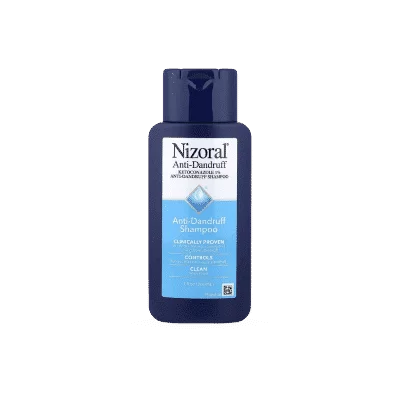
Nizoral Shampoo is a medicated anti-dandruff shampoo containing ketoconazole. It is for adults and adolescents with persistent dandruff or seborrhoeic dermatitis symptoms on the scalp. It helps by reducing Malassezia yeast on the scalp to ease flaking and irritation.
Nizoral Shampoo is a medicated Anti-Dandruff Shampoo used to treat dandruff and related scalp conditions such as Seborrheic Dermatitis. It is suited to adults and adolescents with persistent flakes, an itchy scalp, or scalp redness linked to yeast overgrowth. The antifungal ingredient ketoconazole targets the root cause on the scalp, helping reduce flaking and calm irritation.
Nizoral Shampoo contains ketoconazole plus excipients that help it cleanse, foam, condition hair, and remain stable.
Start with the mechanics. Technique matters more than extra product.
Three small details that change outcomes in real life: use fingertips rather than nails (nails inflame follicles), part the hair in a few lines so lather reaches the skin, and rinse longer than you think because residue can irritate sensitive scalps.
Many regimens use medicated ketoconazole shampoo twice weekly for 2–4 weeks, then once weekly or once every 1–2 weeks for maintenance in people who relapse. Some people with milder dandruff control it with less frequent use, yet seborrhoeic dermatitis often returns when the routine stops abruptly.
Nizoral Shampoo is a medicated Anti-Dandruff Shampoo used to treat dandruff and related scalp conditions such as Seborrheic Dermatitis.
Nizoral Shampoo is often chosen when dandruff is paired with inflammation: greasy scale, redness at the hairline, and an itchy scalp that flares in cycles. Those patterns fit Seborrheic Dermatitis, where reducing Malassezia load can reduce inflammatory signalling and scaling.
Some dermatology clinics also use ketoconazole shampoo as part of scalp routines when there is overlap with scalp psoriasis, because itch and scale can be made worse by yeast overgrowth even if psoriasis is the main diagnosis. It is not a cure for psoriasis, yet it can be a useful “yeast-control” tool during flare periods when the scalp is busy with scale.
Different anti-dandruff ingredients solve different problems. Ketoconazole targets yeast; some alternatives focus on loosening scale or slowing skin turnover.
| Approach | What it targets | When it fits best |
|---|---|---|
| Ketoconazole (Nizoral Shampoo) | Antifungal action against Malassezia | Inflamed dandruff, Seborrheic Dermatitis, recurrent itchy scalp |
| Selenium sulfide | Antifungal + reduces cell turnover | Greasy scaling, recurrent dandruff, some seb derm routines |
| Salicylic acid / keratolytics | Lifts and softens scale | Thick adherent scale, “build-up,” flaky plaques needing scale removal |
A practical way to choose is this: if dandruff improves for one day after washing and then rebounds with itch and redness, an antifungal track like ketoconazole often makes more sense than scale-lifting alone. If the main issue is heavy scale with minimal itch, keratolytics can improve comfort, sometimes alongside an antifungal plan.
Do not use Nizoral Shampoo if you have ever had an allergic reaction to ketoconazole or any ingredient in the shampoo.
Avoid applying it to broken or very inflamed scalp skin unless a clinician has advised it, because it is more likely to sting or irritate.
Speak to a clinician before use if you are pregnant or breastfeeding, if the user is a child, or if you are also using other strong scalp products like topical steroids, retinoids, or exfoliating treatments, as combining these can make irritation more likely.
Most side effects are local and mild. The common ones are scalp dryness, irritation, a burning sensation, or changes in hair texture (hair can feel drier). Some people notice increased shedding early on; this is often hair breakage from dryness, not true hair-loss from the follicle, and it settles when conditioning routines improve.
Less common reactions include contact dermatitis (itching plus a rash beyond the scalp), pustules around follicles, or swelling/irritation if the shampoo runs into the eyes. Stop and seek medical advice urgently if there are signs of a serious allergy such as facial swelling, widespread hives, or breathing difficulty.
One nuisance detail patients mention: ketoconazole shampoo can fade certain semi-permanent dyes faster, since medicated surfactants and frequent washing reduce dye retention. Another practical issue is “medicated smell” on hair; using a gentle conditioner on hair lengths (not the scalp) after rinsing can help.
Using it like a normal cosmetic shampoo is the top reason people quit early. A 20-second lather rarely gives enough contact time.
Other mistakes I see often:
In dermatology practice, clinicians often reach for ketoconazole shampoo when dandruff looks inflammatory rather than just dry flaking: redness, greasy scale, and itch that returns fast after standard cosmetic anti-dandruff products. Another common observation is that seborrhoeic dermatitis behaves like asthma: it calms down, then relapses, so a maintenance schedule tends to work better than “stop the moment it looks better.”
Doctors also see avoidable irritation from overuse. Daily ketoconazole shampooing can strip the scalp barrier and create burning that patients mistake for “the fungus getting worse.” A simpler plan tends to succeed: structured twice-weekly use, gentle shampoo on other days, and treating the scalp skin rather than scrubbing hair lengths.
Clinical guidance documents from the NHS describe medicated anti-dandruff shampoos as targeted treatments for dandruff and seborrhoeic dermatitis, with advice to follow a planned course and then maintain as needed [3].
Relief from itching often starts within the first few washes, while visible scaling usually improves across 2–4 weeks when used on schedule. Seborrhoeic dermatitis tends to relapse, so spacing to a maintenance plan after clearing is common. Yeast levels fall first, then inflammation settles more slowly. This matches how antifungal shampoos are described in NHS clinical care guidance (2024). [3]
Many people do use ketoconazole shampoos on treated hair, yet dryness and faster colour fade can happen because medicated surfactants and more frequent washing remove oils and some dye. A practical approach is to keep Nizoral Shampoo on the scalp only, then apply conditioner to hair lengths after rinsing. If your scalp is controlled, reducing wash frequency to a maintenance schedule usually helps protect hair feel. This approach aligns with the scalp-skin focus described in EMA product information for topical ketoconazole formulations (2019). [1]
Mild tingling for a short time can occur, yet persistent stinging, worsening redness, or rash beyond the scalp suggests irritant or allergic contact dermatitis. Stop use and seek medical assessment if symptoms are significant or if swelling or hives appear. A common fix for mild irritation is reducing frequency and avoiding other harsh scalp products on the same day. Safety principles for topical antifungals are also discussed in WHO antifungal medicine resources (2023). [2]
Rotation is common when dandruff has both yeast-driven inflammation and heavy scale. Use ketoconazole days for antifungal control, and use scale-lifting approaches (like keratolytics) on separate wash days if needed. Rotating reduces additive irritation from stacking multiple actives at once. Dermatology reviews on PubMed discuss multi-pronged regimens for seborrhoeic dermatitis and dandruff. NHS self-care guidance (2024) likewise supports rotating treatments rather than stacking actives in one wash. [4]
Recurrent dandruff usually reflects the chronic tendency of Malassezia to recolonise oil-rich scalp skin, not a failure of the shampoo. Maintenance use is often needed, spaced out to the lowest frequency that keeps symptoms quiet. Triggers like stress, climate changes, and heavy hair oils can also shorten the time to relapse. This relapsing pattern is described in NHS clinical care guidance for seborrhoeic dermatitis (2024). [3]
Your order will be securely packed and shipped within 24 hours. This is exactly what your package will look like (images of an actual item sent). It has the size and look of a regular private letter (24x11x0.7 cm) and its contents cannot be seen.