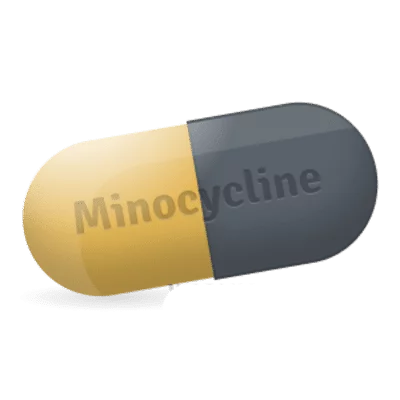
Minocycline is an oral tetracycline antibiotic used for certain bacterial infections and inflammatory acne. It is suitable for adolescents and adults when an oral antibiotic is appropriate. It works by inhibiting bacterial protein synthesis and helping reduce inflammation.
Description
Minocycline is a tetracycline antibiotic used to treat a variety of bacterial infections, including acne, urinary tract infections, and respiratory infections. It is used in adolescents and adults when a clinician decides an oral antibiotic is appropriate for the suspected bacteria. It works by inhibiting bacterial protein synthesis, which stops bacterial growth and also reduces inflammation in some skin conditions.
Composition
Minocycline is a semisynthetic tetracycline antibiotic. Each pill contains minocycline hydrochloride as the active substance, together with standard tablet excipients that provide stability, shape, and absorption support.
Dosage and usage
Minocycline is taken by mouth with water. Your prescriber sets the dose and duration based on the condition, severity, kidney/liver status, and whether it’s acne or an acute infection. The capsule should be swallowed whole.
Typical adult dosing patterns used in clinical practice include:
Acne: often a lower daily dose for weeks to months, then reassessment
Acute bacterial infections: often a higher dose initially, then continued for a defined course length
Key administration rules that prevent avoidable problems:
Swallow with a full glass of water.
Stay upright for at least 30 minutes after the dose.
Separate from calcium, iron, magnesium, zinc, and antacids by a few hours.
For acne, don’t stop as soon as you “look better.” Stopping early is a classic relapse trigger.
A missed dose is usually taken when remembered unless it’s close to the next scheduled dose; doubling up increases side effects without improving outcomes.
Esophageal irritation feels like chest burning or pain when swallowing and often happens when a capsule is taken right before lying down; the water + upright rule prevents most cases.
How it works
Route: oral, taken by mouth as pills.
Dose: 50–100 mg per dose, depending on the infection and prescriber instructions.
Frequency: 1–2 times per day.
Timing: take with a full glass of water; take after a light meal if stomach upset occurs, and avoid taking it together with milk, antacids, iron, calcium, magnesium, zinc, or bismuth.
Duration: for the full prescribed course, often 5–14 days for acute infections; acne treatment may require longer courses under medical supervision.
Administration: swallow the pill whole; do not crush or chew unless the product instructions specifically allow it.
Indications
Minocycline is prescribed for bacterial infections where the likely organism is sensitive to tetracyclines and where oral therapy is suitable. In day-to-day practice, it’s most often discussed for skin conditions, yet it is also used for infections beyond dermatology.
Common situations where clinicians may choose Minocycline include:
Acne (moderate to severe inflammatory acne)
Rosacea (selected cases where inflammation is prominent)
Respiratory bacterial infections (when tetracyclines are appropriate)
Genitourinary bacterial infections, including some urinary tract infections
Other susceptible infections where tissue penetration is useful
Minocycline does not treat viral infections such as influenza, the common cold, or viral sore throat.
Comparison
Minocycline is often compared with other acne and infection treatments in the same decision tree. The key differences are tissue penetration, side-effect profile, and whether the treatment is antibiotic-based or not.
Option
How it differs
When it’s often chosen
Minocycline
Tetracycline antibiotic with higher rates of dizziness in some people; also anti-inflammatory
Inflammatory acne, selected bacterial infections needing good tissue penetration
Tetracycline antibiotic with more predictable vestibular tolerability for many patients
Similar indications, often first-choice for acne in many protocols
Where retinoids fit: acitretin and isotretinoin are not antibiotics. They change keratinization and sebaceous activity, so they can be transformative for severe acne or certain dermatoses, yet they carry strict pregnancy prevention and monitoring requirements and are not “swap-in” equivalents to Minocycline.
Contraindications
Hypersensitivity to minocycline or other tetracyclines
Pregnancy
Breastfeeding
Children under 8 years
Significant hepatic dysfunction requiring careful selection and follow-up
Concomitant use with systemic retinoids such as isotretinoin or acitretin unless a specialist has a clear monitoring plan
When this is not for you
Avoid this medicine if you are pregnant, breastfeeding, or have a history of allergy to tetracyclines. It is also not a good fit if you need to take mineral supplements, antacids, or retinoid medicines without a clear plan from your clinician. If you become dizzy, keep away from driving until the effect is gone.
Side effects
Minocycline is a tetracycline antibiotic that can cause common gastrointestinal and nervous system effects, plus a few important class-specific risks.
Common side effects include nausea, abdominal pain, diarrhea, loss of appetite, dizziness, vertigo, and headache. Some people also develop sensitivity to sunlight, so skin may burn more easily during treatment.
Serious side effects are less common but require prompt attention: allergic reactions, severe skin reactions, liver injury, blood count changes, esophagitis, and antibiotic-associated colitis including C. difficile. Rarely, minocycline may cause skin or mucosal pigmentation with longer use.
Drug interactions are clinically important because minocycline binds to minerals and is absorbed less well when taken with antacids or supplements containing aluminium, magnesium, calcium, iron, zinc, or bismuth. It should not be combined with isotretinoin or other systemic retinoids because of the risk of increased intracranial pressure. Warfarin may require closer INR monitoring.
Pregnancy, breastfeeding, and children under 8 years need special caution because tetracyclines can affect teeth and bone development. Dizziness can impair driving and use of machinery until the effect is known.
Common mistakes
People usually run into trouble with Minocycline for practical reasons, not because the drug is “too strong.”
Common mistakes that reduce benefit or raise side effects:
Taking the capsule right before bed, then getting painful swallowing or reflux-like symptoms the next day
Pairing the dose with milk, calcium supplements, iron, or antacids and then concluding it “didn’t work”
Stopping early when symptoms improve, then getting a rebound flare (very common with acne)
Starting a new skincare acid/peel at the same time and blaming Minocycline for irritation that is really topical overuse
Ignoring early dizziness and continuing to drive on day 1–3
A small insider tip from pharmacy practice: if dizziness is your main issue, shifting the dose to evening sometimes helps, but only if it does not push you into the “take and lie down” trap.
What doctors say
In clinical practice, prescribers like Minocycline for acne when inflammation is dominant and topical-only plans have failed or were not tolerated. Dermatologists also tend to use it as a time-limited bridge while a long-term maintenance routine (topicals, skin-care habits) is built, rather than leaving patients on antibiotics indefinitely.
For acute infections, doctors focus on matching the antibiotic to the suspected organism and the infection site. If cultures are taken, a clinician may switch antibiotics once results return, even if you already feel better. From a stewardship angle, physicians in the UAE increasingly align antibiotic duration and selection with MOHAP expectations on responsible antibiotic use and documentation in healthcare settings. [3]
One thing doctors repeatedly warn about is persistent headache with visual symptoms while combining acne medicines. It is rare, but when it happens, it needs prompt action and medication review.
Frequently asked questions
Use During Pregnancy or Breastfeeding
Minocycline is usually avoided during pregnancy and breastfeeding because tetracyclines can affect developing teeth and bones. In 2021, the World Health Organization discussed this risk profile for tetracycline antibiotics and fetal development in its medication safety resources. [5]
Use with Dairy, Antacids, Iron, or Zinc
Calcium, magnesium, aluminium, iron, and zinc can bind Minocycline in the gut and reduce absorption. A practical approach is spacing these products by a few hours and keeping the antibiotic dose simple with water.
What to Do if Dizziness Happens
Dizziness often shows up early and often improves after the first days. Avoid driving or operating machinery until you know your response, since vestibular side effects can feel sudden when you stand up or turn your head quickly. If dizziness is intense, persistent, or paired with severe headache or visual changes, the plan needs reassessment.
What to Do if You Miss a Dose
Take the missed dose when you remember unless it’s close to the next scheduled dose. Skipping and doubling is a common pattern that increases nausea and headache without improving bacterial control. MedlinePlus advised patients to follow the prescribed schedule and avoid doubling doses after a missed tablet.
Combining Minocycline with Isotretinoin or Acitretin
Combining Minocycline with systemic retinoids like isotretinoin or acitretin is generally avoided because both can be associated with increased intracranial pressure symptoms, and together the risk may rise. The red flags are severe headache, blurred vision, and nausea that feels different from routine stomach upset. If a specialist uses both in a plan, they usually do it with clear monitoring and stop rules.
Do you offer anonymous delivery?
Your order will be securely packed and shipped within 24 hours. This is exactly what your package will look like (images of an actual item sent). It has the size and look of a regular private letter (24x11x0.7 cm) and its contents cannot be seen.
My dermatologist used it for inflammatory acne. Week two I still had breakouts, then by week six the deep painful bumps were much less frequent. I did feel lightheaded the first three days, so I avoided driving in the morning.
5 Nov 2024
O
Omar, 34
Abu Dhabi
Using for 10 days
Verified
Rating: 3.2 out of 5
I took it for a skin infection. The redness improved fast, but I made the mistake of taking the capsule right before sleep and woke up with a burning feeling in my throat. Taking it with a full glass of water and staying upright fixed it.
13 Nov 2024
S
Sara, 23
Sharjah
Using for 12 weeks
Verified
Rating: 3.4 out of 5
Acne improved, but the sun sensitivity surprised me. I got a mild sun rash after a long midday walk even with sunscreen. Once I switched to shade and long sleeves, it was fine.
22 Oct 2024
H
Hassan, 41
Ajman
Using for 2 weeks
Verified
Rating: 3.3 out of 5
It helped my symptoms, but nausea was annoying on an empty stomach. A small snack worked, but I had to avoid dairy around the dose or the pharmacist said it may not absorb well.
2 Nov 2024
L
Lina, 37
Al Ain
Using for 4 weeks
Verified
Rating: 4.2 out of 5
It worked for my inflammatory acne, but the dizziness was enough that I had to change when I took it. The medication helped, though, so I stayed consistent and the side effects eased after the first week.
18 Nov 2024
Sources
World Health Organization (WHO) (2023). Antimicrobial resistance: fact sheet
European Medicines Agency (EMA) (2022). Summary of Product Characteristics (SmPC) — Minocycline (systemic use)
MOHAP (Ministry of Health and Prevention) (2022). National Action Plan for Combatting Antimicrobial Resistance
MedlinePlus (2024). Minocycline
World Health Organization (WHO) (2021). WHO Model Formulary: Tetracyclines (safety in pregnancy and breastfeeding)