
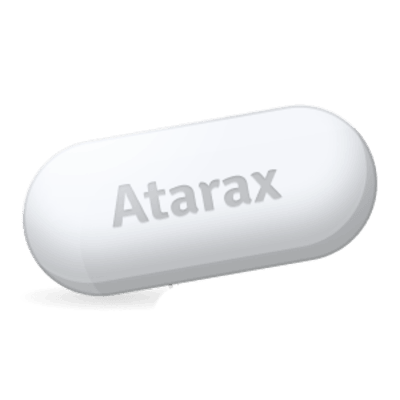
Atarax - Hydroxyzine
5 customer reviewsAtarax is a hydroxyzine antihistamine tablet for adults and selected children. It is used for itching, hives, and short-term anxiety relief. It helps by blocking H1 histamine receptors and calming the central nervous system.
What is it?
Atarax, containing the active ingredient hydroxyzine, is a first‑generation antihistamine tablet used for allergic itching and hives and for short-term relief of anxiety. It is used by adults and, in selected cases, children when a sedating antihistamine is clinically useful. Hydroxyzine blocks H1 histamine receptors and also acts in the central nervous system, which is why Atarax can calm itching and reduce tension at the same time.
Composition
Atarax contains hydroxyzine hydrochloride as the active substance. The tablets also include standard excipients that help form the tablet and support stability, such as lactose, microcrystalline cellulose, magnesium stearate, and colloidal silicon dioxide.
How to use?
Dosing is individualized by indication, age, and how strongly you experience sedation. The goal is the lowest dose that controls symptoms without leaving you foggy the next day.
Typical dosing ranges used in practice:
- Allergic itching/urticaria (adults): commonly divided doses across the day, with the larger portion in the evening if drowsiness is an issue
- Anxiety (adults): doses are often split 2–3 times daily; some people do better with a higher evening dose if anxiety spikes at night
- Children: weight- and age-adjusted dosing is used, and clinicians watch for paradoxical excitation and next-day sleepiness
Tablets can be taken with or without food. Water helps. A consistent schedule reduces peaks and troughs.
Common patient mistakes with Atarax
People tend to run into the same problems with hydroxyzine.
- Taking the first dose before driving or a work shift. Sedation can be strongest at the start, before your body adapts.
- Stacking sedatives. Combining Atarax with alcohol, opioid pain medicines, or sleep aids can cause heavy sedation and unsafe breathing patterns.
- Using it as a nightly sleep fix for months. Hydroxyzine is used short-term; persistent insomnia needs a plan, not escalating antihistamines.
- Ignoring heart rhythm risk. Patients with QT prolongation history sometimes try it for anxiety without mentioning their ECG history.
- Doubling up after a missed dose. That can overshoot into dizziness, confusion, and palpitations.
If you miss a dose, take it when remembered unless it is close to the next scheduled dose. Skip the missed one rather than doubling.
How does it work?
- Route: oral tablets.
- Dose: 25 mg per tablet; adults are commonly given 25–100 mg/day in divided doses, and the dose is adjusted by the prescriber.
- Frequency: 1–4 times/day depending on the prescribed total daily dose.
- Timing: take by mouth with water, with or after meals if stomach upset occurs; the last dose is often taken in the evening because it can cause drowsiness.
- Duration: use for the period prescribed by your doctor, with the lowest effective dose for the shortest necessary time.
Indications
Atarax is an antihistamine medicine with hydroxyzine as the active ingredient. In day-to-day practice, it’s often chosen when allergy symptoms are driven by itching and when night-time scratching is a problem, because sedation can benefit some patients [1].
Main uses for Atarax tablets include:
- Allergic skin symptoms: itching (pruritus), hives (urticaria), and itchy rashes such as eczema flares where an antihistamine is appropriate
- Short-term anxiety: tension, agitation, and anxiety symptoms when a non-benzodiazepine option is preferred
- Nausea and vomiting: used in some settings as an antiemetic (not the most common use in routine outpatient care)
One limitation matters: if you need an antihistamine for daytime work and driving, Atarax may feel too sedating compared with newer allergy tablets.
Comparison
Atarax (hydroxyzine) belongs to older, sedating antihistamines, while cetirizine and levocetirizine are newer options designed to be less sedating for many people.
| Option | Key clinical role | Sedation tendency |
|---|---|---|
| Atarax (hydroxyzine) | Itch/hives where sedation may help; short-term anxiety | Higher |
| Cetirizine | Daytime allergic rhinitis, hives | Lower–moderate |
| Levocetirizine | Similar to cetirizine; often used for allergy symptoms | Lower–moderate |
A practical trade-off: cetirizine/levocetirizine are often preferred for daytime functioning, while hydroxyzine can be preferred when itching is severe at night or when anxiety relief is desired along with antihistamine effect.
Contraindications
This medication is NOT for you if:
- You are allergic to hydroxyzine or have had a serious reaction to it before
- You have a known history of QT interval prolongation or serious heart rhythm disturbances
- You are pregnant (especially early pregnancy) or breastfeeding
- You have severe liver or kidney impairment where drug accumulation is a concern
- You have conditions where anticholinergic/sedative burden is risky (for example, severe Parkinsonism symptoms)
Not recommended for
Some people can take hydroxyzine comfortably, and others should avoid it. Age, comorbidities, and other medicines change the risk profile.
Side effects
Commonly reported effects include:
- Sleepiness, fatigue
- Dizziness, slowed coordination
- Dry mouth
- Headache
- Blurred vision (from anticholinergic effects in some people)
Two safety signals deserve respect: palpitations/fast heartbeat and severe dizziness or fainting, which can point toward a rhythm issue in susceptible patients. Seek urgent care for facial swelling, wheeze, or breathing difficulty consistent with a severe allergic reaction [3].
Common mistakes
People tend to run into the same problems with hydroxyzine.
- Taking the first dose before driving or a work shift. Sedation can be strongest at the start, before your body adapts.
- Stacking sedatives. Combining Atarax with alcohol, opioid pain medicines, or sleep aids can cause heavy sedation and unsafe breathing patterns.
- Using it as a nightly sleep fix for months. Hydroxyzine is used short-term; persistent insomnia needs a plan, not escalating antihistamines.
- Ignoring heart rhythm risk. Patients with QT prolongation history sometimes try it for anxiety without mentioning their ECG history.
- Doubling up after a missed dose. That can overshoot into dizziness, confusion, and palpitations.
If you miss a dose, take it when remembered unless it is close to the next scheduled dose. Skip the missed one rather than doubling.
Doctor opinions
Clinicians tend to position Atarax in a specific niche: it’s a good fit for itch + poor sleep, and for acute anxiety where a sedating, non-benzodiazepine option is reasonable. In clinic, a common pattern is starting low and adjusting after 2–3 nights because sedation is easier to judge at home than in the office.
Doctors also watch for two “gotchas.” First, some patients feel calm yet cognitively slowed, which matters for driving and safety-sensitive work. Second, if a patient has fainting episodes, a personal or family history of rhythm problems, or is already on QT‑risk medicines, many prescribers choose an alternative rather than trying to “make it work”.
Frequently asked questions
Can I drink alcohol with Atarax?
Alcohol and hydroxyzine both depress the central nervous system, so the combination can cause pronounced drowsiness, impaired coordination, and risky decision-making. People also report stronger next‑day grogginess when alcohol is taken in the evening with hydroxyzine. For safety, alcohol is generally avoided during periods when Atarax is being used. The WHO includes sedating medicines among common contributors to unintentional injury when combined with alcohol [5].
How long does Atarax take to work?
Hydroxyzine is absorbed fairly quickly, so many people feel an effect within about an hour, with sedation sometimes appearing earlier than itch relief. For itching, response can vary with the trigger and the severity of the flare. For anxiety, the “calm” effect is often noticeable the same day, but the right dose may take a few tries to balance relief against drowsiness.
Can Atarax be used for sleep?
Atarax can make you sleepy, and clinicians sometimes use it when insomnia is driven by itching or short-term anxiety rather than as a stand-alone long-term sleep medicine. The downside is next‑day sedation and reduced concentration, which can linger into the morning in some users. If sleep is the only target, doctors often evaluate other causes first, such as reflux, pain, or poor sleep schedule.
What should I do if I feel too drowsy the next day?
Next‑day drowsiness usually means the dose is too high for you, or the timing is too close to your wake time. Many patients do better by shifting the dose earlier in the evening or lowering the total daily dose, under a clinician’s direction. Avoid driving or safety-sensitive tasks until you know how you respond.
Is Atarax suitable during pregnancy or breastfeeding?
Hydroxyzine is generally avoided in pregnancy and breastfeeding because it can cross the placenta and enter breast milk, and safer alternatives are often chosen depending on the symptom being treated. Early pregnancy is a special concern, so clinicians usually prefer other options for allergy or anxiety symptoms. If pregnancy is possible, it should be flagged before starting hydroxyzine so the plan can be adjusted.
What happens if I miss a dose?
A missed dose is usually handled by taking it when remembered unless your next scheduled dose is close. Doubling up tends to cause more side effects than benefit, including dizziness, dry mouth, blurred vision, and heavy sedation. If your Atarax schedule is being used for anxiety and you miss doses often, the plan may need simplifying.
Do you offer anonymous delivery?
 Front view
 Side view
 Back view
Your order will be securely packed and shipped within 24 hours. This is exactly what your package will look like (images of an actual item sent). It has the size and look of a regular private letter (9.4x4.3x0.3 in. or 24x11x0.7 cm) and its contents cannot be seen.
Reviews and Experiences
Sources
- FDA (2016). Vistaril (hydroxyzine pamoate) — Prescribing Information. ↑
- EMA (2015). Hydroxyzine-containing medicinal products — PRAC recommendations on QT prolongation and torsade de pointes risk (referral outcome/public assessment). ↑
- EMA (2020). Summary of Product Characteristics (SmPC) — hydroxyzine. ↑
- MOHAP (Ministry of Health and Prevention) (2022). Medication safety guidance for sedating medicines and high-risk medicines (public guidance documents). ↑
- WHO (2018). Global status report on road safety (medicines, alcohol, and impairment considerations). ↑
