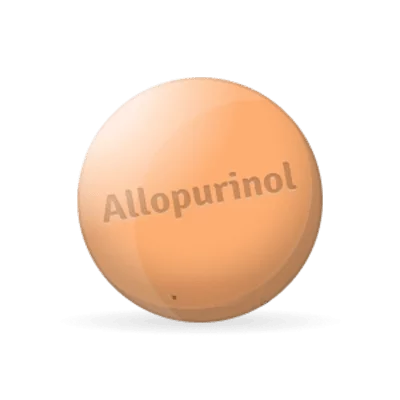
Allopurinol is an oral tablet medicine for people with gout or persistently high uric acid levels. It lowers uric acid by blocking xanthine oxidase, helping prevent urate crystal buildup in joints and kidneys.
الوصف
Allopurinol is a xanthine oxidase inhibitor used to lower uric acid in the body. Uric acid forms when your body breaks down purines, which come from normal cell turnover and from foods like red meat and some seafood. When uric acid stays high, it can form urate crystals that deposit in joints (gout) or the urinary tract (stones).
Practical tip: a gout flare can still happen early after starting urate-lowering therapy because shifting urate levels can “shake loose” existing deposits. Many prescribers add a short course of flare prevention (often colchicine or an NSAID) when initiating Allopurinol.
التركيب
Each tablet contains allopurinol as the active ingredient. The usual tablet excipients may include lactose, starch, povidone, magnesium stearate, and other standard tablet-forming agents, depending on the manufacturer.
الجرعة وطريقة الاستخدام
Take Allopurinol by mouth once daily, or as directed by your prescriber. It is commonly taken after food with a full glass of water to reduce stomach upset.
Hydration matters because fluid intake supports uric acid excretion through the kidneys. This does not replace the medication, but it supports the plan.
Practical tip: if your dose is once daily, tie it to a consistent habit (after breakfast or after dinner). Adherence is what keeps uric acid stable between lab checks.
Missed dose
If you miss a dose, take it when you remember the same day. If it is close to the next dose, skip the missed dose and return to your normal schedule. Doubling up increases side-effect risk without improving urate control.
آلية العمل
Allopurinol inhibits xanthine oxidase, the enzyme that helps convert purines into uric acid. By reducing uric acid production, it lowers urate levels in the blood and urine. Over time this helps prevent urate crystal deposition in joints and kidneys.
Allopurinol is converted in the body to oxypurinol, its primary active metabolite. Oxypurinol also inhibits xanthine oxidase and contributes to the medicine’s sustained urate-lowering effect.
دواعي الاستعمال
Allopurinol is used for gout management when blood uric acid is persistently elevated or when gout attacks recur. It is also used when high uric acid increases the risk of urate kidney stones or urate deposits (tophi).
Prevention of gout attacks over months to years by keeping uric acid below a target range
Reduction of urate crystal formation in joints and soft tissues
Lowering uric acid in urine, which can reduce the chance of urate stone formation in selected patients
Long-term control for people who cannot manage uric acid with lifestyle measures alone
One limitation: Allopurinol does not treat an acute gout attack by itself, and starting it during a severe flare may feel worse before it feels better.
مقارنة
Allopurinol is one of several ways to lower uric acid long-term. The choice depends on kidney function, prior reactions, interactions, and how far uric acid is above target.
Option
How it lowers uric acid
When it’s often used
Allopurinol
Lowers production by inhibiting xanthine oxidase
First-line long-term urate lowering for many patients
Febuxostat
Lowers production by inhibiting xanthine oxidase
Alternative when Allopurinol is not tolerated or not suitable
Probenecid
Increases kidney excretion of uric acid (uricosuric)
Selected patients with under-excretion and good kidney function
Trade-offs are real. Xanthine oxidase inhibitors reduce uric acid “at the source,” while uricosurics push more uric acid through the kidneys and can raise stone risk in susceptible patients. Many prescribers also consider cardiovascular profile and kidney disease stage when choosing between allopurinol and febuxostat, using regulator-reviewed safety information as part of that decision. [4]
موانع الاستعمال
Previous hypersensitivity reaction to allopurinol
Concomitant use with azathioprine without prescriber-led dose adjustment
Concomitant use with 6-mercaptopurine without prescriber-led dose adjustment
Acute gout attack as the sole intended treatment setting
Severe skin reaction history compatible with Stevens–Johnson syndrome or toxic epidermal necrolysis
متى لا يكون هذا المنتج مناسباً لك
Some groups need extra care with Allopurinol, mainly because drug exposure rises when clearance is reduced.
Dose and monitoring commonly change in:
Kidney impairment (dose may be reduced; titration is slower)
Liver impairment (dose may be reduced and liver tests monitored)
Older adults with multiple medicines, where interaction risk climbs
This medication is NOT for you if you have had a hypersensitivity reaction to allopurinol in the past. It is also not used as a stand-alone treatment to stop an acute gout attack.
Practical tip: if you have chronic kidney disease, ask for a clear urate target and a titration plan. The goal is still to reach target uric acid, just with safer steps.
الآثار الجانبية
Most people tolerate Allopurinol well, yet side effects can happen. Skin reactions are the key safety topic with this medicine.
Common or reasonably expected effects in practice include:
Mild rash or itching
Nausea, diarrhoea, abdominal discomfort
Drowsiness or dizziness in some people
Temporary changes in liver enzymes on blood tests
Allopurinol Hypersensitivity Syndrome (AHS): a rare, severe reaction that can include fever, widespread rash, facial swelling, liver injury, kidney injury, and blood count abnormalities.
Severe skin reactions such as Stevens–Johnson syndrome or toxic epidermal necrolysis can start as a painful rash with blisters, mouth sores, or eye irritation.
Rare immune-related skin findings have been reported, including allopurinol-induced vascular purpura (purple spots from small-vessel inflammation).
Stop-and-get-help symptoms are straightforward: a fast-spreading rash, blistering, fever, swollen glands, shortness of breath, yellowing of the eyes, or dark urine should be treated as urgent. WHO safety communications and drug references highlight early recognition of severe cutaneous adverse reactions as a major risk-management step for allopurinol. [2]
Practical tip: many patients dismiss a “small rash” for days. With Allopurinol, do not wait and watch a new rash that spreads, hurts, blisters, or comes with fever.
أخطاء شائعة
People do not “fail” Allopurinol as much as they get tripped up by predictable patterns.
Mistakes that I see lead to poor control:
Stopping after the first flare-up and assuming the medicine caused gout permanently; early flares can happen even when the long-term direction is right.
Taking it only when symptoms appear; urate-lowering works when taken daily.
Skipping fluids for long periods (for example during travel or long work shifts), which can worsen urate concentration in urine and trigger symptoms.
Not mentioning azathioprine or 6-mercaptopurine to the prescriber; this interaction is high-stakes.
Ignoring a new rash for “a few more days” instead of seeking urgent assessment.
Two practical wins: keep a simple medication list in your phone, and write down the date you started Allopurinol. It helps when a clinician asks about timing in relation to side effects.
ما يقوله الأطباء
A common clinic conversation is about targets. Doctors often document a serum urate goal (frequently <6 mg/dL in guidelines) and adjust doses until that goal is met, while checking kidney function and adverse effects. NICE guidance for gout management supports a treat-to-target approach with urate-lowering therapy where appropriate. [3]
One more clinical nuance: if a patient starts Allopurinol and then stops it after a flare, they tend to repeat the same cycle of flares. Consistency beats intensity here.
الأسئلة الشائعة
How quickly does Allopurinol start lowering uric acid?
Blood uric acid can begin to fall within days of starting therapy, yet the real goal is stable control over weeks to months. Gout flares may still occur early even as uric acid drops, because existing crystal deposits are being mobilised. Treatment targets and titration are typically guided by repeat blood tests and symptoms. This approach aligns with urate-lowering therapy principles described in NICE guidance (2022).
Can Allopurinol be started during a gout flare?
Starting during a flare is a clinical decision: some clinicians start or continue urate-lowering therapy during a flare while treating the inflammation with an anti-inflammatory plan, while others wait if the flare is severe and uncontrolled. What matters is avoiding repeated start-stop cycles that destabilise urate levels. WHO drug safety resources emphasise that management plans should include flare treatment plus long-term urate control. This is best decided with a clinician who knows your history.
What is the relationship between purines, uric acid, and Allopurinol?
Purines are broken down into uric acid during normal metabolism, and uric acid rises when production is high or kidney excretion is low. Allopurinol blocks xanthine oxidase, which sits in the pathway that converts purines into uric acid. Lower uric acid means fewer urate crystals forming in joints and kidneys over time. This mechanism is described in regulator-reviewed product information used across the EU. [5]
Which medicines must be reviewed before starting Allopurinol?
Azathioprine and 6-mercaptopurine must be flagged because Allopurinol can increase their toxicity sharply, and prescribers adjust doses to prevent bone marrow suppression. Warfarin also deserves attention because anticoagulation may become stronger in some patients, so INR monitoring may tighten during changes. Aspirin can influence uric acid handling, so clinicians factor it into the gout plan while keeping cardiovascular indications in mind. These interaction principles are summarised in drug interaction references used in clinical practice, including FDA labeling.
Why is oxypurinol mentioned so often with Allopurinol?
Oxypurinol is the active metabolite that provides much of the sustained urate-lowering effect after dosing. Because it is cleared mainly through the kidneys, kidney function affects how long it stays in the body. This is why dosing and monitoring are more cautious in chronic kidney disease. Pharmacology references in regulator-reviewed documents describe this metabolite contribution clearly.
What precautions matter most for people with kidney or liver impairment?
Kidney impairment often requires a lower starting dose and slower titration, since both allopurinol and oxypurinol exposure can rise. Liver impairment may also need dose adjustment and periodic liver enzyme monitoring, especially if symptoms like fatigue, nausea, or dark urine appear. Drug plans often include repeat uric acid plus kidney and liver labs to balance benefit with tolerability. This risk-based approach matches urate-lowering therapy guidance used by regulators and guideline bodies.
هل تقدمون توصيلًا مجهول الهوية؟
سيتم تغليف طلبك بشكل آمن وشحنه خلال 24 ساعة. هذا هو الشكل الذي ستبدو عليه طردك بالضبط (صور لمنتج فعلي تم إرساله). له حجم ومظهر رسالة خاصة عادية (9.4×4.3×0.3 بوصة أو 24×11×0.7 سم) ولا يمكن رؤية محتوياته.
My uric acid came down after the first lab check and the tophi on my toe looked less angry by month three. Week two I had a flare and thought the tablets were making it worse, but my doctor warned me this could happen. I stayed on it and the attacks became less frequent.
7 Nov 2024
R
Ravi, 39
Sharjah
يستخدمه منذ 7 weeks
موثّق
التقييم: 4.2 من 5
It upset my stomach for the first few days, so I started taking it after dinner and that helped. I also realised dehydration triggered my ankle pain, so I kept a water bottle at my desk. No rash for me, but I watched for it.
19 Oct 2024
M
Mariam, 51
Abu Dhabi
يستخدمه منذ 3 months
موثّق
التقييم: 3.2 من 5
Urate dropped, but I felt sleepy in the afternoons for about two weeks. It improved, yet I still avoided driving long distances until I knew how I reacted. The benefit was fewer night-time throbbing episodes in my big toe.
30 Oct 2024
O
Omar, 58
Al Ain
يستخدمه منذ 10 days
موثّق
التقييم: 2 من 5
I stopped after a rash on my arms and a low fever because it scared me. The clinic switched my plan and told me not to retry it on my own. The rash settled after I was assessed, but it was an unpleasant start.
14 Nov 2024
المصادر
European Medicines Agency (EMA) (2023). Summary of Product Characteristics (SmPC) — allopurinol
World Health Organization (WHO) (2025). WHO Pharmaceutical News: Drug safety signals and risk communication (severe cutaneous adverse reactions)
National Institute for Health and Care Excellence (NICE) (2022). Gout: diagnosis and management (NG219)