Verified
I started Famvir the same evening I felt the tingling for a genital herpes flare. By day two the burning eased and I didn’t get as many new spots as usual. Mild headache on the first day, then it settled.
1 Dec 2024

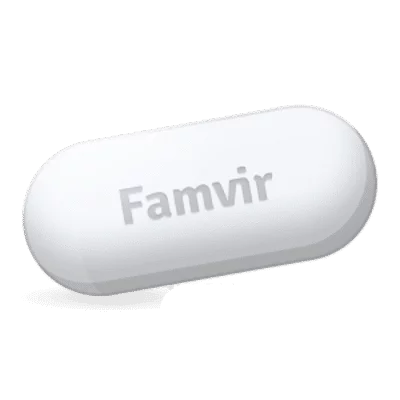
Famvir is an antiviral medicine with famciclovir as its active ingredient. It is used in adults for shingles, genital herpes, and cold sores. It helps stop herpes viruses from multiplying, which can shorten outbreaks and support healing.
Famvir, containing the active ingredient famciclovir, is an antiviral medication primarily used to treat outbreaks of herpes simplex virus (HSV) infections, including genital herpes and cold sores, and to manage shingles (herpes zoster). It is used by adults who need treatment for a flare or a plan to reduce recurrences under medical guidance. The medicine works by stopping herpes viruses from multiplying, which shortens symptoms and supports faster skin healing.
Famvir contains famciclovir (Famciclovir INN). Famciclovir is a prodrug, meaning it is inactive until your body converts it into the active antiviral.
After absorption, famciclovir (prodrug) is converted to penciclovir (active drug). Inside infected cells, penciclovir is further activated to penciclovir triphosphate, the form that does the real work by blocking viral DNA synthesis and slowing viral replication, so the outbreak settles faster and new lesions are less likely to form. This mechanism and its clinical use are described in EU regulatory documents reviewed by the EMA (European Medicines Agency). [1]
Famvir is used to treat infections caused by herpes viruses, including cold sores, genital herpes, and shingles. It may also be prescribed to help reduce the severity and duration of outbreaks when started early.
Famvir is used for:
Famvir is a brand-name product; generic famciclovir contains the same active ingredient. In regulatory terms, generics are expected to meet bioequivalence standards, meaning the body is exposed to the medicine in a similar way and clinical effect is expected to be the same when used at the same dose. The meaningful differences are usually non-clinical (tablet appearance or excipients) rather than antiviral activity.
Famvir may not be suitable if you have a known allergy to famciclovir, penciclovir, or similar antivirals. It also needs extra caution if your kidneys do not clear medicines well, if you are pregnant or breastfeeding, or if a doctor is not supervising treatment for a child or teenager.
Famvir is generally well tolerated, but it can cause side effects. Common effects include headache, nausea, diarrhea, stomach pain, dizziness, and fatigue.
Less common reactions include rash, itching, and allergic reactions such as swelling of the face or throat. Rarely, blood or kidney test changes can occur, so new severe symptoms should be reviewed promptly.
Frequent recurrences can make suppression useful, but episodic treatment suits people with fewer flares. People do not fail Famvir; timing and routines fail people. In practice, a few patterns show up again and again.
Doctors usually frame Famvir as a “speed and severity” medicine. For shingles, the aim is to reduce viral replication early, so the rash resolves faster and the risk of complications like post-herpetic neuralgia may be lower when started promptly, even though nerve pain can still persist. For genital herpes, clinicians choose between episodic treatment for people with infrequent outbreaks and suppressive therapy for those with frequent or disruptive recurrences, often revisiting the plan after several months. Many clinicians also counsel that antivirals manage HSV but do not eradicate latency, so expectations stay realistic and adherence stays steady.
Famvir treats outbreaks and can reduce recurrence frequency with suppressive therapy, but it does not eliminate HSV from the body. HSV establishes latency in nerve cells, and antivirals mainly block replication during reactivation. This is why outbreaks can still happen after long symptom-free periods. CDC clinical guidance from 2024 describes HSV management as control rather than eradication. [5]
Famvir reduces VZV replication and helps the shingles rash heal, which can indirectly lessen pain over time. It is not an analgesic, so many patients still need targeted pain relief in the acute phase. If pain is severe, clinicians may add nerve-pain agents or anti-inflammatories depending on the person’s risk profile. This treatment approach aligns with standard shingles management referenced in clinical monographs for famciclovir.
Suppressive therapy means taking an antiviral on a regular schedule to reduce how often outbreaks occur and how intense they feel. It is usually considered when outbreaks are frequent, disruptive, or stressful, and it is commonly reassessed after a period of stability. People often report fewer “warning tingles” and shorter flares when they do break through. The concept is described in mainstream STI guidance used internationally, including CDC materials updated in 2026.
Take the missed dose when you remember unless it is close to the next scheduled dose, then continue with the regular schedule. Doubling up tends to increase side effects like nausea or headache without giving extra antiviral benefit. If you are on suppressive therapy and you miss doses often, breakthrough recurrences become more likely because the antiviral level drops. This dosing logic follows general principles in EMA-labeled use for oral antivirals.
Your order will be securely packed and shipped within 24 hours. This is exactly what your package will look like (images of an actual item sent). It has the size and look of a regular private letter (24x11x0.7 cm) and its contents cannot be seen.