موثّق
I used a small amount at night for about four weeks. My cheeks felt less tight, and makeup looked smoother the next morning. The cream was too rich for my nose, so I kept that area light.
٦ أكتوبر ٢٠٢٦

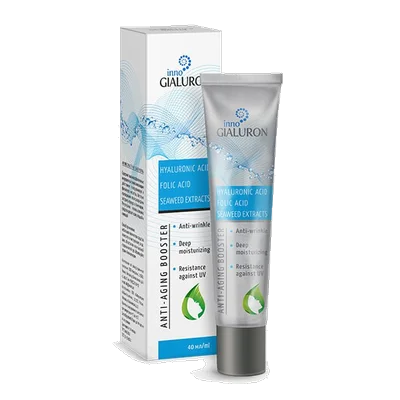
Innogialuron is a topical anti-aging cream applied to clean skin to support hydration and a smoother appearance. It is intended for adults concerned about dryness, fine lines, and visible loss of skin suppleness. Hyaluronic acid helps attract moisture, while folic acid and seaweed extracts complement the formula’s skin-conditioning and protective role.
Innogialuron is a topical cream designed for facial and body skincare. Its main cosmetic purpose is to improve the appearance of dehydrated skin, fine lines, and wrinkles through moisturisation and surface smoothing. The amount used per application is determined individually for each person rather than being one fixed quantity.
Better hydration can make fine lines appear less pronounced and can give the skin a softer, fuller look [1].
Innogialuron contains a combination of moisturising and skin-conditioning ingredients rather than a single active substance. The formulation includes:
Hyaluronic acid works mainly through water retention. Folic acid and seaweed extracts provide a broader formulation approach, combining hydration with skin-conditioning support. That combination gives Innogialuron a different profile from a simple single-ingredient moisturiser.
Use Innogialuron as a topical cream for adults. The amount per application is set individually rather than being one fixed number, so use enough to form a thin, comfortable layer over the selected area.
Avoid applying the cream to cuts, active rashes, or freshly irritated skin. Do not massage vigorously around the eyes. If the cream enters the eyes, rinse with clean water.
The best application time depends on the rest of the routine. Morning use works well beneath sunscreen, while evening use allows the moisturising layer to remain undisturbed overnight. The cream can be used alone or followed by another moisturiser when the skin feels dry.
Innogialuron acts at the skin surface. Hyaluronic acid attracts water and helps maintain a hydrated outer layer, which can temporarily soften the look of fine lines caused or worsened by dryness.
A useful way to picture the effect is to think of dry skin as a surface with tiny visible creases. When the outer layer holds more water, it becomes more flexible and reflective. Fine lines may then look less deep, although a topical moisturiser cannot remove established wrinkles permanently.
The cream also supports a smoother feel during application. Regular moisturisation may reduce roughness and make makeup or sunscreen sit more evenly on the skin. The anti-aging benefit is therefore cosmetic: improved hydration, softness, and the visual appearance of fine lines.
The World Health Organization links ultraviolet exposure with premature skin aging and recommends protective habits such as shade, protective clothing, and sunscreen [2].
Innogialuron is a topical anti-aging cream for adults concerned about dry skin, fine lines, and visible loss of skin suppleness. It supports hydration and a smoother-looking appearance through hyaluronic acid, folic acid, and seaweed extracts.
Hyaluronic acid products differ by texture, supporting ingredients, concentration, and intended routine. Innogialuron combines hyaluronic acid with folic acid and seaweed extracts in a cream-based anti-aging booster.
| Product category | Main focus | Practical difference |
|---|---|---|
| Innogialuron cream | Hydration plus skin conditioning | Combines hyaluronic acid, folic acid, and seaweed extracts in a topical cream |
| Single-ingredient hyaluronic acid serum | Surface hydration | Usually focuses on humectant hydration with fewer supporting ingredients |
| Rich moisturising cream without hyaluronic acid | Barrier comfort and emollience | Relies more on oils, occlusive agents, or skin-softening ingredients |
A serum may feel lighter and suit layered routines, while a cream may feel more comfortable on dry or mature skin. Innogialuron’s combination formula is intended for people who want hydration together with a broader anti-aging skincare approach.
No topical hyaluronic acid product can reproduce a clinical filler procedure. Injectable treatments act differently and require trained medical administration. A cream remains a non-invasive option for improving hydration and the appearance of superficial lines.
Innogialuron is not suitable for you if you have a known allergy to hyaluronic acid, folic acid, seaweed-derived ingredients, or any other component of the formula.
The cream is not intended for injection or internal use. Hyaluronic acid injections are medical procedures with different products, techniques, risks, and aftercare requirements.
Use extra caution in the following situations:
Do not apply Innogialuron over prescription creams unless the prescribing clinician has confirmed that the products can be layered. Applying multiple topical products at once may increase irritation and can make it difficult to identify the cause of a reaction.
Most topical skincare reactions are local. Possible effects include temporary stinging, redness, itching, dryness, tightness, or a rash. A reaction may result from an individual ingredient, fragrance or excipient, contact with damaged skin, or use alongside another irritating product.
Stop applying Innogialuron to an area that develops persistent burning, swelling, blistering, or a spreading rash. Seek urgent medical care for facial swelling with breathing difficulty, widespread hives, or swelling of the lips and tongue.
The formula may feel comfortable on dry skin but heavy on oily or acne-prone skin if too much is used. Pilling can occur when several layers are applied quickly, especially if a silicone-rich primer or sunscreen follows before the cream has settled.
One practical detail is easy to miss: irritation can come from the routine rather than from Innogialuron alone. Exfoliating acids, retinoids, strong cleansing products, and shaving can leave skin more reactive. Introduce the cream on a quieter routine so the response is easier to judge.
Dermatology literature describes hyaluronic acid as a widely used moisturising ingredient, while contact reactions remain possible with any cosmetic formulation [3].
Several routine errors can reduce comfort or make the product appear ineffective:
A clinician would usually describe Innogialuron as a supportive moisturising product, not a treatment that reverses structural aging. Its strongest practical role is improving hydration and reducing the visible emphasis of dryness-related fine lines.
Dermatology practice places daily sun protection, gentle cleansing, and regular moisturisation at the centre of basic anti-aging care. A cream can work well within that routine, yet results depend on application frequency and the condition of the skin barrier. The American Academy of Dermatology identifies moisturisers as useful for trapping water in the skin and reducing the appearance of fine lines [4].
Doctors also distinguish cosmetic improvement from treatment of a skin disorder. Persistent redness, painful acne, scaling, pigment changes, sudden swelling, or a rapidly changing lesion needs clinical assessment rather than repeated cosmetic application.
A realistic expectation is a softer feel and a more hydrated appearance. Deeper wrinkles, sagging, and pigmentation usually require a broader plan, which may include prescription treatment or in-clinic procedures selected after an examination.
Topical Innogialuron has minimal expected interaction with oral medicines because it is applied to the skin rather than taken internally. The main practical concern is combining it with other topical products that can irritate the skin, including retinoids, exfoliating acids, or prescription treatments. The EMA distinguishes topical cosmetic use from systemic drug administration when assessing exposure and interaction risk. Apply different topical products at separate times if layering causes burning or redness.
Skin irritation is possible in 2026 even with a moisturising formula, especially when the skin barrier is damaged. The WHO describes contact with cosmetic ingredients as a possible trigger for local skin reactions in susceptible people. Redness, itching, burning, swelling, or a rash calls for stopping application to the affected area. Mild tightness may also occur if the product is used with strong cleansers or exfoliants.
If the expected improvement has not appeared after a consistent skincare routine in 2026, review the amount used, application frequency, sunscreen use, and other products with a dermatologist. The EMA recognises that topical cosmetic effects depend on formulation, skin condition, and regular application rather than a guaranteed timeline. Deep wrinkles or pigmentation may need a different treatment approach. Do not respond by applying a thick layer or using the cream more often than the skin tolerates.
Regular sun protection, adequate sleep, gentle cleansing, and avoiding smoking support the appearance of healthier skin. The WHO identifies ultraviolet exposure as a major contributor to premature skin aging, so outdoor habits can influence the visible result. A varied diet and regular physical activity support general health, but no specific food can replace topical care or sunscreen. Dehydration, smoking, tanning, and repeated unprotected sun exposure can work against a smoother-looking complexion.
